Record 788 thousand debtors: what Ukrainians owe the most for
26 September 2025 13:31
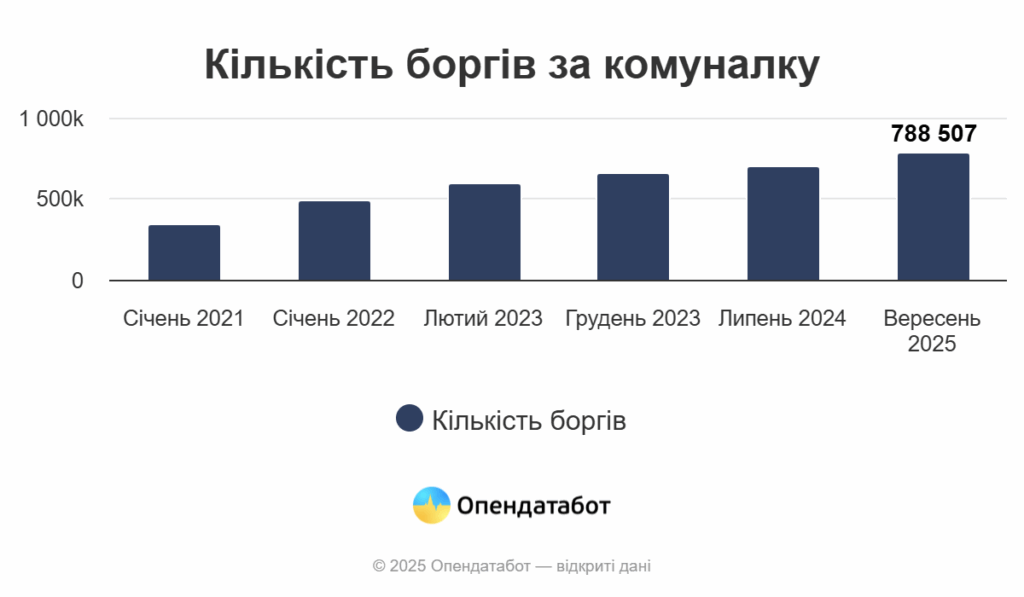
As of mid-September 2025, a record 788,000 enforcement proceedings were registered in Ukraine for utility debts. This is 13% more than in July 2024, when the number was 701,051. This is reported on the Opendatabot website, "Komersant Ukrainian" informs
In general, debts have increased 1.5 times since the beginning of the full-scale war, and more than doubled since January 2021.
The number of utility debts
| January 2021 | January 2022 | February 2023 | December 2023 | July 2024 | September 2025 | |
|---|---|---|---|---|---|---|
| Number of debts | 344 565 | 484 653 | 593 373 | 659 684 | 701 051 | 788 507 |
Where are the most debtors for utilities
Since the beginning of the full-scale war, the number of debts has increased by 1.5 times, and compared to January 2021, it has more than doubled: there were 344,565 debt proceedings then.
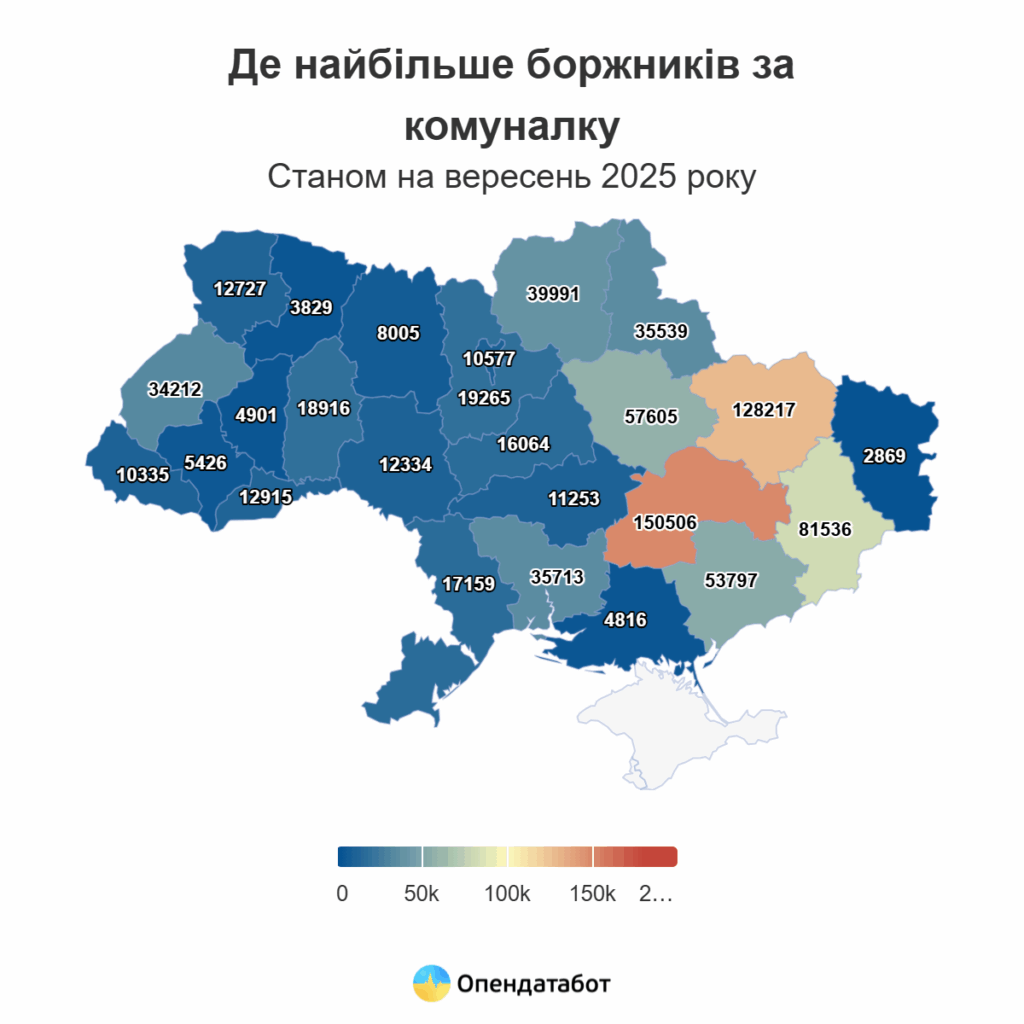
The largest number of debtors is concentrated in the frontline regions. Leaders in terms of the number of debts:
- Dnipro region – 150,506 proceedings (19%)
- Kharkiv region – 128,217 (16%)
- Donetsk region – 81,536 (10%)
- Poltava region – 57,605 (7%)
- Zaporizhzhia region – 53,797 (7%).
What do Ukrainians most often owe for?
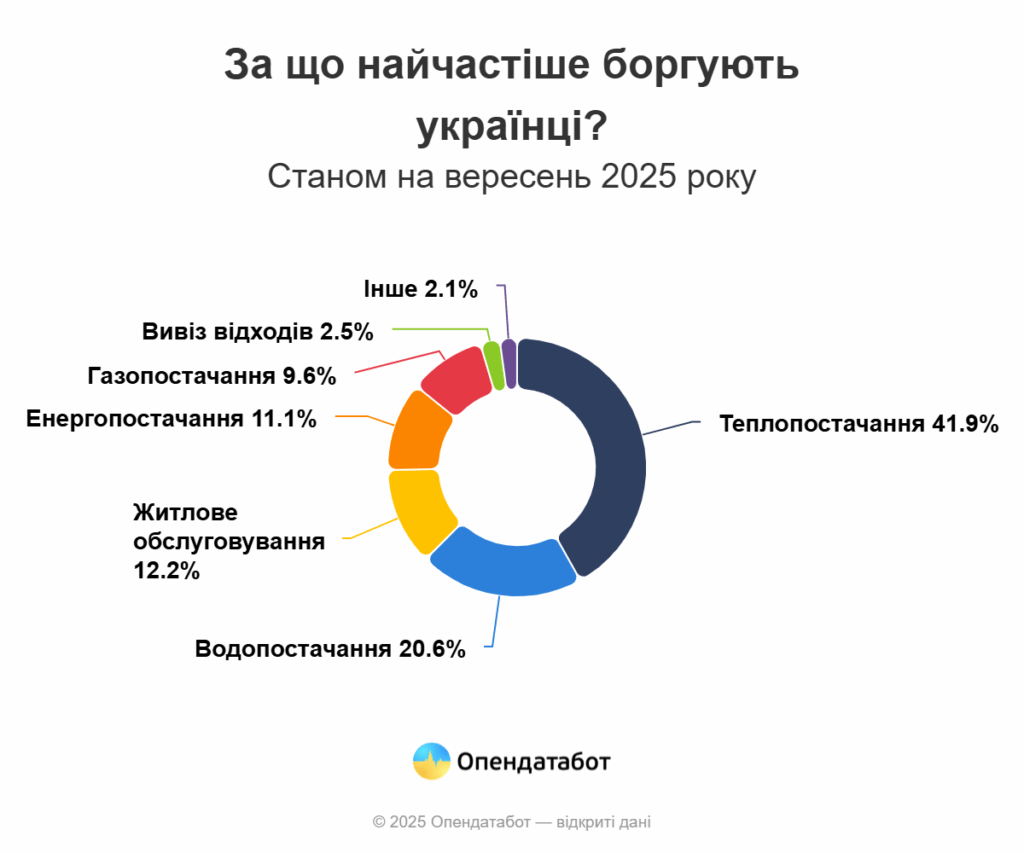
The lion’s share of debts relates to heat supply – 330,236 cases (42%). This is followed by debts for water – 162,455 (21%) and housing services – 96,265 (12%).
There are also significant debts for electricity (87,708) and gas (75,522).
What Ukrainians most often owe for:
| Heat supply | 330 236 | 41.9% |
|---|---|---|
| Water supply | 162 455 | 20.6% |
| Housing services | 96 265 | 12.2% |
| Energy supply | 87 708 | 11.1% |
| Gas supply | 75 522 | 9.6% |
| Waste disposal | 19 388 | 2.5% |
| Other | 16 933 | 2.1% |
Who is most likely to be in debt
Women are the most likely to be in debt – 438.3 thousand proceedings have been opened against them (56%), while 350.1 thousand (44%) have been opened against men.
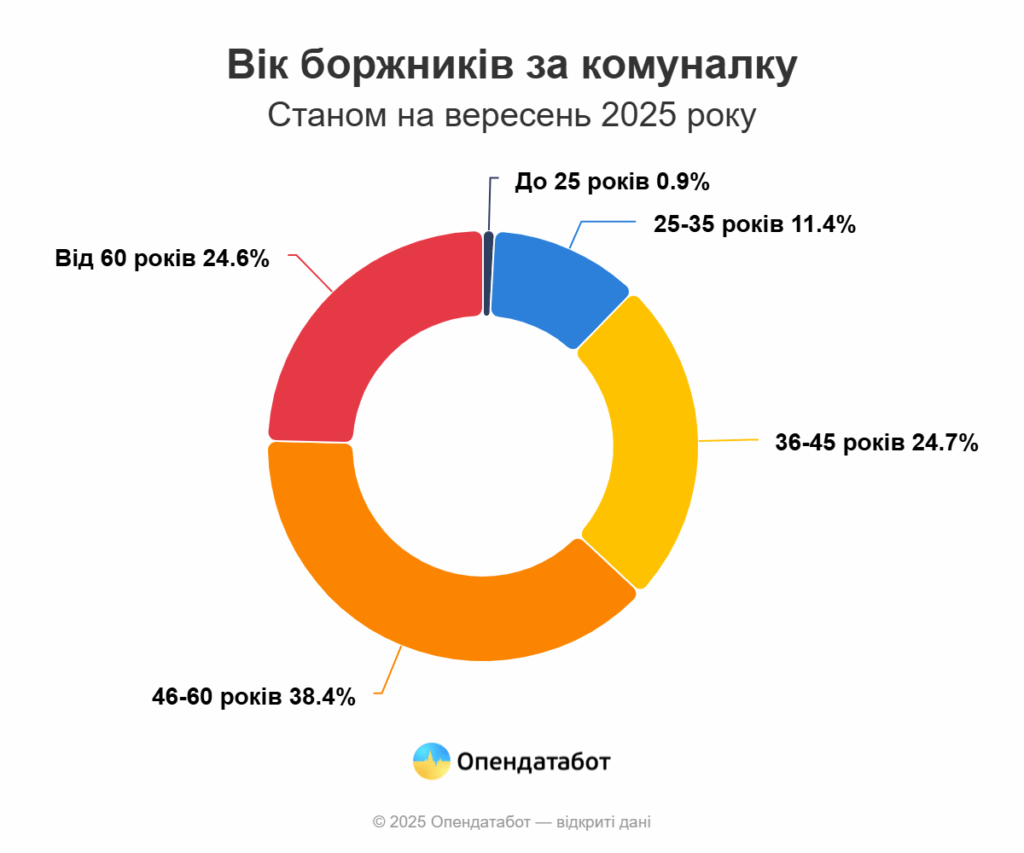
The main burden of utility debts falls on people aged 46-60.
By age distribution:
- 46-60 years old – 302.8 thousand proceedings (38%)
- 36-45 years old – 194.7 thousand (25%)
- 60 years old – 194.1 thousand (25%)
- 25-35 years old – 89.9 thousand (11%)
- Under 25 years old – 6.8 thousand (1%)