Roman Pogorily: The truth about the front does not harm the army. Lies and silence harm it.
2 March 15:34 INTERVIEW
DeepState co-founder on the line between openness and state secrets, conflicts with the General Staff, “counterattacks” in the media, 50,000 fewer occupiers per month, the evolution of the Russian army, and hate directed at him.
In an interview for the YouTube channel "Komersant Ukrainian", military analyst and co-founder of DeepState Roman Pogorily explained in detail why publicity does not equal treason, how the delay in publishing information about the actions of the Armed Forces of Ukraine works, why mop-ups are not counterattacks, and why it is important for Ukraine to focus on destroying the enemy rather than making loud statements.
Real special operations are not announced
— Roman, you said that society often lives in illusions. How can a democratic state determine what can be said publicly and what cannot?
— Let’s make it very simple. Take Kupiansk. When events took place there that were in fact a special operation, did anyone announce them? No. Did anyone tell the media in advance what would happen and where? No. Real operations are not discussed in advance. They are not announced by bloggers or officials. They just happen. Therefore, when we hear the general narrative that “nothing can be said,” I always ask the question: to whom is this appeal directed? Because where soldiers are actually working, this rule is already being followed.
— There have been scandals involving public maps, positions, and photos with access to sensitive information. How dangerous is this?
— Even if the data is outdated, it is unacceptable. A person with access to information and authority does not have the right to publicly display maps, positions, or take grandiose photos. There is professional ethics. Just as an officer cannot publicly discredit his rank, so it is here. Even if no harm has been done, the very fact of such behavior is a problem.
— What is your publication policy? Is there a time lag?
— When it comes to the actions of the Defense Forces, we cannot publish anything before the president, commander-in-chief, brigade commanders, or the soldiers themselves. If they issue an official statement, then we can too. There was a case when a settlement had already been cleared, but there was no official statement. We communicated with the soldiers and agreed on whether it was possible to mark this on the map so as not to jeopardize their safety. As for the enemy’s advance, there are no delays. We work like this: we receive information, verify it, and publish it. The time depends on verification — it can be a day, a week, or a month.
— How often do you get “flak” from the General Staff?
— An example is Siversk. For two weeks, we said that the situation was critical and that the city could be lost. In response, we were accused of lying and working for the enemy. The next day, an official report was released: they had left the city. These are the “flights.” Not calls from Oleksandr Syrskyi, but public attempts to discredit us.
I believe that the commander-in-chief should maintain communication with resources such as ours. Not so that they can tell us what to write, but so that they can respond to problems. Reports can be distorted at various levels. An example is Dobropillya. The reaction came only after public outcry. We work normally with many commanders. They listen, they respond, they don’t say, “Don’t get involved.”
— How would you assess Mykhailo Fedorov’s first month at the Ministry of Defense?
— It’s too early to draw conclusions. But we can see a managerial approach and the involvement of competent people. For example, Serhiy Sternenko in the field of FPV drones. The goal of eliminating 50,000 occupiers every month is ambitious. It can be achieved. But will it break Russia? We have already seen 300,000, 500,000, over a million casualties. And that didn’t stop them. We think with the logic of normal people. But that’s not how Russian society works.
— Russian sources write about a Ukrainian counteroffensive in the Ternovate area.
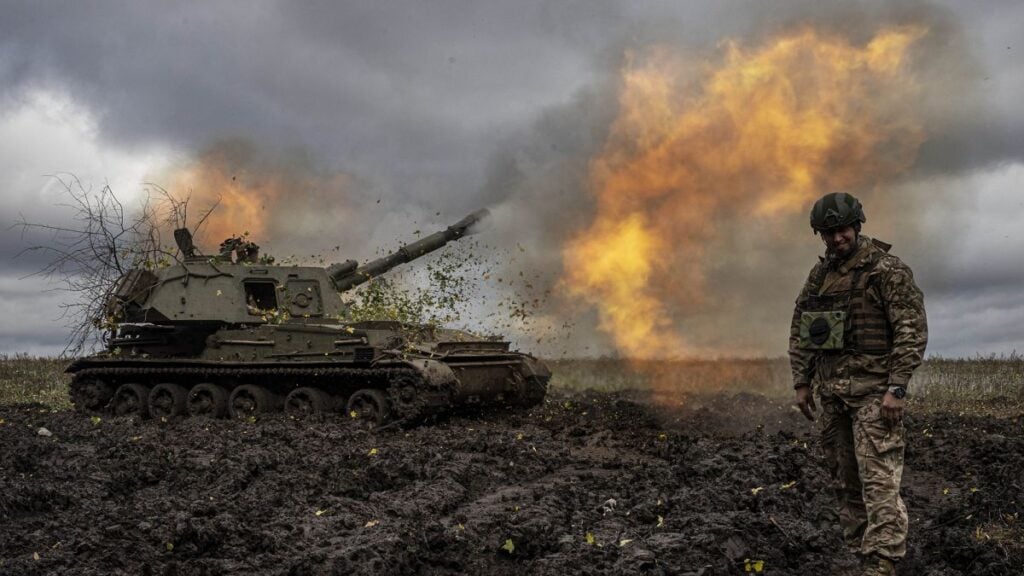
— If a sweep was carried out in the gray zone where the enemy infiltrated, it is a sweep. Not a large-scale counteroffensive. We cannot systematically advance at this time. Even if we do advance, the question is whether we can hold our ground. Therefore, the key is to destroy the enemy in defense and protect our people. Russia carries over its tasks from year to year. Among their goals are the complete occupation of Donetsk Oblast and pressure on Zaporizhzhia and Kherson. Dnipropetrovsk, Kharkiv, and Sumy Oblasts are potential bargaining chips for them in negotiations. It is unwise to make predictions “until summer.” There are no deadlines in this war.
— How do you respond to those who say, “Why aren’t you on the front lines?”
— I was defending my city, traveling to Bakhmut, Soledar, Vuhledar, and Avdiivka at peak moments. I was under fire. We work with thousands of military personnel. Many of them believe that our work is beneficial. If the military says, “We need you here,” we will consider it. But when an anonymous civilian writes this, it is often just a provocation. We are already on the front lines. You just don’t always see how.
Roman Pogorily formulates his position without diplomatic niceties: the truth about the front does not harm the army — what harms it is the silence about problems and the political illusion of “great offensives.” DeepState, in his words, does not compete with the military command, but tries to highlight weaknesses so that they can be corrected.
In a war without deadlines, where losses do not stop the aggressor, quality, experience, and honest communication with society remain key — even if it causes discomfort.