Russia and Belarus are preparing nuclear scenarios for West 2025: experts explain why it is more of a spectacle than a threat
14 August 2025 17:56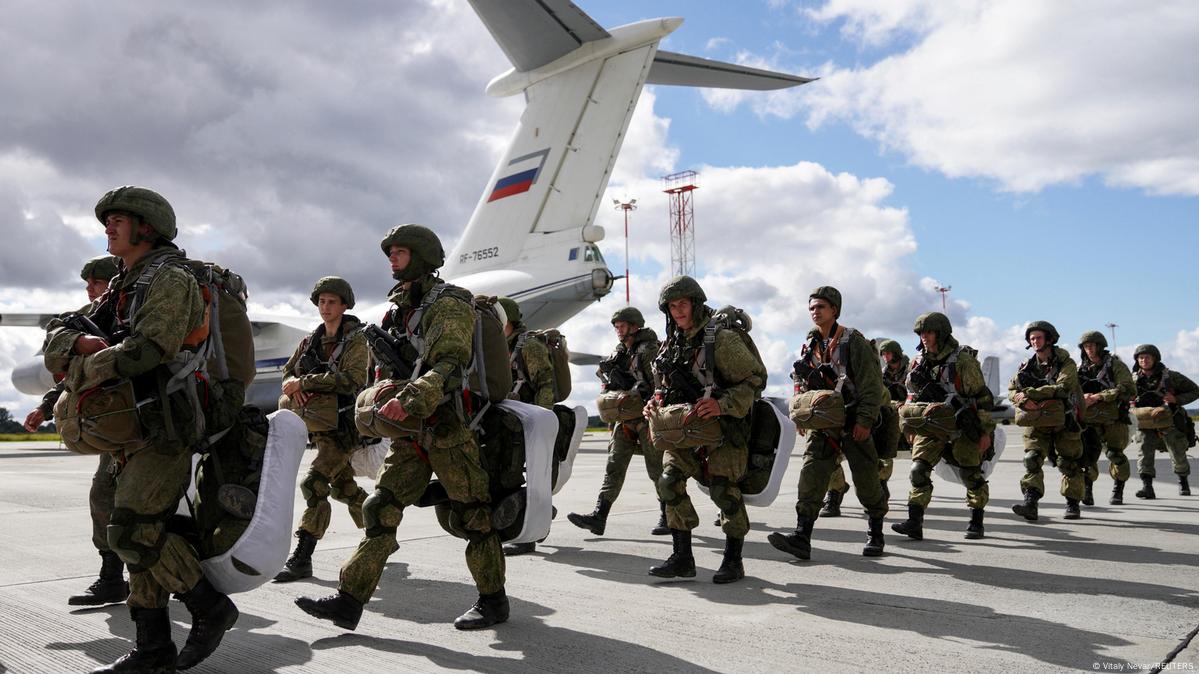 ANALYSIS FROM
From September 12 to 16, Russia and Belarus intend to work on planning the use of nuclear weapons and the Oreshnik missile system as part of the West 2025 joint military exercises. This was announced by the Minister of Defense of Belarus Viktor Khrenin.
Answering a question about the inclusion of nuclear topics in the exercise program, Khrenin confirmed that the two countries will jointly work out scenarios for the use of these types of weapons. The minister also reiterated official statements about the alleged deterioration of the situation on Belarus’ western and northern borders, accusing the West of “militarizing” the region and increasing military activity.
At the same time, he emphasized that nuclear weapons are an important element of strategic deterrence capable of causing unacceptable damage to potential adversaries.
In addition, Hrenin said that NATO’s leadership is allegedly trying to use the West 2025 exercise as a pretext for its own maneuvers, hinting at a possible response from Belarus and Russia.
The Belarusian minister was particularly concerned about Poland’s decision to create a grouping of more than 30-34 thousand troops. According to him, this is a serious formation that Belarus will closely monitor and is ready to respond adequately in the event of any aggressive actions against the country.
Russian nuclear statements on the eve of the Putin-Trump meeting: what experts say
In an exclusive commentary for "Komersant Ukrainian", Dmitry Snegirev, co-chair of the Right Livelihood Initiative and military analyst, explained that the recent statements by Russia and Belarus about nuclear exercises and the deployment of the Oreshnik missile system have a clear political context.
It is no coincidence that such statements appeared on the eve of the meeting between Putin and Trump, which will address the issue of ending the war in Ukraine. “The Russian Federation is again trying to raise the stakes in its favorite game – on the eve of important political events,” Snegirev said.
At the same time, unlike Russia, the United States is not making loud statements, but taking practical steps: redeploying its nuclear arsenal in the UK, moving nuclear submarines to the Russian coast, and deploying additional air groups in the region.
Russia and Belarus have repeatedly frightened the world with the possibility of deploying tactical nuclear weapons in Belarus. They presented this as a fait accompli, citing interstate agreements,” the analyst explained.
However, according to him, no practical actions were taken to move nuclear weapons to Belarusian territory.
The situation with the Oreshnik complex is similar. According to the Defence Intelligence of Ukraine, it is an experimental weapon, and there are serious doubts about the possibility of its mass production and deployment in Belarus.
The Kremlin’s statements were meant to scare the West, but the reaction was unequivocal. U.S. air units have already departed for Russia. Putin has not learned from Medvedev’s previous statements about nuclear weapons, after which the United States responded with decisive and practical actions, not empty posts on social media,” emphasized Snegirev.
The military analyst emphasizes that the situation around the Oreshnik requires a separate detailed analysis. But it is clear that Russia is trying to use this complex as an element of military pressure, despite the limitations of its military-industrial complex.
This is not the use of nuclear weapons, it is a paper game
Roman Svitan, a military expert, reserve colonel of the Armed Forces of Ukraine, pilot-instructor, believes that this is not a combat use of Oreshnik or nuclear weapons, but rather a paper game.
Svitan emphasizes that these “plans” have no practical significance, and that the Russian military and political leadership is simply trying to create the impression of a large-scale threat:
Russia is not preventing this. On the contrary, it is strengthening it. And Lukashenko will never get access to either nuclear weapons or intermediate-range missiles. At most, Belarusian territory will be used as a launching pad,” says Svitan.
According to Svitan, the real goal of the information campaign is not the United States, but the European audience:
“This is not a ‘scarecrow’ for Trump or for Ukraine. It’s for Europe. To get them to agree to Ukraine’s capitulation in Putin’s way.” Oreshnik is a cudgel that Putin wields like a fool with a mortar. Lukashenko carries a bucket of potatoes in one hand and Oreshnik in the other.
The expert emphasizes that in the event of a missile launch, Europe has a clear defense system – the American Aegis missile defense system, which is already deployed in Poland and Romania:
The launchers intercept missiles even on takeoff-at an altitude of 1,500 kilometers and a range of 2,000 kilometers. “Oreshnik is not even a problem for this system. The missile will be intercepted on its ascending trajectory.
Putin does not want to irritate Trump
Political analyst Volodymyr Fesenko supports this view: in his opinion, all of Russia’s nuclear rhetoric is a signal not to Washington, but to European capitals:
“I don’t think it’s aimed at Trump. Putin is now doing everything not to irritate him. On the contrary, he hasn’t made a single strike against Kyiv since the start of preparations for the meeting with Trump. This is no accident.
He reminds us that in 2023, Moscow announced the deployment of tactical nuclear weapons in Belarus, just before the NATO summit in Vilnius. The location is also symbolic:
Why Belarus? Because it is close to Vilnius. This is psychological and military-political pressure on Europeans to agree to Moscow’s demands.
According to Fesenko, Europeans will not react sharply, but this does not mean indifference:
Europeans are afraid of Putin, but they are afraid of war, not threats. And this is good. Because the more they are afraid, the more they invest in defense. And they better understand that they need to help Ukraine. Because if Ukraine loses, the war will come to them.
Thus, Ukrainian analysts view Russia’s information maneuvers, including statements about exercises with a “nuclear component” and the Oreshnik missile system, as an element of psychological pressure on the West, particularly Europe. In real military terms, these threats have no practical significance at the moment – they are just demonstrative “saber-rattling” against the backdrop of important international political processes.
Author – Daryna Glushchenko
Читайте нас у Telegram: головні новини коротко