Russia’s AvtoVAZ to suspend production: the reasons behind the decision
6 April 15:06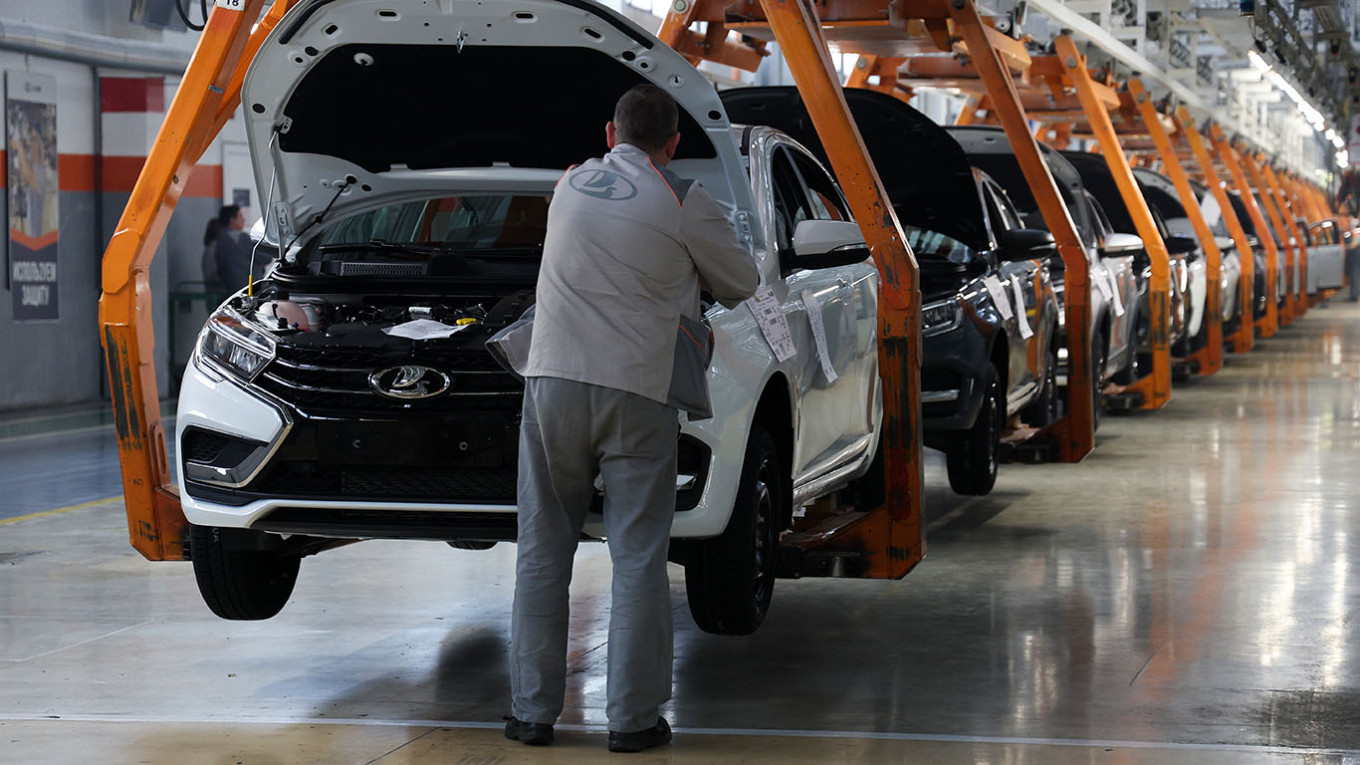
AvtoVAZ has announced that it will place its employees on company-mandated leave from May 4 to May 13 (taking weekends into account, the assembly line will shut down on May 2). The company explains this as “another large-scale modernization of production lines and technological equipment” to prepare for the launch of a new model—the Lada Azimut crossover, scheduled for the third quarter. Work will also continue on the production line for the Niva SUV.
This is reported by "Komersant Ukrainian", citing Russian propaganda media.
The automaker’s dealers are aware of the more than two-week shutdown in April–May, but cite a different reason: overstocking of warehouses due to low demand. According to Mash, AvtoVAZ’s assembly lines will effectively be idle from April 27 to May 17—this is how the plant aims to avoid switching to a four-day workweek. Russia’s largest truck manufacturer, KamAZ, has already announced a switch to a four-day workweek starting in June due to falling sales.
Lada benefited the least from the automotive market’s recovery in March, noted experts from the Autostat analytical agency during a discussion of last month’s results. According to the agency’s estimates, based on registration data, sales of new passenger cars in March rose to 104,300 units, up 31% year-over-year and 30% compared to February. This result contributed to a 7.3% increase in sales for the first quarter (264,900 cars were sold). Lada sales during this period fell by 17.4%.
Alexey Kalitsev, head of the AEB Automakers Committee, urges against jumping to conclusions about a turnaround in the Russian auto market following a successful March. The HSE Development Center has no doubt that demand for new cars will remain below last year’s levels in the coming months.
One of the key factors behind March’s “thaw” in the market is emotional, according to Sergey Udalov, executive director of Autostat. The cold, snowy winter did not inspire a desire to upgrade one’s car, whereas the early spring drew buyers to dealerships. In addition, keeping money in bank deposits is no longer as profitable as it used to be, and, apparently, many are deciding to buy a car “at the old prices,” the expert believes. According to data from the Central Bank of the Russian Federation, deposit rates at the end of March returned to the level of November 2023. For now, subsidized loans and special offers remain on the market, but everyone understands that cars will become more expensive: there is already a shortage of inventory, and dealers will have to factor in the increase in VAT and the recycling fee into the price of new shipments, explains Udalov.
Most leading brands are growing along with the market, but not Lada. According to Autostat, AvtoVAZ sold 25,200 cars in March—32% more than in February, but exactly the same as a year earlier. Meanwhile, sales of the Chinese brand Haval, which ranks second and manufactures cars at a plant near Tula, rose 50% year-over-year to 14,800 vehicles, and even those of the imported Geely brand increased by 24% year-over-year to 6,300.
Localized Chinese cars, such as Haval, Tenet (a localized Chery), or Belgee (manufactured at the Belarusian Geely joint venture), are gaining the most market share, while global brands entering Russia via parallel imports are also noticeably strengthening their positions, whereas Lada’s share continues to shrink, the deputy head of the department explained. For example, Toyota sold 2,800 cars in March—2.5 times more than a year earlier and nearly 43% more than in February. Its Toyota Rav4 model is currently in fourth place on the list of imported new cars.
Buyers are divided into those who want to purchase a car from a global brand, as well as pragmatists who are willing to buy a car assembled in Russia, provided it is modern, explained Avtostat CEO Sergey Tselikov. For now, localized models from Chinese brands seem more advanced to consumers than AvtoVAZ products, and their manufacturers are more actively stimulating sales through subsidized loans and other favorable terms.
In this situation, AvtoVAZ’s target audience consists primarily of those who want a new car for 1–2.5 million rubles. However, the Russian automaker’s problem is that its modern models exceed this price threshold, where they must once again compete with Chinese brands, Tselikov explained. Therefore, an increasing number of buyers on tight budgets are switching to purchasing used foreign cars.
In this sense, the Ministry of Industry and Trade is achieving its goal of supporting local production. In March, the share of Russian-made cars accounted for 65% of total sales, compared to 25% in 2023. However, it is not AvtoVAZ that is benefiting, but its competitors, the expert concluded.