Shared responsibility: why Kyiv failed to prepare adequately for a difficult winter of war
29 January 18:12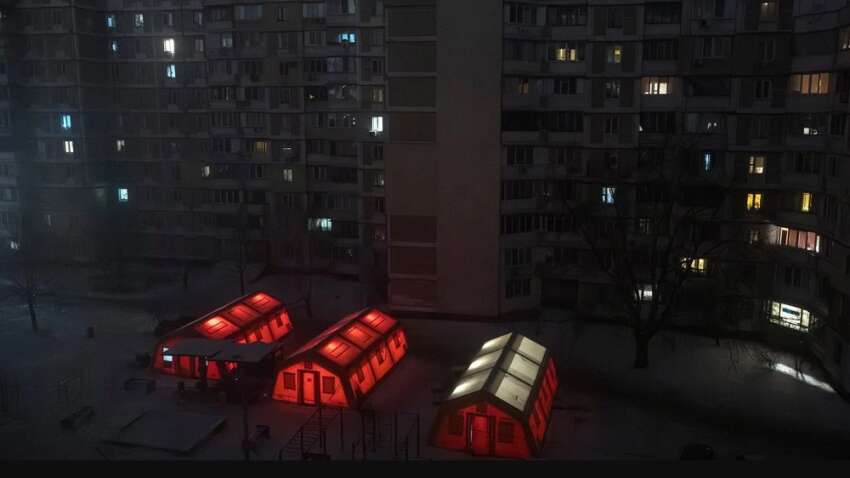
The Ukrainian capital and its residents have been living and working in extreme energy conditions for several weeks now, with longer power outages and less warm, and often cold, radiators in their homes. Komersant tried to find out why this happened.
The damage caused to Kyiv’s energy infrastructure as a result of the Russian attack on the night of January 13 has made the situation with providing Kyiv residents with light and heat as critical as possible. And this is against the backdrop of low air temperatures. The real threat of a humanitarian disaster prompted the Ukrainian authorities to declare a state of emergency in the energy sector the very next day, and everyone — officials and ordinary citizens alike — to seek answers not only to the question of “what to do,” but also “who is to blame.”
Who is responsible and for what
President Volodymyr Zelensky, announcing on January 14 the introduction of a state of emergency in the energy sector and reporting on the creation of a headquarters to coordinate the situation in Kyiv, effectively pointed to the main contender for the role of “culprit.”
“The situation in Kyiv is particularly difficult — the city authorities have wasted time, and now the government will have to fix what was not done at the city level. A permanent headquarters for the capital has already been formed, and its work will be supervised at the government level. I expect full cooperation and interaction from the local authorities,” Volodymyr Zelenskyy said at the time.
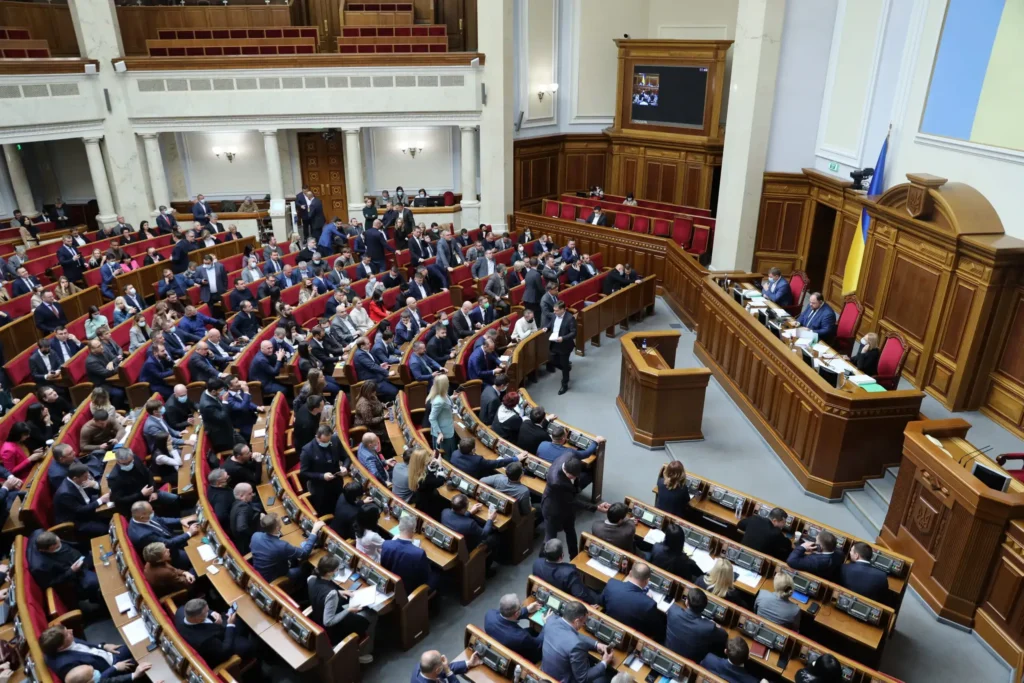
The newly appointed Minister of Energy, Denys Shmyhal, was no less categorical. Responding in parliament to questions from deputies about the crisis in the energy sector, he said:
“Kharkiv was prepared, and the regional, local, and city authorities prepared the city: there are mobile boiler rooms, and there is adequate distributed power generation. Kyiv, unfortunately, was much less prepared, I would say — not prepared at all, so now we will have to take emergency measures.”
Kyiv Mayor Vitali Klitschko called the accusations unfounded.
“Instead of constructive dialogue, unfortunately, we are once again seeing politics. I consider this unacceptable in such a situation! When it comes to the safety, health, and lives of people,” the official said.
So, how justified are the accusations? Here is the opinion of Oleksandr Sergienko, head of the City Institute.
“Many officials, including Deputy Prime Minister Oleksiy Kuleba and Denys Shmyhal, said that Kyiv did nothing to implement distributed generation. In reality, the entire heat supply system in Kyiv actually consists of distributed generation. This is because TPP-5 and TPP-6 serve only half of Kyiv’s subscribers. The rest are served by 180 small municipal boiler rooms. That is, there are 12 powerful district boiler rooms with a capacity of over 80 gigacalories, and the rest, almost 170, are of lesser capacity. They are located throughout the city: in residential areas, large enterprises, and hospitals. In other words, the heat supply system is distributed. And in fact, no one is to blame for the disaster that has befallen Kyiv now, except, of course, the Russians. In Soviet times, large thermal power plants were built because they were the most economically viable. No one thought that our “brothers” in quotation marks would bomb and destroy them,” the expert noted.
According to Oleksandr Sergienko, the city authorities have also taken precautions in terms of electricity supply by purchasing many generators.
“The city authorities alone have more than a thousand electric generators at their disposal, and they are specifically aimed at keeping infrastructure and critical social facilities running. That is, if there is no electricity, the backup generator kicks in, and the boiler room continues to operate. In my opinion, Kyiv is better prepared than anyone else, because a thousand generators plus 69 mobile heat generators is a lot of power,” the expert believes.
Replacing the two damaged capital thermal power plants with various types of cogeneration units is technically impossible. This is once again emphasized by Oleksiy Kucherenko, first deputy chairman of the parliamentary committee on energy and housing and communal services. At the same time, he notes the local authorities’ unpreparedness for what happened in Kyiv.
“It is clear that the worst-case scenario has occurred. It is clear that the Kyiv management companies, which serve almost 9,000 buildings… I am not touching on the condominium associations — there are a thousand of them, and another 700 cooperatives. There are also private managers. But the management companies were clearly not prepared for such a scenario. And it’s not because they are bad — no one prepared them. They don’t have enough plumbers, repairmen, etc. That is why the capital’s leadership failed. Second. Protecting thermal power plants is not the responsibility of the city authorities. I am critical of the mayor, but he and his subordinates could not protect these facilities from missile strikes. And the lack of distributed generation today is a myth that the government is using to cover up its mistakes and shortcomings in preparing for this winter. A sufficient number of distributed generation facilities could have mitigated certain situations to a certain extent, but if TPP-5 and TPP-6 were destroyed, no distributed generation could or will be able to replace these two TPPs, which provide most of Kyiv’s housing stock,” the deputy emphasizes.
The discussion on the possibilities of distributed generation can be summed up with the following figures: the two Kyiv CHPs that were damaged have a total capacity of 1,200 MW. One cogeneration plant can provide approximately 1.5-2 MW. It is easy to calculate how many such plants are needed to replace the two capital CHPs.
What about heating in homes
Unfortunately, the above accusations and assessments, facts and figures do not make residents of many buildings in the capital, especially those located in Troieschyna, feel any warmer.
As of the evening of January 28, according to the mayor of the capital, 639 high-rise buildings in Kyiv remained without heat. In the morning of the same day, 737 residential buildings were without heat. The vast majority of them are in Troieshchyna.
According to Vitali Klitschko, more than 1,000 utility workers are working to fix the heating problems in Kyiv. They are being assisted by teams from Lviv, Poltava, Chernihiv, Vinnytsia, Zhytomyr, Mykolaiv, Odesa, Rivne, Kropyvnytskyi, Kyiv region, and several other cities. Teams from Ukrzaliznytsia are also assisting.
The publication
“Troieshchyna is located practically next to TPP-6. And TPP-6 provided it with heating. And while electricity can still be supplied somehow, heating cannot. The situation there is really critical. It is impossible to connect a mobile boiler room to each building because, in fact, to connect it, you need to make an “entry” into the building. Literally, you need to cut into the building’s heating system. And that is a separate job. And for 700 buildings, 70 mobile boiler rooms are clearly not enough. So what are the city authorities and the State Emergency Service doing? They are bringing in generators and powering up everything they can. As I understand it, there is a powerful electrical network inside the building. In this way, they are at least providing electricity, and people are heating themselves with electric heaters,” the expert notes.
He believes that this is not a solution to the problem and suggests a slightly different approach.
“A possible solution to the problem would be to use these mobile boiler rooms or others in spacious premises such as schools, kindergartens, and recreation centers so that people could come and spend the night. Not just to charge their phones and drink tea, but to spend the night. This is what the district should organize. Not give scandalous interviews, not suggest digging courtyard toilets, but organize,” the expert notes.
A few days ago, Maksym Bakhmatov, head of the Desnianskyi District State Administration of Kyiv, stated that it was impossible to provide heating for the houses in Troieschyna with generators and admitted that it was necessary to build an extensive heating, warming, and energy system four years ago.
How to organize work on mistakes
The sooner you start, the sooner you will finish. Of course, the main thing now is to repair, restore, and survive. But what next? How to rebuild the city’s energy and heating systems destroyed by the Russians.
Oleksiy Kucherenko, first deputy chairman of the parliamentary committee on energy and housing and communal services, predicts a difficult search for solutions and serious discussions.
“We will need to involve professional energy and heat engineers to discuss with them what the architecture of the future Kyiv energy system should be. Because Kyiv will have its own separate energy system. And in no case should Kyiv be compared with Zhytomyr. Because the cities are different in scale. Kyiv has a completely different housing stock, a different load, a different network length, and so on. Only Warsaw can be compared — as an example to follow,” the deputy notes.
According to him, Warsaw has the same thermal power plants, only modernized — local reserve and alternative sources have been added.
“There is very strict discipline — practically all city buildings are on centralized heat supply, which is the basis of the city’s strategy along with the master plan. It is practically impossible to disconnect, but no one particularly wants to — the quality of service is guaranteed. And another very important point is that 100 percent of buildings have individual heating points. This is a fundamental point,” the expert emphasizes.
According to the head of the City Institute, Oleksandr Sergienko, it is not only the energy supply system that will require new approaches, and not only in the capital.
“For example, it is worth considering what height is more appropriate for building houses. Because the higher the height, the higher the operating costs: you need to provide backup generators to supply water to the upper floors and keep the elevators running. Secondly, how to organize the water supply, heat supply, and sewage systems so that they are as stable as possible and less vulnerable to barbaric attacks. Obviously, it is necessary to create additional sources of energy supply, no matter how expensive it may sound, to distribute the system, and to arrange more reliable anti-missile protection for such facilities,” the expert notes.
In general, he believes that a new concept of a city located in a frontline zone that still functions normally needs to be created.
Author: Serhiy Vasilevich