Saldo may be charged with war crimes: how Ukrainian grain was smuggled abroad
25 March 13:23
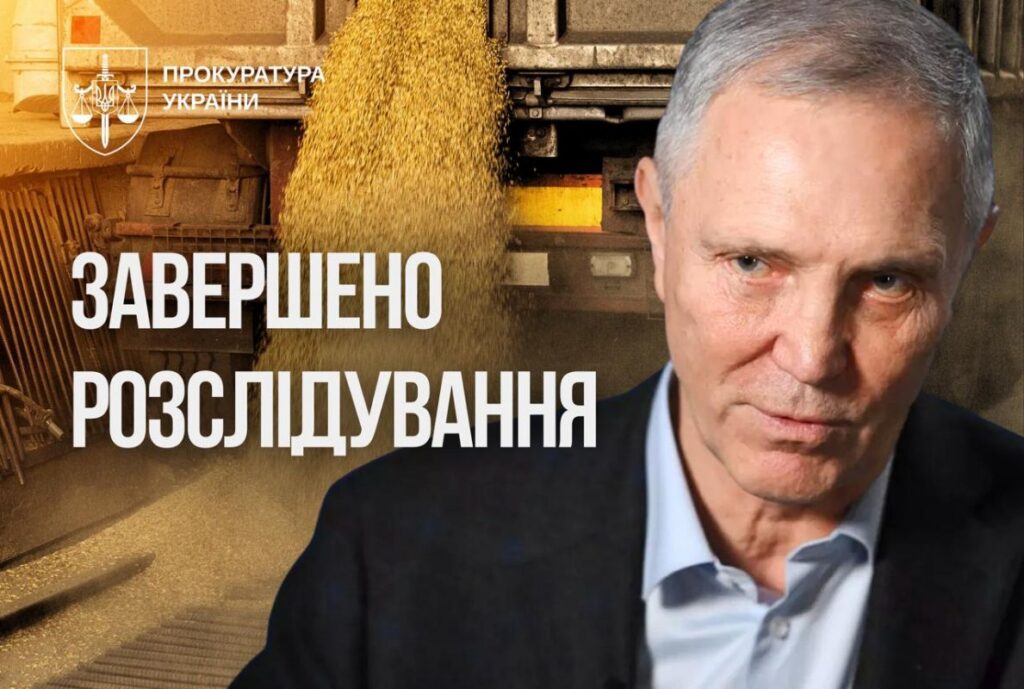
Ukraine is preparing to bring charges against one of the key collaborators in the temporarily occupied part of the Kherson region—Volodymyr Saldo. He is suspected of organizing a large-scale scheme to steal Ukrainian grain worth over 5.3 billion hryvnias, which could be classified as a war crime. This was reported by the Office of the Prosecutor General, according to "Komersant Ukrainian"
What is Saldo accused of?
According to the investigation, after the occupation of part of the Kherson region in 2022, Saldo voluntarily headed the occupation administration and established control over the region’s agricultural sector.
Investigators established that under his leadership:
- grain was forcibly seized from farmers;
- agricultural enterprises were seized;
- grain elevators and terminals were confiscated;
- other agricultural products were appropriated.
The total value of the illegally exported resources, according to law enforcement estimates, exceeds 5.3 billion hryvnias.
How the grain export scheme worked
According to the prosecutor’s office, after seizure, the grain was transported:
- to occupied Crimea;
- to the Krasnodar Krai of the Russian Federation;
- to the Rostov Oblast.
After that, the grain was exported by sea to third countries under the guise of Russian grain.
Among the countries to which the stolen grain could have been shipped:
- Syria;
- Egypt;
- Turkey;
- Lebanon.
Law enforcement officials believe that this was part of a fully-fledged system of illegal appropriation of Ukrainian resources.
Why this could be considered a war crime
The Prosecutor’s Office views these actions as violations of international humanitarian law, specifically:
- the Geneva Convention on the Protection of Civilian Persons;
- the laws and customs of war;
- provisions prohibiting the plundering of occupied territories.
That is why the case may be referred to the International Criminal Court.
Who else is involved in the case
According to the investigation, at least nine participants in this scheme have already appeared in court. These are the perpetrators who helped implement the decisions of the occupation administration.
The pre-trial investigation was conducted by investigators from the Security Service of Ukraine with the participation of counterintelligence.
When will the trial take place
Saldo has been summoned to the Kherson City Court for a hearing in criminal proceedings under the article on violations of the laws and customs of war.
He is charged with crimes under Article 438 of the Criminal Code of Ukraine.
On April 26, 2022, Volodymyr Saldo was appointed head of the Russian occupation administration in Kherson. On June 3, 2022, he was added to the European Union’s sanctions list for collaborating with Russia.
On November 8, 2023, the Malynovsky District Court of Odesa found him guilty of treason.
In May 2024, Saldo’s apartment in Odesa was sold at auction for 2.9 million hryvnias. In July 2023, Saldo’s property and property belonging to his daughter and ex-wife were transferred to the state.
In July 2024, Volodymyr Saldo was stripped of his powers as a city council member ahead of schedule. The activities of the “Volodymyr Saldo Bloc” party are banned in Ukraine.
On April 24, the SBU announced charges in absentia against Volodymyr Saldo, Russian citizen Serhiy Yeliseyev, and Kherson resident Serhiy Razdroghin. They are accused of seizing an oil transshipment facility and a network of gas stations during the occupation of the Kherson region.
Why the case has international significance
The case could set an important precedent for holding accountable those involved in the economic plundering of occupied territories.
Ukraine has repeatedly stated that Russia’s systematic export of grain is part of an economic war.
Similar cases against collaborators
Ukrainian courts have previously handed down sentences against other collaborators. In particular, in 2025, one of the leaders of the occupation administration in Zaporizhzhia Oblast was sentenced in absentia to life imprisonment for similar crimes.
What this means
The referral of the case to court marks the transition to the next stage of holding the organizers of these schemes accountable.
Ukraine also continues to gather evidence for international courts regarding Russia’s economic crimes during the war.