“You can’t shoot down Shahids with electronics anymore: aviation expert on a new threat to cities
1 July 2025 13:54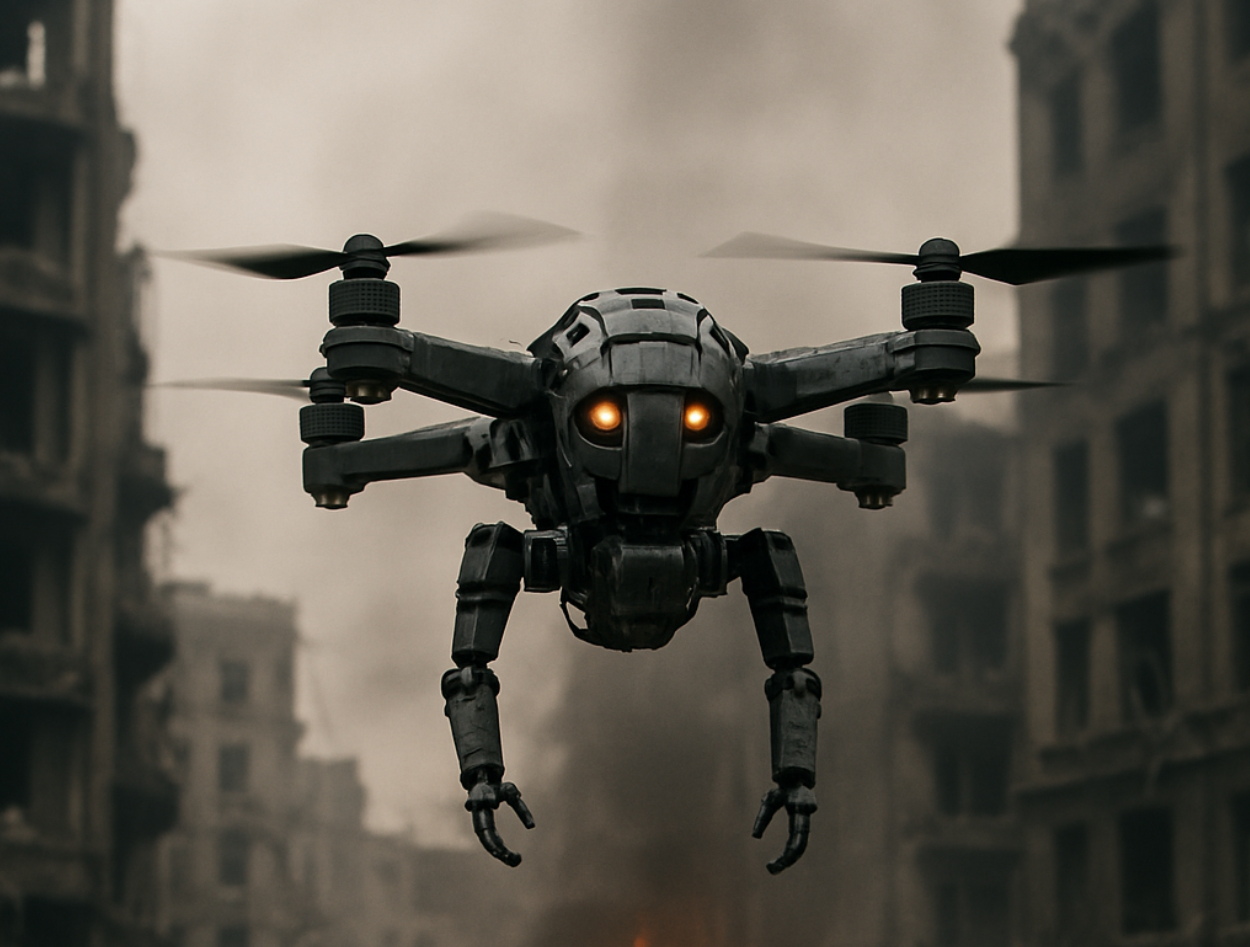
Ukraine is on the verge of a new phase of war. And if we do not act today, it may be too late tomorrow.
Public figure and military technology expert Maria Berlinska warns that starting in 2026, Ukrainian cities may be under the gun of autonomous drones that will search for live targets in real time. Aviation expert Kostyantyn Kryvolap supports the alarming signal, but criticizes the chaotic reaction of the authorities, the lack of air defense, and expensive but ineffective projects. Read more about the future of killer drones, an alternative, and an analysis of how not to be left “without pants” during the next wave of attacks in the article
Ukraine has only a few months to prepare for a new threat – the massive use of autonomous combat drones that not only deliver targeted strikes but also “hunt” people in real time. This was stated in a public post by Maria Berlinska, a public figure, head of the Aerial Reconnaissance Support Center and Victory Drones initiative.
“This is not fiction or a Hollywood horror movie script. This will be our reality in 2026,” warns Maria Berlinska.
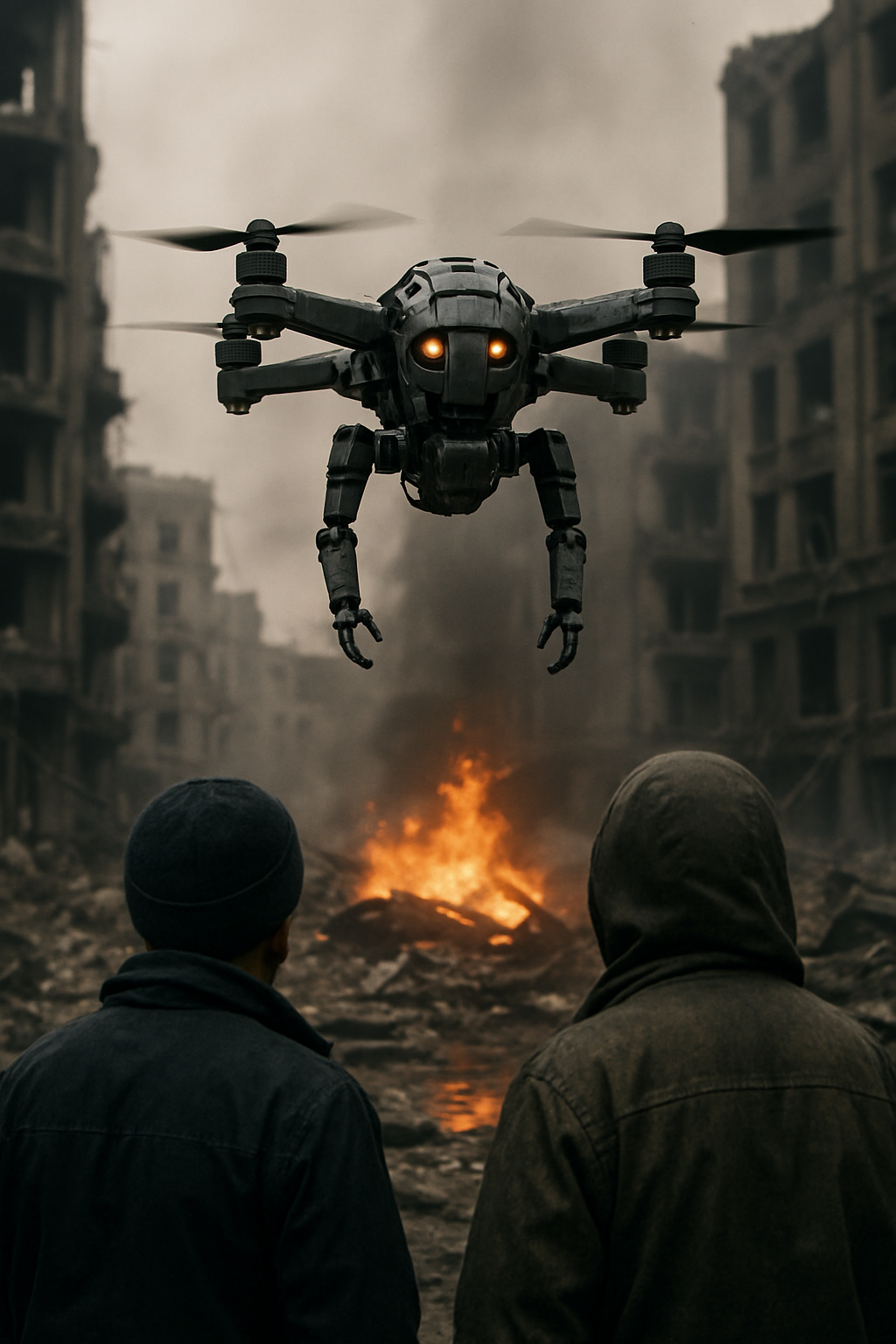
According to her, if now the most feared are the Shahed and missiles, soon there will be a much more dangerous threat – thousands of autonomous drones that will patrol the skies over Ukrainian cities in search of human targets. And it is not only about the frontline regions, but also about Lviv, Chernivtsi, and Kyiv, where it is currently considered conditionally safe.
Berlinska warns that Russian technologies are developing rapidly, and drones controlled by fiber optics have already been spotted in Kherson and Kostiantynivka. The next stage is partial or full autonomy. Consequently, traditional methods of defense will no longer work effectively.
Countermeasures exist, but we need to act immediately
According to the expert, to counter the new threat, it is necessary to urgently develop and test automatic turrets, anti-aircraft drones, electromagnetic and laser weapons, nets, and create an infrastructure for protecting cities.
“We have six months until 2026. If we don’t start now, it will be too late,” she emphasizes.

Aviation expert Kryvolap on threats from the sky and panic
In a commentary for
“These scenarios about ‘killer drones hovering over cities’ may sound extreme. But they are exactly what we need to prepare for. Not to react, but to anticipate,” says Kryvolap.
Commenting on Maria Berlinska’s statements about massive attacks by autonomous drones as early as 2026, the expert is ironic:
“She always wants to be a few steps ahead. A kind of a mixture of Joan of Arc and Wang in military optics,” added Kryvolap.
However, according to him, the problem is different: the real threats were obvious six months ago. But instead of implementing cheap solutions, such as balloons with repeaters, the defense system is being bloated with expensive and inefficient procurement.
We need to fly like the Shahed, not like the F-16
According to Kryvolap, the main mistake is trying to shoot down slow Shaheds with high-speed fighters:
“The F-16 cannot keep up with the Shahed. By the time you slow down, level the course, and fire, it’s too late. And a $100,000 missile to shoot down a $20,000 drone is like taking off your pants and walking around without them,” Kryvolap said.
The solution is light aircraft, interceptor drones or the latest inexpensive heat-seeking missiles. However, it turns out that even the technologies that have already worked near Kursk, such as tethered balloons, are not scalable in Ukraine.
“I ask the guys: why don’t you tether the radar? They answer: “Who will give it to us?”,” says Kryvolap.
The expert does not hold back his criticism of the choice of aircraft. According to him, for some reason, the state is not focused on simple solutions, but on the purchase of exotic and extremely expensive aircraft, such as Argentine Tucans and SuperTucans, which cost from $5 to $15 million per unit.
“These planes are good, but this is not about air defense. It’s about business trips to Argentina, meetings in Europe, logistics plans, and setting up service centers. There is work, but there is zero efficiency,” says Kryvolap.
The Slovak-Czech “Shark” is also questionable. “Yura Yakovlev, our world champion in aerobatics, says that the Shark is not good in operation.
Kryvolap is convinced that the most effective means of fighting the Shahed can be light aircraft – simple sports or ultralight aircraft whose speed is the same as that of kamikaze drones (about 200-250 km/h).
“When the airplane and the Shahed have approximately the same speed, the pilot calmly flies up from the side and destroys it with small arms. Simple and cheap,” says Kryvolap.
Russia has adapted its Shaheeds to electronic warfare: the drones have 12-16 GPS-protected antennas, powerful processors, and map orientation. “Previously, we used to launch Shakhtys in a circle and make them fall. Now, this will no longer be the case, the aviation expert says.