Six months before the meeting with putin: is there a date for the end of the war in Ukraine behind Trump’s statements?
8 January 2025 20:36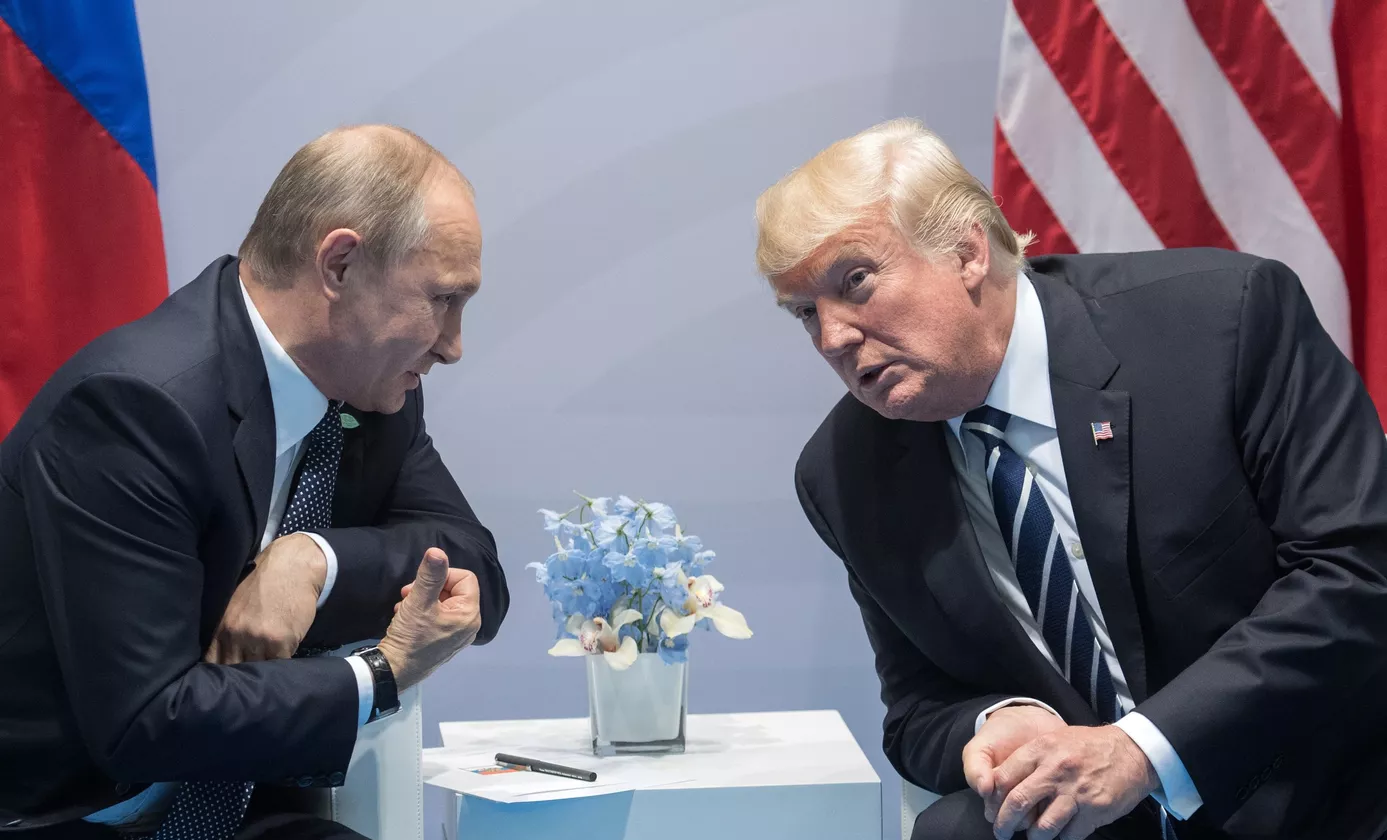 ANALYSIS FROM
US President-elect Donald Trump’s statement about “six months” during a press conference in Florida sparked lively discussions in the Ukrainian and international media. However, did this phrase refer to the war in Ukraine and what should we pay special attention to?
The press conference, which took place at Trump’s Mar-a-Lago residence, was supposed to focus on investments in data centers in the United States. However, as is often the case, Trump touched on a much wider range of topics, from the environment to foreign policy.
The phrase “six months,” which has become the subject of speculation, was uttered in response to a journalist’s clarifying question about a possible meeting with Russian President Putin. Trump replied that he hoped to have six months or even “much sooner than six months” to resolve the issue.
There was no direct reference to a deadline for ending the war in Ukraine in his words. The context suggests that he was referring to the possibility of negotiations with Putin, not to the cessation of hostilities.
Reaction of diplomats
Former Ukrainian Ambassador to the United States Valeriy Chaly emphasized that Trump’s words were misinterpreted.
“The journalist’s question concerned the meeting with Putin, not the end of the war. The mention of six months refers to a period for possible negotiations, not a specific plan or promise to end the war,” Valeriy Chaly said
Leonid Yemets, a member of the Kyiv City Council and MP of previous convocations, also commented on Trump’s statements.
“There are two pieces of news: first, Trump did not say anything about ending the war in six months, only about a possible meeting with Putin. Secondly, he was very specific about Ukraine’s prospects in NATO – in his opinion, there are none. This is the result of many reasons: corruption, political oppression, and weak diplomacy. We did not do enough to convince the Biden administration to support our accession,” Leonid Yemets
Six months is a benchmark
Ivan Stupak, military expert, in an exclusive commentary for
“This is an approximate timeframe that should not be clung to. My internal expectation is that we can start the first preparatory steps for peace talks no earlier than March,” said Ivan Stupak.
The expert emphasizes that even if the negotiations do start, they will be only the first, cautious steps.
“I call them baby steps – very cautious, small ones. These are defining the framework of negotiations, writing down the requirements of the parties, forming delegations and choosing a venue. These processes always take time,” Ivan Stupak
The expert emphasizes that the possibility of peaceful negotiations will largely depend on the positions of the parties and the willingness of the United States and Europe to put pressure on Russia:
“Trump’s words about “six months” are more of a marker. The deadline can be shifted either in the direction of acceleration or delay, depending on the dynamics of events at the front and political moods in the international arena,” summarized Ivan Stupak.
Ukraine’s membership in NATO: realities and political situation
During a press conference at his Mar-a-Lago estate, US President-elect Donald Trump made a number of statements about Ukraine’s membership in NATO that resonated in political circles. In particular, he said that he could “understand Russia’s feelings” about Ukraine’s possible accession to NATO, blaming the Joe Biden administration for the escalation of the conflict.
Speaking about the causes of the war, Trump noted that the idea of Ukraine’s membership in the Alliance has been one of Russia’s “significant problems” for many years.
“And somewhere along the way, Biden said, ‘No, they should be able to join NATO. Well, then Russia has someone on their doorstep. And I can understand how they feel about that,” Trump said.
Trump claims that the Biden administration has violated an alleged agreement on Ukraine’s refusal to join NATO. According to him, the agreement could have satisfied all parties, but the change of course of the Biden administration was a key factor that influenced further developments.
“They had a deal that would have satisfied Ukraine and everybody else, but Biden said, ‘No, you should be able to join NATO,'” Trump added.
Military expert Ivan Stupak commented on Ukraine’s prospects for joining NATO, emphasizing the political obstacles.
“We understand that Ukraine’s membership in the Alliance is not yet on the table because of the political situation. Seven countries are categorically against it, which is about 30% of all NATO members. Among them are the United States, Germany, Belgium, Slovakia, Slovenia, Hungary and Turkey,” said Ivan Stupak.
According to the expert, under the current circumstances, Ukraine’s prospects of becoming a NATO member look illusory:
“Unfortunately, we can now put an end to our efforts to become a member of the Alliance. Russia, in turn, demands that Ukraine be permanently excluded from this process – perhaps for life,” Ivan Stupak
Trump’s statements about the likelihood of negotiations and difficulties with Ukraine’s accession to NATO reflect the current political situation, which remains extremely uncertain.
Political context
It is worth noting that this is not the first time that Trump has demonstrated ambivalence in his statements regarding Ukraine and Russia. Statements about the importance of dialog with Putin have been made in his campaigns before. At the same time, Trump has criticized the Biden administration for its lack of effectiveness in resolving global conflicts.
Only time will tell whether Trump’s words hide a date for the end of the war. For now, however, experts advise caution in interpreting any of his statements without full context.
Author – Anastasia Fedor