Stamp, stain or inscription: which dollars Ukrainians can no longer exchange
20 October 2025 14:42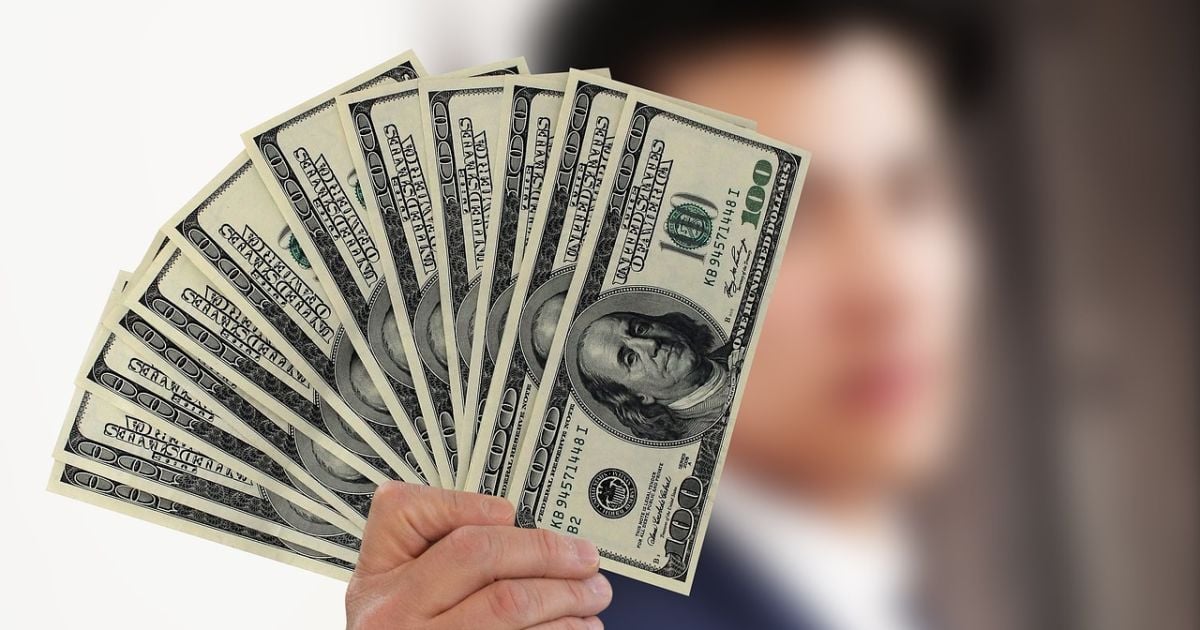 ANALYSIS FROM
Ukrainians are increasingly faced with the problem of what to do with damaged banknotes, especially foreign currency. In recent years, the number of “defective” dollars among the population has increased, and banks no longer want to accept some bills without a fee. What to do in such a situation – found out
In 2023, Ukrainians handed over approximately $11 million in defective banknotes, which is 36% more than in 2022 ($8.3 million) and 59% more than in 2021 ($6.9 million).
This amount includes both worn and damaged banknotes that were exchanged in accordance with the established procedure.
Neither the NBU nor the National Bank has data for 2024 and 2025, but we can safely assume that the amount is no less than in 2023.
There are several reasons for this: first, Ukrainians returning from abroad often bring banknotes that exchange offices or banks refuse to accept simply because they are old, worn out, or have stamps or inscriptions.
Secondly, some citizens take out a “rainy day stash” – money that has been stored for a long time without attention to its appearance.
In addition, after shelling, fires, etc., the money often gets damaged – it gets wet, burns, deforms, etc.,” says
“According to the current legislation, financial institutions are obliged to accept all dollar bills issued after 1914 if they do not show signs of significant wear or serious damage. But at the same time, many banks and non-bank institutions set their own rules,” the financier notes.
At one time, there was a wave of exchanges of old banknotes for new ones.
The reason was that banknotes issued in 1996, 2003, and 2006 were suddenly classified as “old” and were rumored to be about to be withdrawn from circulation. People rushed to exchange offices to exchange them for “fresh” ones. The exchangers and banks were not at a loss and began to demand a fee for the exchange. Also, when accepting such bills, the hryvnia exchange rate was depreciated, effectively ripping off naive people.
“The rush to exchange ‘old’ for ‘new’ banknotes began in 2023, and the NBU barely managed to calm the situation by conducting explanatory work with exchangers and the public.
Today, they hardly ever refuse to accept dollars issued in 1996,” says the financier.
Banknotes with stamps: to take or not to take – it’s up to the cashier
Now a new fear has emerged: Ukrainians have begun to be wary of keeping banknotes with stamps.
They started checking their stashes again, looking for such banknotes and trying to get rid of them.
People are afraid that they will not be accepted.
However, the NBU has clearly explained that the presence of stamps, seals or inscriptions is NOT a reason to refuse to exchange them if the area of such markings does not exceed 200 square meters.
“The NBU’s letter No. 50-0006/14998 states that Ukrainian banks should not refuse to accept currency that meets certain characteristics. For example, it has greasy spots, inscriptions, stamps (except for the “non-payment” stamp), if their area does not exceed 200 square meters or 20%. But there is a nuance: the decision to exchange is made by the cashier, i.e. it is he who assesses the degree of damage. Accordingly, each cashier can interpret this in their own way. And it is useless to argue,” says
That’s because cashiers act on the instructions of managers who benefit from perfect banknotes, because they are put back into circulation. Stamps, inscriptions, and stains spoil the appearance and make banknotes illiquid.
“The cashier may agree to accept a bill, but at a lower rate or with a commission – as damaged or old. It all depends on who you come across. There are those who are specifically looking for a cheaper bill, and the difference goes into the cashier’s pocket. Alternatively, you can go to another location where the bill will be accepted without any problems. You shouldn’t panic if the stamp is small,” advises Olena Slobodian.
In fact, if you have banknotes with stamps, you can leave them for traveling abroad.
They will be accepted in any country without any problems, just like the old-style banknotes.
Do not try to remove the stamps yourself with chemicals – if you use them carelessly, you can permanently damage the bill. In this case, there is only one option left – to hand it over for collection with a considerable commission and a long wait.
Five main rules of currency exchange from the NBU:
1️.All foreign currency banknotes whose authenticity is confirmed by counters and detectors must be accepted for exchange without exception.
2️.Banks and non-banking institutions are FORBIDDEN to refuse to exchange currency that meets the design and security features approved by foreign central banks and whose authenticity is confirmed by equipment.
3️.It is FORBIDDEN to impose restrictions on the denomination or year of issue if the currency is legal tender in the respective country.
4️.Banknotes with signs of significant wear and tear are subject to collection. Institutions that carry out such operations are obliged to place in an accessible place a list of signs of wear and tear and collection rates.
5️.In case of refusal to exchange currency that meets all the requirements, the consumer has the right to file a complaint with the NBU.
Author: Alla Dunina