Faster isn’t always better: how “financial visa-free travel” will simplify money transfers from Ukraine to Europe and strengthen financial monitoring
10 April 16:37 ANALYSIS FROM
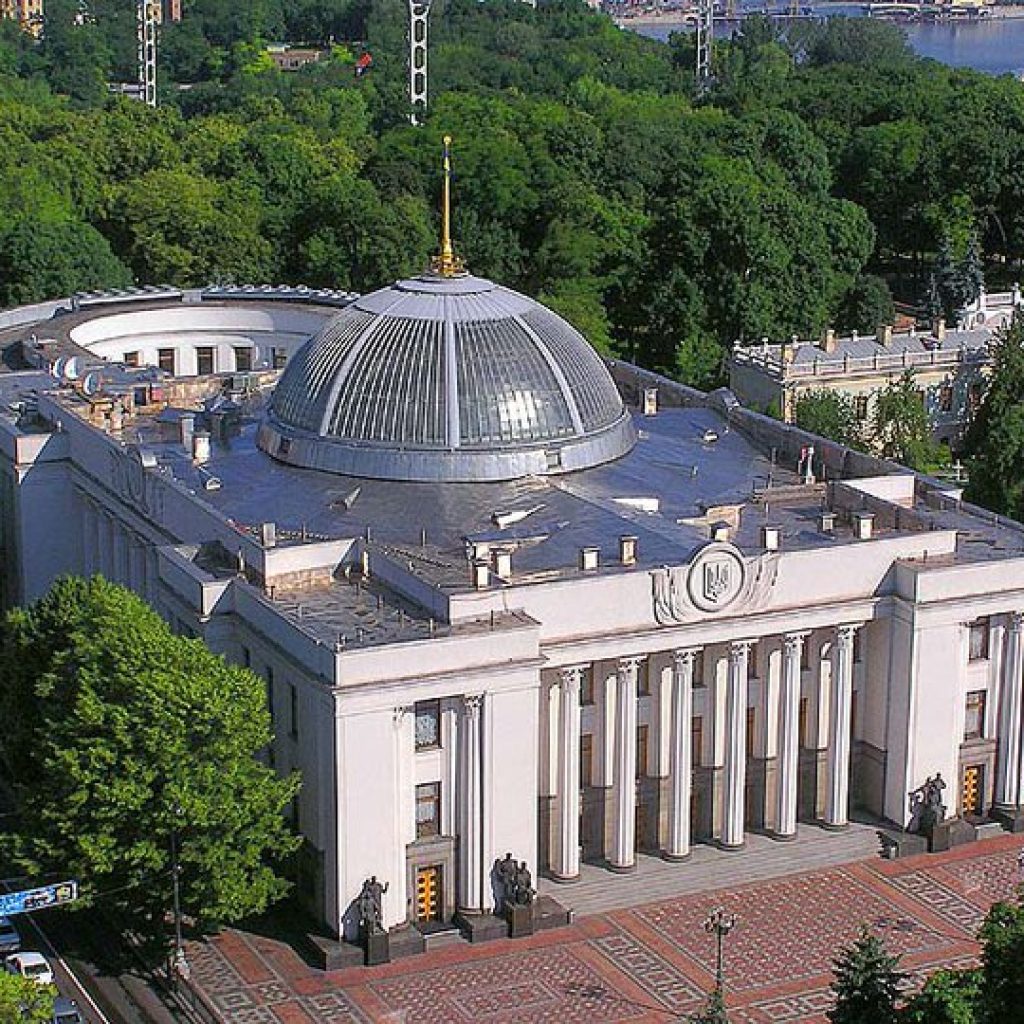
Thanks to the efforts of members of parliament, Ukraine is on the verge of beginning the process of integration into the European financial space and the regulatory implementation of the so-called “financial visa-free regime.” "Komersant Ukrainian" investigated what Ukrainian businesses and citizens should prepare for.
A corresponding bill, which is already ready for consideration in the plenary hall, aims to bring Ukraine closer to the Single Euro Payments Area (SEPA). In fact, not long ago, there were two bills on this topic in parliament—one from the government and one alternative. The relevant parliamentary committee has prepared a third—revised—draft, numbered 14327-d, in which everything that raised questions among committee members has been detailed, clarified, improved, and balanced. How successfully they have done this is for their colleagues in the plenary hall to assess. It should also be noted that this document is one of four European integration bills, the adoption of which is expected to unlock $3.35 billion in funding from the World Bank. But this is not just about those funds.
Faster and cheaper
SEPA (Single Euro Payments Area) is a unified euro payments area, the benefits of which are already enjoyed by over 500 million people and businesses in 42 European countries. So far, international transfers in euros from Ukraine are mostly carried out via the SWIFT system. Joining the Single Euro Payments Area, however, is expected to speed up and reduce the cost of such transfers. They will be standardized and carried out according to uniform rules for all SEPA member countries. This, in fact, is what gives grounds to speak of “financial visa-free travel.”
According to calculations by the Ministry of Finance, joining SEPA will allow Ukraine to save 70–100 million euros annually on international transfers. For the 120,000 Ukrainian small and medium-sized enterprises that regularly export to the EU, the annual savings will amount to about 4,000 euros per company.
Economist Boris Kushniruk agrees that joining SEPA will make payments from Ukraine to eurozone countries faster and cheaper. But he advises against overestimating the significance of this for the general public.
“Ordinary citizens don’t make such payments very often. If they want to buy something abroad, they do so through the same marketplaces. But businesses will truly feel the benefits: faster settlements and better control over processes. Because if payments are currently made through standard procedures, they can be delayed at the level of banks and correspondent banks. So from this perspective, it’s undoubtedly beneficial. Plus, fees there may be lower, meaning businesses will effectively pay less. And considering that the share of our transactions in euros is growing and Europe is becoming our main trading partner, this can definitely be seen as a positive,” the expert emphasizes.
At the same time, Boris Kushniruk himself believes that faster isn’t always better. Especially when it comes to bank payments.
“There’s a banking term: ‘money should stay overnight.’ And I’m a proponent of this approach. It means that any payment received today cannot be sent out from the bank today. For us, it’s perfectly normal now to move money between several accounts throughout the day. But in Europe, this isn’t the norm. Moreover, in Ukraine, this isn’t a very good practice, as it creates opportunities for fraud, much of which relies on the fact that money sent today will be withdrawn from the bank where it arrived on the same day. In other words, there’s virtually no chance to reconsider and stop the process. “If the money ‘sits overnight,’ then at least until the morning of the next day, people will have the opportunity to stop the payment by calling the bank,” the expert notes.
According to him, both banks and citizens would benefit from this.
More control, but is it for everyone?
Ukraine’s accession to the Single Euro Payments Area is not only about the benefits of cheaper and faster transfers, but also about additional European requirements, particularly in the area of financial monitoring. Hence the concerns about a possible tightening of control over citizens, as well as doubts regarding the protection of banking secrecy. The basis for such concerns and doubts is, for example, the creation of a Register of Accounts and Individual Bank Safes for Individuals, as stated in the draft law. The National Bank and the Ministry of Finance are reassuring:
“The creation of a Register of Accounts and Individual Bank Safes for Individuals, to be administered by the Ministry of Finance, will contain only the IBAN, the account holder’s full name, and the bank’s name. Account balances, transaction history, safe contents, or the date of opening/closing are not included!” the Ministry of Finance emphasizes.
The National Bank, meanwhile, assures that the preservation of banking secrecy is an important and necessary condition for ensuring customer trust in the banking sector and assures that the creation of the Register of Accounts and Individual Bank Safes does not change this, since the information will retain its confidential status and will be protected accordingly.
Economist Boris Kushniruk considers fears that the creation of the aforementioned registry could threaten banking secrecy to be exaggerated.
“When there is an individual account—what we call an IBAN—it still identifies the user. It indicates who is served by which bank, meaning it provides fairly comprehensive information that the National Bank itself can see. It doesn’t need to see all the transactions you make, where you pay, or what you pay for. That is not visible. And the fact that, say, a register of accounts will function—formally, this already exists. For example, according to tax legislation requirements, information about opening any account at any bank—whether a deposit account or for current transactions—is automatically transmitted to the tax authorities. It is important that information about transactions on these accounts—what you are paying for, whom you are paying—not be disclosed. This is precisely what is protected by bank secrecy,” the expert notes.
However, questions remain regarding who will receive information from the Register of Accounts and Individual Bank Safes of Individuals, and exactly how it will be provided. The Ministry of Finance explains that only authorized state bodies will have access to the registry: the State Financial Monitoring Service, ARMA, the National Agency for Corruption Prevention (NAZK), the Prosecutor’s Office of Ukraine, the National Anti-Corruption Bureau (NABU), the Bureau of Economic Security (BEB), the State Bureau of Investigation (DBR), the National Police of Ukraine, and the Security Service of Ukraine (SBU). Article 37 of the draft law states that information from the Register will be provided “through special access in the form of direct, including automated, access and/or electronic data exchange between electronic registers.” In other words, it can be concluded that this will occur without prior approval of requests.
Yana Okhrimenko, a senior economist at the Center for Economic Strategy, in an article for “European Truth,” comparing Ukrainian proposals with European practice, emphasizes that in the EU, such registries typically operate through a system of requests and external oversight. She cites the example of Poland, where law enforcement officials gain access to financial information only upon a written and substantiated request from the head of the relevant agency, and each such request is recorded in a special registry of requests, the data from which is directly provided for review to the head of the Office for Personal Data Protection. In Ukraine, however, according to Yana Okhrimenko, a stricter model is being proposed.
“Compared to Poland, Ukraine does indeed plan to introduce a stricter control model, as evidenced by automated access to the Registry rather than a substantiated request, the absence of an independent audit of requests, and a fairly broad range of potential users with direct access. Even for API access, it is possible to implement differentiated access levels for various agencies and a requirement to specify the specific proceeding and the basis for the request, with automatic recording of the purpose and a prohibition on secondary use without separate approval. “Additionally, an independent registry of requests could be established (with mandatory fields: agency, official, case number, basis, scope of data) and made available for regular audit by an authorized body,” the expert notes.
It is no surprise that the provision regarding special access by competent state bodies to information in the registries became the subject of a separate discussion at the meeting of the relevant committee, as did the issue of the bill’s effective date. The exchange of views resulted in the inclusion of a compromise provision in the revised committee draft. It provides for the provisions regarding access to the specified information to take effect six months prior to Ukraine’s accession to the European Union.
Author: Serhiy Vasylovych