The restoration service explained the dismantling of ADZ on the roads of Kharkiv region
16 February 19:39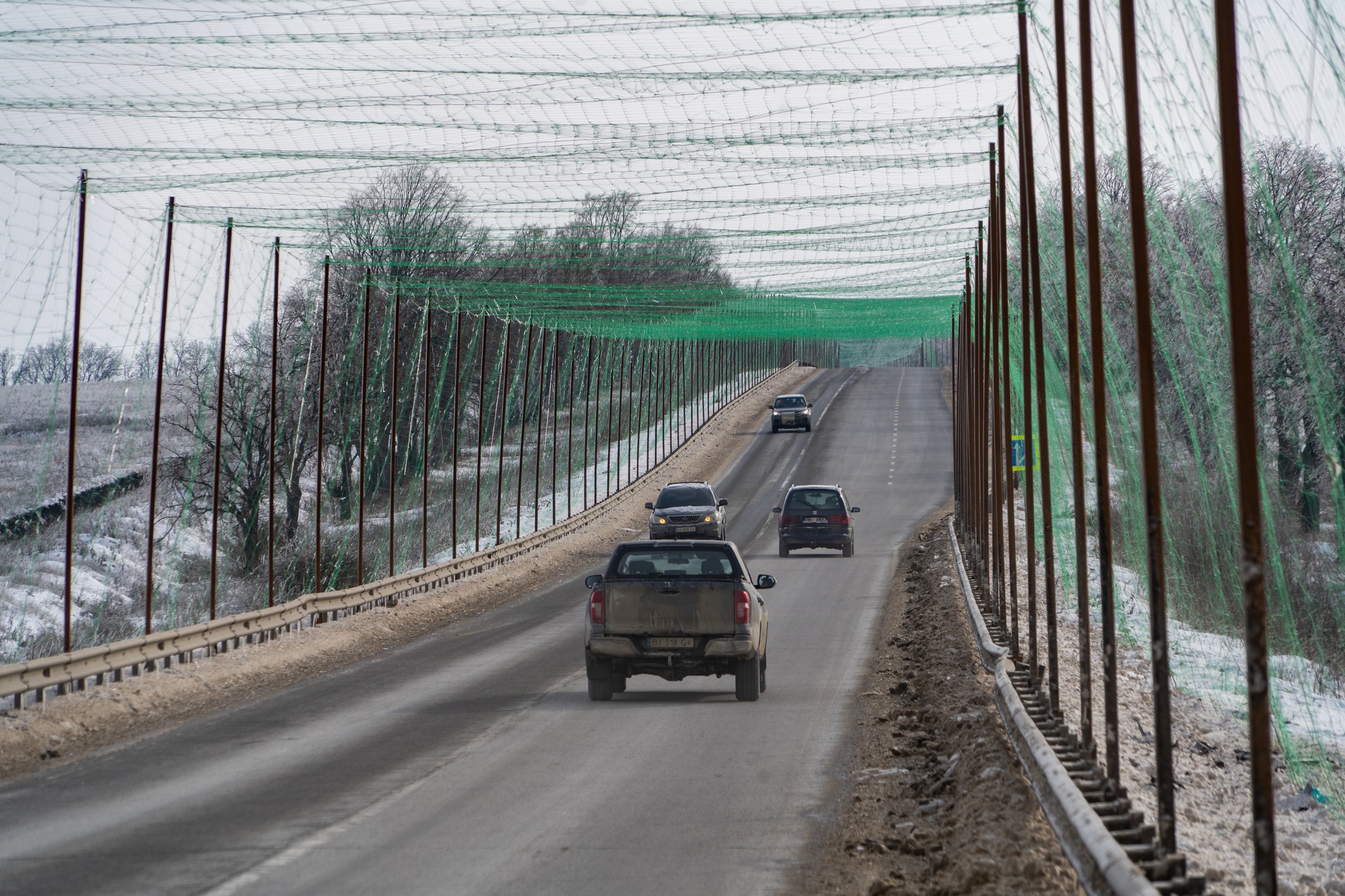
In the Kharkiv region, part of the anti-drone protective structures on highways were dismantled after they were damaged during a period of abnormal ice precipitation.
This was reported by the Infrastructure Restoration and Development Service in the Kharkiv region, according to "Komersant Ukrainian".
According to the agency, at the end of January and beginning of February, the region was hit by powerful cyclones that brought freezing rain and sharp temperature changes. As a result, ice accumulated intensively on the protective nets and metal struts, causing them to sag.
What went wrong with the structures
- the thickness of the ice on the nets reached 2.3 cm;
- the passage width in some areas decreased to 4.4–4.5 m;
- the additional load on each section exceeded 500 kg.
The Restoration Service notes that the structures themselves withstood the load, but problems arose due to the movement of oversized vehicles.
The role of oversized vehicles
During freezing rain, some large vehicles:
- moved under anti-drone nets;
- caught on them with protruding elements;
- damaged the nets and metal tensioners.
According to the service, this led to the nets breaking and, in some cases, to critical deformations of the metal supports, which can no longer be repaired.
Why they decided to dismantle
To:
- prevent further destruction of anti-drone protection;
- ensure unhindered passage of equipment, a decision was made to partially dismantle the structures by cutting the nets and metal tension rods in the places where they sagged the most.
The agency emphasizes that this allowed them to preserve other elements of the anti-drone protection that could have suffered much more serious damage.
What will be done next
- Together with contractors, they’ve already taken steps to strengthen the structures.
- Reviewing decisions regarding the stability of the ADZ in extreme weather conditions.
- All cases of damage will be recorded for further full compensation.
Drivers are also urged to:
- to comply with traffic rules;
- avoid driving under anti-drone structures during difficult weather conditions;
- use alternative routes.
Anti-drone nets and tunnels are currently being installed en masse in frontline regions to protect civilian and military transport from FPV drone attacks. Earlier it was reported that
- the identification of the most critical areas for the priority installation of anti-drone structures;
- construction of the first anti-drone tunnel in the Zaporizhzhia region;
- large-scale plans to install such structures in the Kherson region.