Today is Makovia and the beginning of the Dormition Fast: traditions and prohibitions
1 August 2024 09:15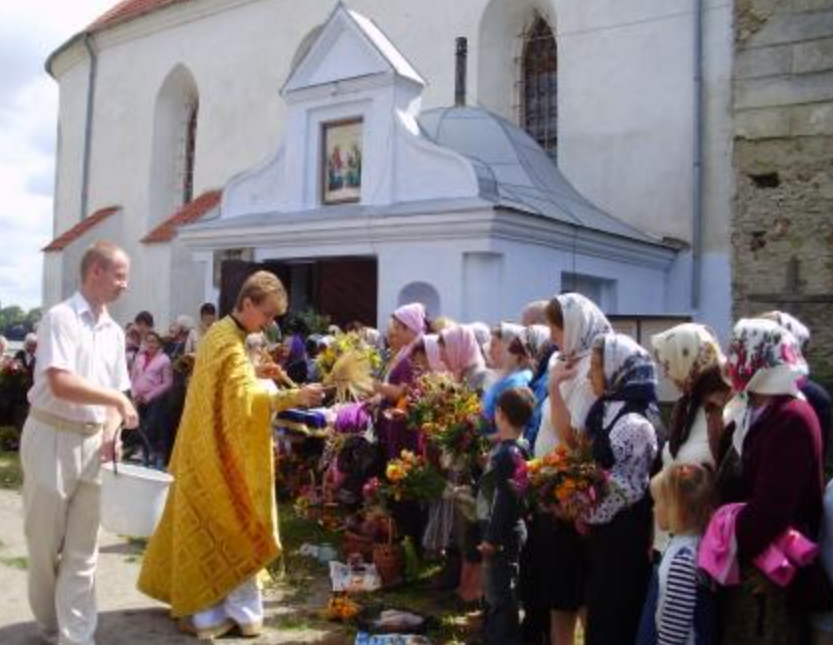
on 1 August, according to the new church calendar, Orthodox believers celebrate a great holiday – the bringing out of the holy branches of the Life-Giving Cross of the Lord, which is also called the Honey Savior or Makovia. This day also marks the beginning of the Dormition Fast, "Komersant Ukrainian" reports
In September last year, the Orthodox Church of Ukraine (OCU) and the Ukrainian Greek Catholic Church (UGCC) switched to the New Julian calendar, so Makoviya or Honey Savior in 2024 is celebrated on 1 August.
The feast of Makoviy or Honey Savior

This is the first of three summer holidays in honour of the Saviour.
The Honey or Poppy Saviour got its name for a reason – in the old days, people used to start collecting poppies and honey on this date.
In the Christian tradition, the name of the holiday is associated with the seven martyrs of the Macabees, their mother Solomon and teacher Eleazar, who died for their faith in the Lord.
The second name of the feast is “The Origin of the Honourable Branches of the Life-Giving Cross of the Lord”. The legend says that in ancient times the world was overcome by a terrible epidemic, and the only cure for it was the energy emanating from a part of the cross on which Jesus was crucified. Hence the word “Spas” – salvation.
What is sanctified on Makoviy

On this day, believers bring a jar of newly harvested honey, poppy seeds, and water to church. It is believed that the consecrated honey should be left in the church as an alms. Some housewives also prepare various delicacies from honey and poppy seeds, which are then blessed in the church.
It is believed that water blessed on the Honey Savior has healing properties. In this regard, small water blessings are held in churches. According to believers, in order to protect themselves from disease, after the blessing of festive foods, one should eat a spoonful of honey and drink three sips of blessed water.
Also on Makovii, amulet bouquets are blessed, which are popularly called “makoviychyk”. Such bouquets must include large ripe poppy heads, which are usually complemented by wild herbs and various flowers. In total, such a bouquet should contain 17 herbs and flowers, namely:
- mint
- wormwood
- oats or wheat, rye;
- oregano
- st. John’s wort
- immortelle;
- marigolds
- cornflowers
- sunflower;
- rue
- sweet clover
- gentian
- lovage;
- thistle
- yarrow
- witch hazel
- chicory and others.
However, it is important to remember that it is strictly forbidden to throw away blessed “poppy flowers” as they serve as a home amulet. They should be kept near icons at least until spring. Our ancestors believed in the magical power of such bouquets and often sprinkled them on their homes to ward off evil spirits, and blessed poppy heads were placed under children’s pillows to ensure a restful sleep.
There are certain restrictions and prohibitions on Honey Savior:
- First of all, it is not recommended to work, except for beekeepers who collect honey on this day. Our ancestors considered this day a holiday and spent it with their families, visiting each other and treating each other to delicious dishes.
- It isforbidden to do any work in the garden, on the plot of land or at home, including digging, building, sewing, washing and cleaning. All necessary tasks are done the day before. However, on this day, it is customary to bake lean products with honey and poppy seeds, so you can still cook on this day.
- No noisyfeasts should be held, as they are not approved by the church on major church holidays, so the celebration should be quiet and family-friendly. In addition, noisy entertainment can disturb bees, which cannot stand loud noises and can become aggressive.
- You should also refrain from quarreling and swearing, so as not to bring negative and unhappy things to yourself and your family.
Assumption Lent: what are the prohibitions?

The Assumption Lent begins on Makoviy and ends on 14 August, the feast of the Assumption of the Blessed Virgin Mary.
The Assumption Lent, which lasts for two weeks, is considered to be as strict as Lent.
People say that the Blessed Virgin, preparing for eternal life, fasted and prayed a lot to purify her soul and body. Therefore, we too should fast to become closer to the mother of Jesus. It is believed that it is on this day that women are forgiven for all their sinful deeds.
During the Dormition Fast, you cannot have fun, organise noisy festivities, swear, gossip and condemn. Weddings are also not allowed during this time, but you can register a marriage.
In addition, you need to observe a fast in food. During the fast, you cannot eat meat, eggs, or dairy products. It is allowed to eat fish only on one day – the Feast of the Transfiguration of the Lord (6 August).
During the Assumption Fast, the strictest days are Monday, Wednesday and Friday. On these days, it is allowed to eat raw vegetables and fruits, nuts, dried fruits, honey, bread, salt, honey and wash them down with water.
On Tuesday and Thursday, you can eat hot dishes, but they must be cooked without oil. Hot dishes with oil are allowed on Saturday and Sunday. You can also drink wine on these days.
During this period, you should devote more time to prayer, attend church, confess and receive the Holy Communion. During the Dormition Fast, it is also customary to make religious processions to water bodies and bless wells. After the blessing, people usually bathe in the water – it is believed that a person will become healthier.
During the fast, you should always do good deeds and help those in need.