Solar flares and magnetic storms: forecast for February 6–7
6 February 11:56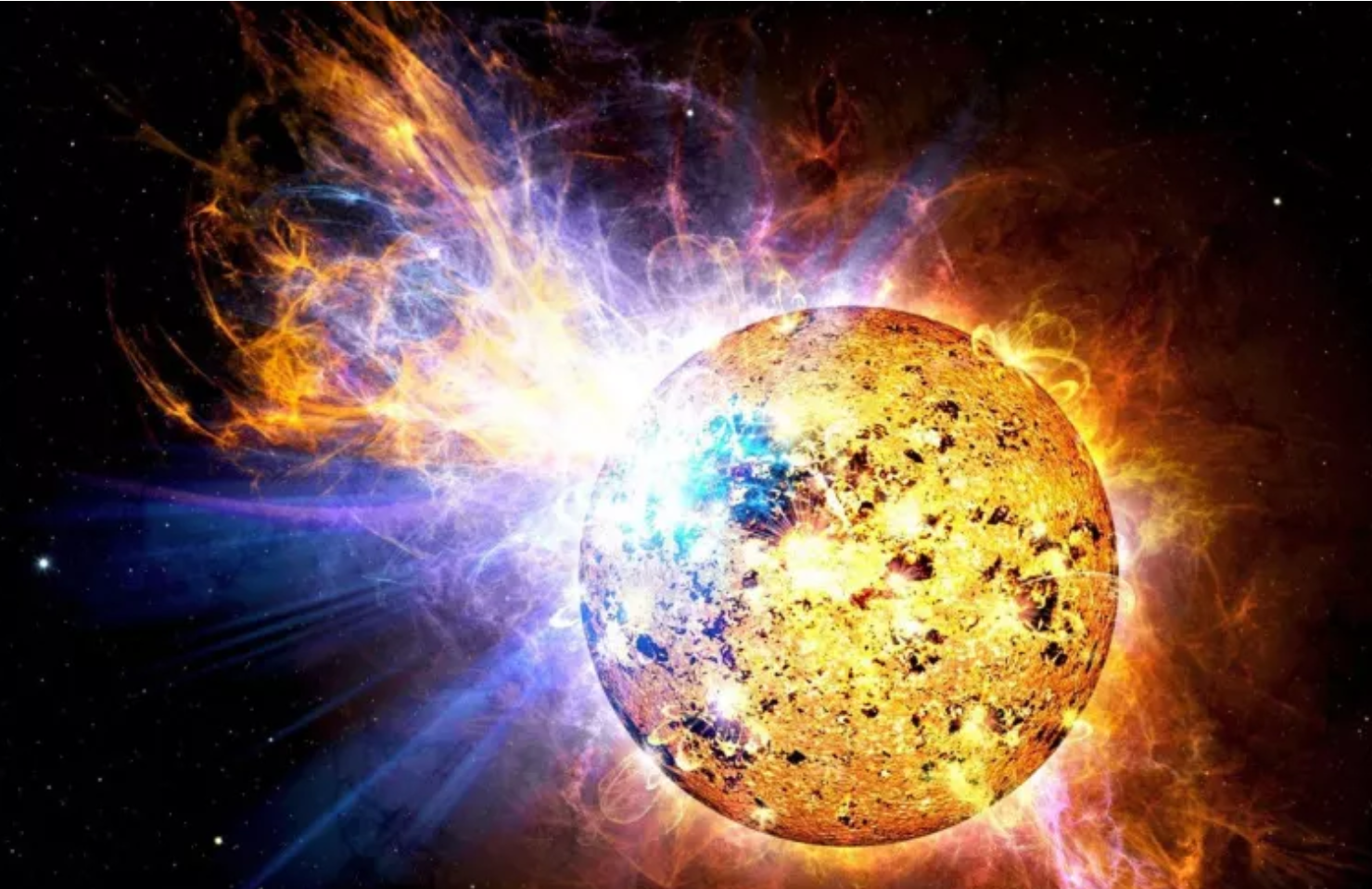
On Friday, February 6, a powerful magnetic storm caused by increased solar activity continues on Earth. Although the overall intensity of processes on the Sun is gradually decreasing, their impact is still noticeable on our planet’s magnetic field and people’s well-being. This is evidenced by data from the British Geological Survey, according to "Komersant Ukrainian".
What is the level of the magnetic storm?
According to experts’ forecasts, on February 6, magnetic activity will reach a K-index of 6, which corresponds to a red danger level. This means a moderately strong magnetic storm capable of affecting both the operation of technical systems and the health of weather-sensitive people.
Experts explain that the increased speed of the solar wind is associated with the prolonged influence of a coronal mass ejection (CME), as well as the possible arrival of a high-speed stream from a coronal hole. Short-term G1 disturbances are possible during the day, after which the Earth’s magnetic field should gradually stabilize.
Giant sunspot and flares
At the same time, the US National Oceanic and Atmospheric Administration warns that solar activity will remain elevated until at least Saturday, February 7.
The reason for this is the appearance of a large and unstable active region on the Sun — spot No. 4366. A few days ago, it did not exist, but it has grown rapidly and now reaches about half the size of the famous Carrington spot.
Due to its gigantic size, this area is extremely unstable. In just 24 hours, it caused 27 solar flares:
- 23 M-class flares;
- 4 of the most powerful class X flares.
The flares were accompanied by several coronal mass ejections. Although none of them were directed directly at Earth, scientists predict shock waves capable of causing G1–G2 magnetic storms throughout February 6.
How a magnetic storm can affect your well-being
During K5–K6 storms, people often complain of:
- headaches and dizziness;
- fluctuations in blood pressure;
- fatigue, drowsiness, or insomnia;
- irritability and decreased concentration.
People with cardiovascular diseases, chronic illnesses, and weather sensitivity are the most susceptible.
Doctors’ advice: how to get through a magnetic storm more easily
Experts advise following simple but effective recommendations:
- sleep 7–8 hours and avoid fatigue;
- reduce physical and emotional stress;
- refrain from fatty foods, coffee, and alcohol;
- drink more water or herbal teas;
- Spend more time outdoors.
- keep your prescribed medication handy.
According to forecasts, after the active phase of the solar wind ends, the Earth’s magnetic field will gradually return to a calm state.
Read us on Telegram: important topics – without censorship