Simplification or chaos: why the abolition of certificates of completion could hit businesses hard
26 February 19:46
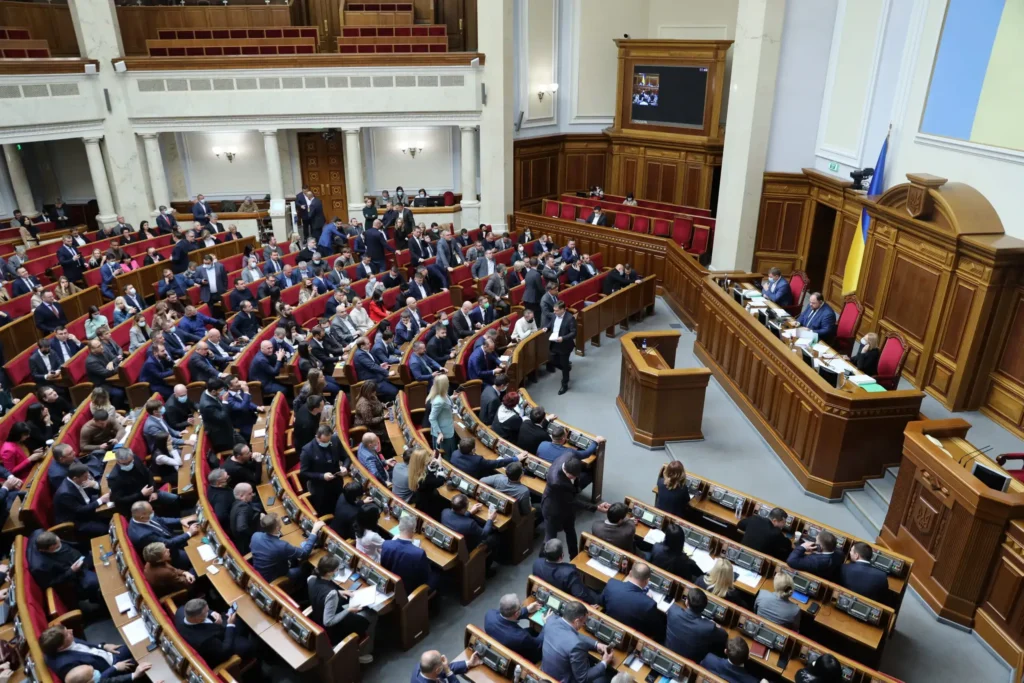
Ukrainians have long been accustomed to purchasing goods and services in just a few clicks: order, pay, receive. It would seem, why can’t businesses operate according to the same simple scheme? This is precisely what the people’s deputies decided to rectify by passing a law that abolishes the requirement for companies to sign certificates of completion (AVR). The authors of the initiative promise businesses savings of up to UAH 20 billion per year and harmonization with European standards. But is everything so rosy in practice? [Komersant] investigated.
European vector or post-Soviet legacy?
The main argument of the law’s supporters is that it is in line with international practice. In most countries around the world and in the EU, certificates of services rendered are not used. Companies issue invoices and monitor performance through internal procedures. They call our mandatory certification of work completion a post-Soviet relic, where form prevails over substance.
After the President signs the law, entrepreneurs will be able to decide for themselves whether they need certificates. In cases where the parties decide to dispense with paperwork, the primary document for accounting and tax purposes will be the invoice signed by the contractor.
It would seem to be a long-awaited freedom. But, as is often the case, the details turned out to be tricky.
The flip side of the coin: “A great opportunity for fraudsters”
Lawyers are sounding the alarm. In their opinion, the abolition of mandatory documents opens Pandora’s box for unscrupulous market players.
“Imagine the situation. You have done the work, issued an invoice, and the customer refuses to pay, saying, ‘I did not receive any services. You did nothing.’ How can you prove that the services were provided without a signed certificate?” explains lawyer Olena Yanchuk.
A certificate of completion is not just a piece of paper. It is confirmation of the customer’s will that the service has been provided properly and without complaints. Without it, the only evidence is correspondence, testimony, or complex expert examinations. And this creates ideal conditions for abuse on both sides.
Even more worrying for experts is the potential for outright fraud.
“This is a great opportunity for fraudsters. The scheme is simple: we sign a contract, for example, for the supply of food products. We don’t deliver anything, but we file a claim that the work has been done but not paid for. We go to a private enforcement agent, and he immediately seizes the debtor’s accounts and property. A conscientious customer is faced with a choice: pay for a non-existent service or spend months in court proving that nothing happened,” emphasizes Olena Yanchuk.
Previously, it was the act of completed work that served as a “protective wall” that prevented this mechanism from being triggered without the consent of both parties. An agreement (to agree) does not mean to perform. It is impossible to foresee everything in the agreement because it is signed before the work is performed. And the Act is signed afterwards.
More questions than answers
Those who directly accompany the contractual work of enterprises react particularly sharply.
“As a lawyer who serves enterprises, I will not miss a single contract that does not provide for acts. Because stupid legislators think that this will save money somewhere. But no one thinks about what to do when the funds are paid and the work is not done,” says lawyer Oleg Petrovsky.
And this is not just emotion. There are still many unresolved technical issues:
- How to record hidden work in construction, where quality control at intermediate stages is critically important?
- What standards were used to perform the work if there is no confirmation of acceptance?
- How will warranty obligations be formalized? From what date will they be calculated if the fact of performance is not legally recorded anywhere?
The price of “simplification”
The authors of the law cite impressive figures: the preparation of one act costs UAH 200-300, the company spends about UAH 4,000 on this every month, and the total annual savings for the business should reach UAH 20 billion. In addition, they emphasize that previously up to 5% of a manager’s working time and up to 13% of an accountant’s time was spent on preparing AVRs.
But did lawmakers take other costs into account?
“Who calculated the cost of the legal disputes that will inevitably arise after the acts are repealed? Who will count the time spent by lawyers on these disputes? Who will compensate the losses of companies whose accounts will be blocked due to unfounded claims? And most importantly, now a random individual entrepreneur may not have to draw up an act, but will have to hire a lawyer to draw up contracts. Where are the savings?” asks the lawyer.
What next?
The law has already been passed and is awaiting the President’s signature. The only hope is for a veto or for businesses to quickly adapt and start specifying all possible risks in their contracts. But you have to agree that this is no “simplification.”
“Now the contractor won’t care, and no one will be held responsible for poor performance. It will be possible to steal, embezzle, not finish construction, and supply rotten goods. And it will be very, very difficult to prove this without an act,” concludes Oleg Petrovsky.
A unilateral document without acceptance by the customer increases compliance risk. Companies with mature internal control systems are more likely to leave the act or “acceptance” in another form. Until the practice of application (verification/courts/clarification) is established, most accountants will choose the conservative path: the act additional evidence.
“A certificate of completion is not just accounting. It is evidence of acceptance in commercial disputes: quality, volume, deadlines, grounds for payment/penalties. Many companies will not give up this “shield.” No law will ever be written perfectly. Much more important is the interpretation and application of legislative norms,” says former Deputy Minister of Finance of Ukraine Olena Makeyeva.
It seems that the declared savings on paper may turn into colossal losses for Ukrainian businesses in the real sector. Is such “freedom” worth the risks? This is a question that every entrepreneur will have to answer for themselves, either by hiring lawyers to draft multi-page contracts to protect against potential abuse, or by continuing to work as before.
Author: Alla Dunina