Starlink disabled: military officials report chaos in Russian troops and tactical advantage for Ukrainian Armed Forces
9 February 12:56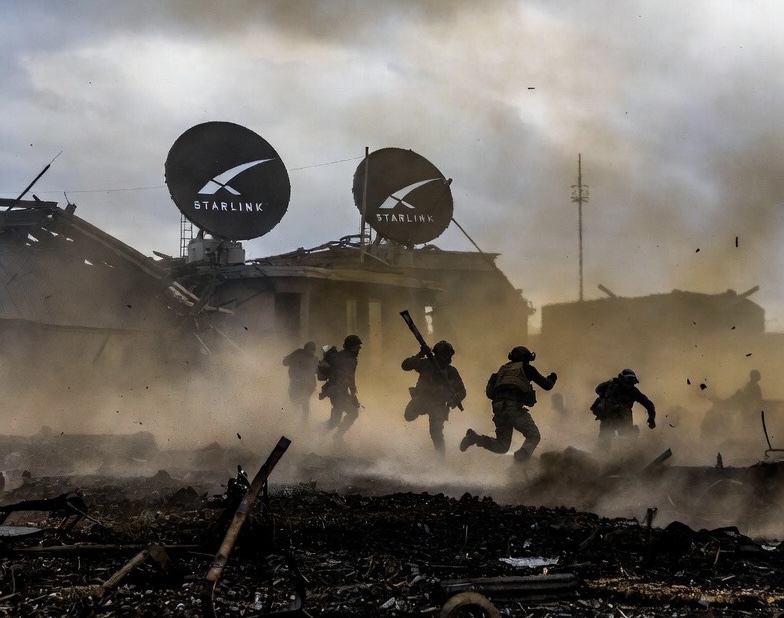 ANALYSIS [K]
The shutdown of Starlink satellite internet for Russian troops has dealt a serious blow to the Russian army’s command and control system on the front lines. Almost 90% of enemy units were left without stable communications, leading to chaos on the front lines and even cases of “friendly fire.” The Ukrainian military, on the other hand, is in control of the situation and is using modern technology for rapid data exchange and precise strikes against the enemy.
How are Ukrainian troops using technology to quickly exchange data and strike the enemy? What is happening in Russian units due to the lack of coordination: “friendly fire” and panic on the front line? And what chance does Moscow have of getting a Starlink equivalent from its allies?
Ukraine has signed an agreement with SpaceX and its founder Elon Musk, according to which only Starlink terminals registered in Kyiv can operate in the country. The Telegraph notes. In addition, a technical speed limit of 75 km/h was introduced — if exceeded, the devices automatically shut down. This made it impossible to use Starlink on fast-moving platforms, such as drones and military equipment.
As a result, the smuggled terminals, which were previously actively used by Russian troops, have ceased to function. Analysts believe that this step could significantly affect the balance of power on the battlefield and give the Ukrainian Armed Forces an additional tactical advantage. After all, as The Telegraph notes, after access was restricted, almost 90% of Russian units faced a loss of stable communication.
What do the Ukrainian Defense Forces say?
Starlink plays a critical role in modern warfare. Maxim, an officer in the Ukrainian Armed Forces, explains in an exclusive comment for
“The use of Starlink has radically changed the speed of information exchange and decision-making. In essence, you see images from a drone in real time and can immediately engage in fire damage. This is much more effective than radio relay or traditional satellite communications,” he said.
According to the officer, the key advantage of the system is its simplicity. Any soldier can deploy a terminal, connect to the internet, and immediately transmit data to the command.
Russia has never had official access to Starlink. According to Maxim, the Russian military obtained terminals either as trophies or through illegal schemes from third countries, but there was no question of mass purchases. At the same time, the serviceman warns against overestimating the effect of disconnecting Starlink for Russia.
“This has seriously affected their combat capabilities and decision-making speed, but their alternative communication systems continue to function. They were used in parallel and have not disappeared,” Maxim explained.
At the same time, the Ukrainian Armed Forces have not reported any problems with reconnecting or organizing communications. Officer Yevgeny Tikhiy in an exclusive comment
“What problems? There are no problems. Except for the personal indiscipline of some commanders, or rather, their lack of strictness. There are specially trained people with education or relevant training who are responsible for these areas,” said Officer Tykhyi.

Ukrainian Armed Forces serviceman Stanislav Bunyatov notes in his Telegram channel “Sniper Speaks” that it has become much more difficult for the enemy to carry out assault operations using equipment.
“It is now extremely difficult for the enemy to carry out any assault operations using equipment, but small groups continue to storm. Sometimes they are hit by drones from adjacent Russian units, sometimes by their own infantry,” Bunyatov writes.
Chaos on the front lines, “friendly fire”: what is happening in the Russian army?
The partisan movement “ATESH,” whose agents operate within the Russian Armed Forces, also reports a critical situation with communications. According to their data, the 122nd Motorized Rifle Regiment in the Kupiansk direction and the 1152nd Regiment in the Zaporizhzhia direction have experienced an almost complete failure of Starlink terminals.
Attempts to deploy backup communication channels have failed, and standard electronic warfare equipment often jams even their own radios. Due to a complete breakdown in communication, “friendly fire” occurred in the Zaporizhzhia direction.
“Units, having no information about each other, opened fire on their own. As a result, an assault group of 12 people was completely destroyed by their own forces,” ATEŞ reported.
Meanwhile, Petro Andriushchenko, head of the Center for the Study of Occupation, reported the arrival of additional Rosgvardia forces in the Zaporizhzhia region. A convoy of four trucks with manpower, accompanied by military police and armored vehicles, was spotted on the Mariupol-Berdyansk route in the direction of Melitopol.
“The urgent reinforcement is directly related to the shutdown of Starlink and the sharp increase in concern among the Russian command regarding communications, disciplinary failures, and potential manifestations of internal discontent among personnel,” Petro Andriushchenko
OSINT researcher Chris O’Wick notes that Russian Z-channels have already seen a flood of requests from the military to raise funds for alternative means of communication. According to his assessment, after losing access to Starlink, Russian soldiers have to finance most alternative solutions at their own expense.
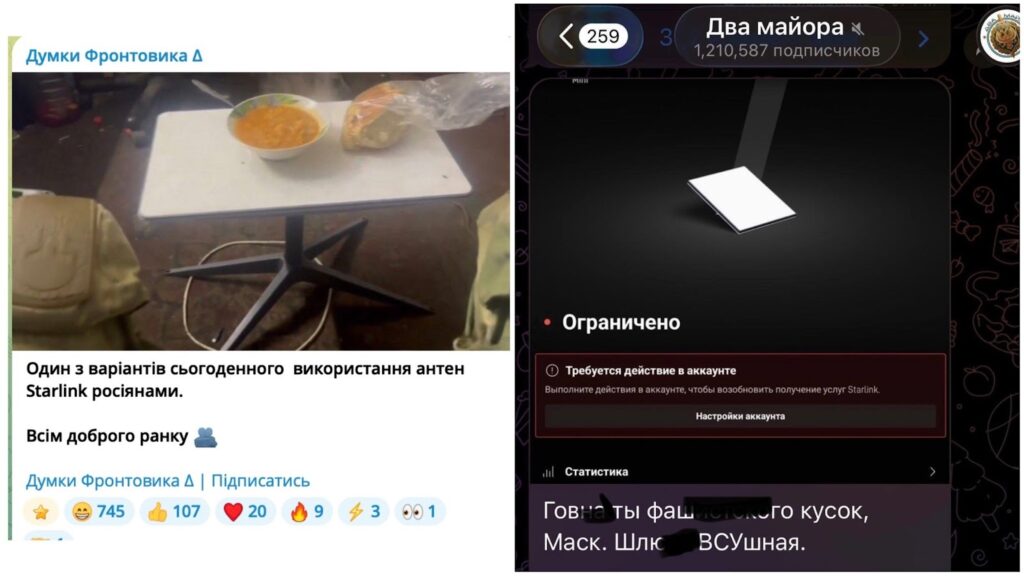
At the same time, the reaction of pro-Russian propagandists is becoming increasingly emotional. For example, the Telegram channel “Two Majors” responded to the situation with profanity directed at Elon Musk, effectively shifting the blame for the communication failures onto the founder of SpaceX.
Belarusian analogue of Starlink
Perhaps things will not be so bad in Russia if the so-called “Union State” shares its own developments. Recently, Belarus announced the creation of its own “Starlink equivalent.” A video demonstrating the development to Alexander Lukashenko was distributed by local state propaganda resources.
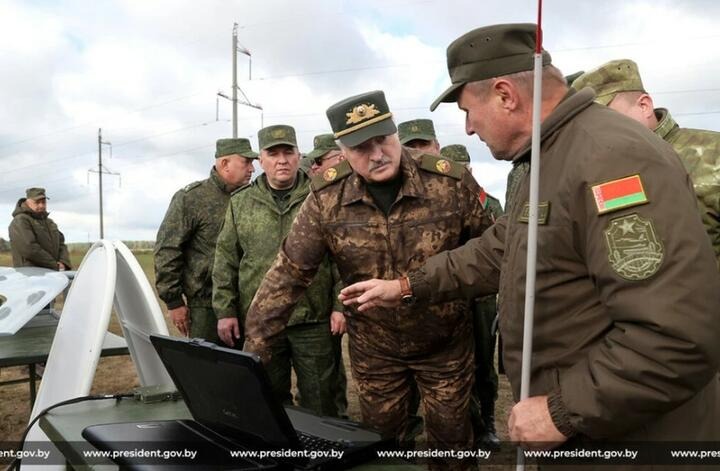
In the published footage, the military shows a device with several antennas, which allegedly “works on the principle of Starlink” from SpaceX, owned by Elon Musk. During the presentation, Lukashenko asked if this meant that Belarus no longer needed Western technology.
“What Musk did for billions of dollars, you did for free… So, we don’t need Musk?” he asked, receiving an affirmative answer from the military.
However, experts understand that it is virtually impossible to recreate such a system without access to space technology, production facilities, and multi-billion dollar investments.
And even if such a possibility theoretically exists, it requires time and significant resources.
“Elon Musk implemented this in the private sector. Whether the state will be able to scale such a solution so quickly is a big question,” said Maxim, an officer of the Ukrainian Defense Forces.
The Russian army still does not have a full-fledged alternative to Starlink and is forced to rely on outdated satellite communication technologies.
“The Russians use satellite communication kits linked to their own satellites in geostationary orbit. This is old technology: deploying such a satellite terminal takes much longer and is more complicated than simply turning on Starlink. In addition, the data transfer speed in these systems is dozens of times lower than in Starlink,” says the military officer.
The Russians have begun to consider options for replacing Starlink with their own satellite solutions, but in practice, almost nothing has been implemented yet, noted the Ukrainian Defense Forces officer.
Meanwhile, Russian propaganda outlets are enthusiastically discussing Chinese developments, hoping that Beijing will share them with Moscow. In particular, they refer to an article in the South China Morning Post about the NAVAC microwave weapon project, which is allegedly capable of interfering with satellite systems, including Starlink.

These statements are already being presented as a “response” to the loss of access to Western technologies, which in fact only emphasizes Russia’s dependence on foreign solutions and the lack of its own effective developments.