Strategic resource: why and how Ukrainian gas production became a target of Russian attacks
31 October 2025 12:04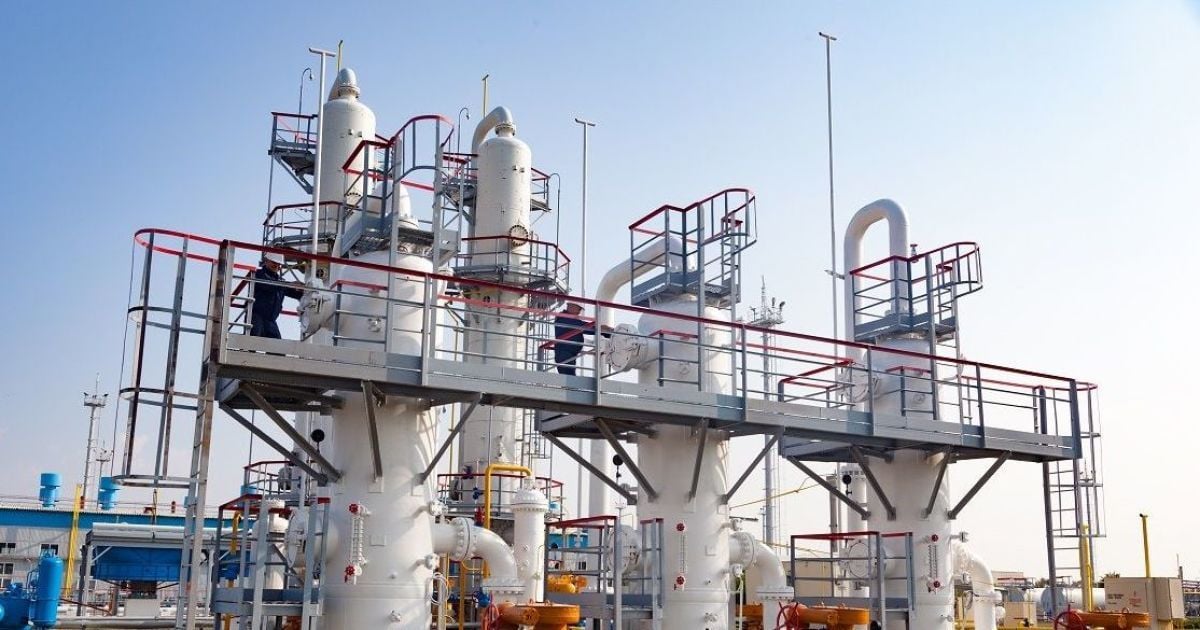 ANALYSIS FROM
The enemy’s October attacks on Ukrainian gas production facilities have raised not only questions such as “how much capacity has been lost.” Many people are also concerned about how Ukraine will get through the winter without sufficient volumes of domestically produced gas. The answers to these questions were found out by "Komersant Ukrainian".
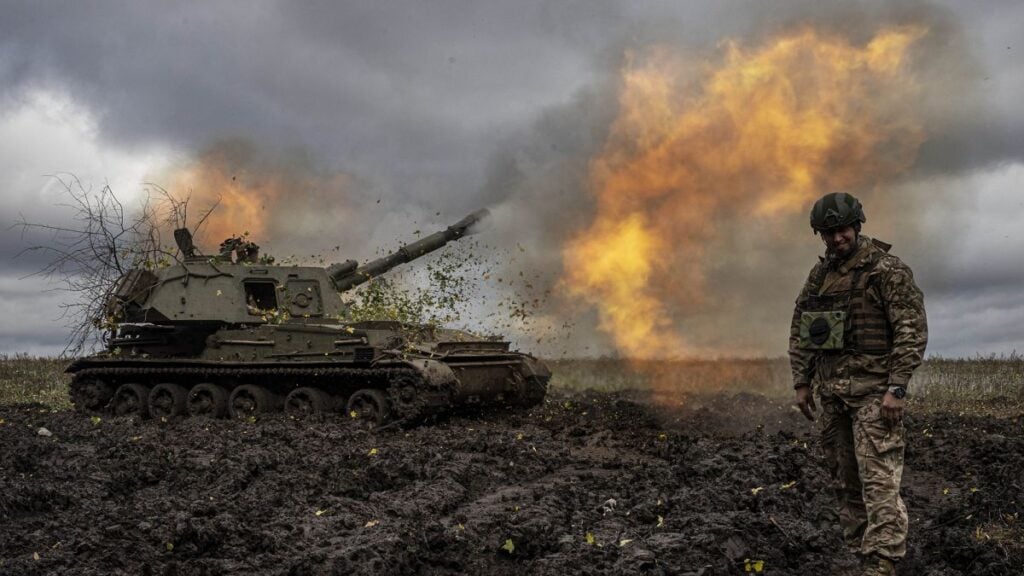
Seven targeted attacks by the enemy on the Ukrainian gas infrastructure since the beginning of October – this is the threatening statistics cited a few days ago by the Chairman of the Board of Naftogaz of Ukraine Sergiy Koretsky.
On October 3, energy infrastructure facilities in Kharkiv and Poltava regions were subjected to a combined attack with missiles and drones. At the time, Naftogaz called it “the largest massive attack on the gas production assets of the Naftogaz Group since the beginning of the full-scale war.” And Bloomberg, citing informed sources, reported that as a result of the shelling of Kharkiv and Poltava regions on October 3, Russia destroyed about 60% of Ukraine’s gas production capacity. This was followed by other massive attacks at intervals of several days.
There has been no official response to the question of what the specific consequences of these attacks were in terms of numbers and names of facilities. This is understandable. And yet, some data has been publicly disclosed. For example, NBU Governor Andriy Pyshnyi spoke about the losses of Ukrainian gas production in mid-October at a meeting of the IMF Regional Group in Washington, DC. Apparently, he was emphasizing Ukraine’s need for financial assistance.
“Russia is attacking the energy infrastructure, and now 55% of Ukrainian gas production is unavailable. We are approaching another difficult winter. That is why, in our opinion, Ukraine needs further effective cooperation with the IMF – in the form of a new program that will take into account the experience of the existing one, the continuation of the war and extremely high uncertainty,” the official said.
Ukrainian Prime Minister Yulia Svyrydenko did not publicly provide specific figures for losses, but her statements were still quite informative.
“Due to the massive Russian strikes on the gas infrastructure, we temporarily lost our own production,” the Prime Minister said on October 23, explaining the need to purchase additional volumes of imported gas.
Key regions
It is understandable that the enemy, trying to destroy Ukrainian gas production, targeted Poltava and Kharkiv regions. These regions are critical to the gas industry and play a key role in gas production. Back in November last year, the Association of Gas Producers of Ukraine reported that Kharkiv and Poltava regions accounted for 88% of the country’s total gas production.
According to Mykhailo Honchar, President of the Center for Global Studies “Strategy XXI”, Kharkiv region until recently provided about 45% of the national gas production, and Poltava region – 43%. The rest was produced in Sumy, Lviv, Ivano-Frankivsk, and Chernihiv regions. That is, the main gas-producing regions of Ukraine are Kharkiv and Poltava. “And for Russians, this is a known fact,” says Mykhailo Honchar. To explain this, he recalls facts from the history of the Ukrainian gas industry.
“Large gas production in the Soviet Union and gas consumption did not start in Siberia, it started in Ukraine. And the first gas pipeline that was built, which supplied gas to Moscow, was not from Siberia or the Urals, but from Ukraine – from Dashava. And to the countries of Western Europe, to Austria, in particular, which was a pioneer in ’68, it was Ukrainian gas supplies,” Mykhailo Honchar recalls.
Dashava is a village in the Lviv region where a gas field was discovered at the beginning of the last century. And later, after the Second World War, it was from there that gas was exported to Europe and back to Russia. At that time, Prykarpattia could be considered the “capital” of hydrocarbons. In the second half of the last century, the main volumes of gas began to be produced in the Dnipro-Donetsk depression, which includes, among other things, Poltava and Kharkiv regions, as well as Sumy, Chernihiv, Luhansk, and Dnipro. Today, some call Poltava region the “gas capital” of Ukraine.
Leonid Kosyanchuk, an oil market expert, is not inclined to give such titles, but states:
“Poltava region has enough proven reserves to fully meet the country’s needs. And if it were not for various “schemes,” this would have been achieved long ago,” the expert believes.
Now, unfortunately, the Russian aggressor is making sad adjustments to the development of Ukraine’s gas industry.
To be restored
In their reports on successive enemy attacks, officials usually limit themselves to a “dry” statement that gas infrastructure facilities were damaged and that so many consumers in several settlements were left without gas supply due to the attack. Only subsequent reports that “gas supply, which was interrupted as a result of hostile shelling, has been restored to all consumers” give some idea of how severe the damage was.
According to Artem Petrenko, Executive Director of the Association of Gas Producers of Ukraine, after each attack, Ukrainian producers do their best to eliminate the consequences.
“Some facilities can be repaired more quickly and some equipment can be put back into operation as soon as possible. Some need to be rebuilt from scratch, which will take much longer. Everyone is working at maximum capacity. It is thanks to the repair work and new drilling that, after the massive shelling in February-March, the producers managed to actually restore their production in a few months,” emphasizes Artem Petrenko.
Back then, gas production facilities in Poltava Oblast were also under attack. And now the enemy is attacking gas production facilities again. According to oil market expert Leonid Kosyanchuk, the Russians are trying to damage the technological infrastructure.
“When it comes to production at gas fields, they are trying to disrupt logistics and technological structures. And gas is another story. If, for example, gasoline burns, the gas also explodes in a certain proportion with air. So, of course, you can cause more damage with less force,” the expert notes.
According to experts, if the enemy targets gas transmission infrastructure, the purpose of these strikes is not so much regional, i.e. to deprive local consumers of gas, but strategic, i.e. to create obstacles to the accumulation of sufficient gas for the winter. But at the same time, of course, direct gas production suffers.
Mykhailo Gonchar, president of the Center for Global Studies “Strategy XXI”, is inclined to believe that it is still a temporary loss of gas production capacity. At the same time, he admits that it will be difficult to quickly restore the damaged facilities and, accordingly, it will be difficult for us to get through this winter without sufficient own resources. At the same time, Mykhailo Gonchar reminds that the current situation in terms of gas consumption is not the same as before.
“I don’t want to compare it with the distant early 90s, when our total gas consumption was estimated at 500 billion cubic meters per year. Or, for example, the beginning of the 10s, when we consumed 70 billion cubic meters in total, 20 billion of which were domestic and 50 billion were imported. And it was Russian gas. In fact, 2023 was a significant year for us. It’s not something to be proud of, but back then we reached a state of self-sufficiency in gas, meaning we consumed as much as we produced. But this is the result of the fact that our gas consumption fell due to the occupation of the eastern and southern regions, where there was energy-intensive industry, and some of the industry stopped. That is why we have reached this figure,” the expert states.
This raises the question of whether Ukraine is able to cover the deficit of its own gas at the expense of imported gas. Mikhail Gonchar’s point of view.
“I would like to note that the capacities we have in terms of the right infrastructure allow us to meet our needs with imports from the pipeline. Therefore, the issue will be more about money. And, again, the issue is to reliably protect the gas transportation infrastructure and key gas compressor stations from destructive attacks,” the expert emphasizes.
In other words, the task for the authorities is not new: strengthening Ukraine’s air defense and finding money. As Prime Minister Yulia Svyrydenko said on October 24 during an hour of questions to the government, the required amount of funding for additional gas imports is about €2 billion and will be covered by external assistance from partners and internal reserves. the government has already allocated UAH 8.4 billion for the purchase of additional imported energy.
Author: Sergiy Vasilevich