Strategic resource: has Ukraine been able to profitably manage its lithium deposits
12 January 13:45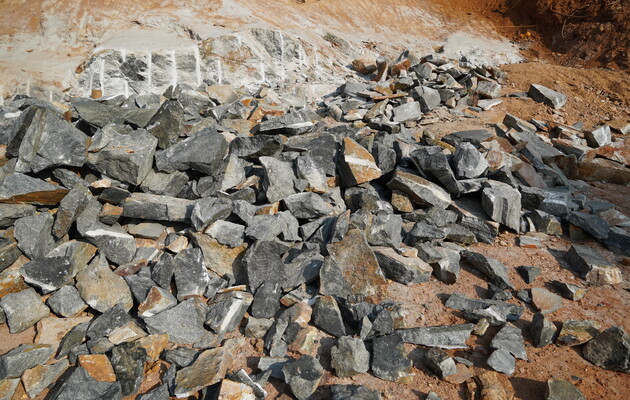
The tender for the development of a large Ukrainian lithium deposit, the Dobra site, has ended, and the winner has been determined. Although there has been no official announcement yet, there is already an unofficial reason to evaluate the results of the competition. Komersant investigated how beneficial it is for Ukraine .
There were no surprises. According to the American publication The New York Times, citing its own sources, the competition for the conclusion of an agreement on the distribution of minerals to be extracted and enriched within the Dilyanka Dobra deposit was won by a consortium of investors, which includes billionaire Ronald Lauder, heir to a cosmetics empire and a long-time acquaintance of current US President Donald Trump, as well as energy company TechMet, which is partly owned by a US government investment agency created during Trump’s first presidential term.
Earlier, The New York Times wrote that this company had long expressed interest in the lithium deposit and, at the end of 2023, called on the Ukrainian president to open bidding. It turns out that it took more than two years and… the victory of US President Donald Trump in the election for its dreams to come true.
Given that the current Ukrainian government is trying very hard to win the favor of the current US leadership, the outcome of the tender can be safely considered politically beneficial for Ukraine. At least for now. Moreover, it is not only political criteria that matter.
Secretive competition
The decision to hold a competition for the development of the Dobra lithium deposit was made by the government at the end of August last year. The competition was officially announced on September 12.
The relevant Interdepartmental Commission for the competition—in particular, for accepting applications for participation, preparing and submitting conclusions and proposals to the Cabinet of Ministers on determining the winner of the competition—was given no more than four months. So, everything went according to plan, and we can expect the Cabinet of Ministers to quickly announce the winner officially.
During the competition, equal conditions for all participants and confidentiality had to be ensured. Incidentally, the latter term is mentioned more than once in the terms and conditions of the competition. As for the circle of participants, the media mentions at least one more participant – European Lithium Ukraine LLC, which, through the Australian European Lithium Ltd, is a sister company of the American Critical Metals Corp (CRML).
The winner of the Ukrainian lithium deposit was determined by members of an interdepartmental group consisting of representatives of various branches of government and relevant government agencies. They did this by evaluating the participants’ bids.
Ksenia Orynchak, executive director of the National Association of Mining Industry of Ukraine, explained what information the participants had to provide.
“Applications had to contain information about the participant, experience in subsoil use, a work program, investment commitments, environmental safety and social development measures. Based on the terms of the competition, the government set conditions that were initially favorable for Ukraine, and participants had to at least commit to fulfilling these conditions in their competitive applications and could offer their own competitive investment advantages. Compliance with environmental standards, the use of Ukrainian goods and labor, and investment in the development of local communities were also required,” explained Ksenia Orynchak.
The participants’ bids were evaluated using a points system. For example, those who offered the best proposals for the distribution of products in favor of the state, were ready to ensure the most comprehensive and rational conditions for the use of natural resources, and had experience in the search, extraction, and enrichment of lithium-containing minerals and other rare metal minerals could count on the highest number of points.
The participants’ bids were also opened, studied, and evaluated in closed session.
However, this confidentiality will soon be lifted, as the results of the tender will be published in official print media and on the Unified Web Portal of Executive Authorities and communicated to each participant in the tender.
Winning arguments
In a comment to The New York Times, two members of the commission, who spoke to the publication anonymously, said that the winning consortium outperformed its competitors by meeting most of the tender criteria, thus refuting any suggestions of favoritism.
As Ksenia Orynchak, executive director of the National Association of Extractive Industries of Ukraine, recalls, according to the terms of the tender, the winner was to sign a 50-year agreement with the state on the distribution of minerals (PSA) to be extracted and enriched within the Dilyanka Dobra deposit and undertake to invest at least $179 million. This amount includes both the financing of geological exploration and the launch of extraction and enrichment.
“According to the Association’s own sources, the commitment proposed by the winner was significantly higher than the tender requirement to invest at least US$179 million. Also, as far as we know, the tender bids proposed to set the state’s share in the profitable production at no less than 10%, while the tender conditions required only 4% or 6%, depending on whether the reimbursable accounting costs exceeded the value of the compensation product limit or vice versa,” explained Ksenia Orynchak.
She also drew attention to another feature of the tender for the development of the Dobra lithium deposit. According to her, the mechanism of the Production Sharing Agreement was initially developed and then used in Ukraine for hydrocarbon deposits and was not applied to solid mineral deposits.
“The competition for the conclusion of an agreement on the distribution of minerals to be extracted and enriched within the Dilyanka Dobra deposit is the first pilot project specifically for solid minerals, which are also strategically important. The government and the Ministry of Economy made it a priority to effectively conduct the first and unique competition in Ukraine specifically for the Doba deposit, a lithium deposit, which is a strategic raw material. This will help attract reputable international investors to Ukraine, as it will signal the opening of the Ukrainian market for strategic raw materials,” the expert noted.
As a reminder, the Dilyanka Dobra lithium ore deposit (also known as Novostankuvatskoye) is located in the Kirovograd region and is one of Ukraine’s most promising investment projects in the field of critical minerals. It covers an area of over 1,700 hectares and was discovered back in 1989, but industrial extraction has not yet begun.
In total, Ukraine has four lithium deposits: in addition to the two deposits in the Kirovohrad region — the Dobra and Polokhiv deposits — there are also the Shevchenkivske deposit in the Donetsk region and the Kruta Balka deposit in the Zaporizhzhia region, both of which are located in temporarily occupied territory. Lithium deposits in Ukraine are estimated at 500,000 tons, which is 2% of global reserves and ranks fifth in Europe.
Author: Serhiy Vasilevych