Power is on, no voltage: Ukrainians report 150 V in sockets
30 December 2025 15:21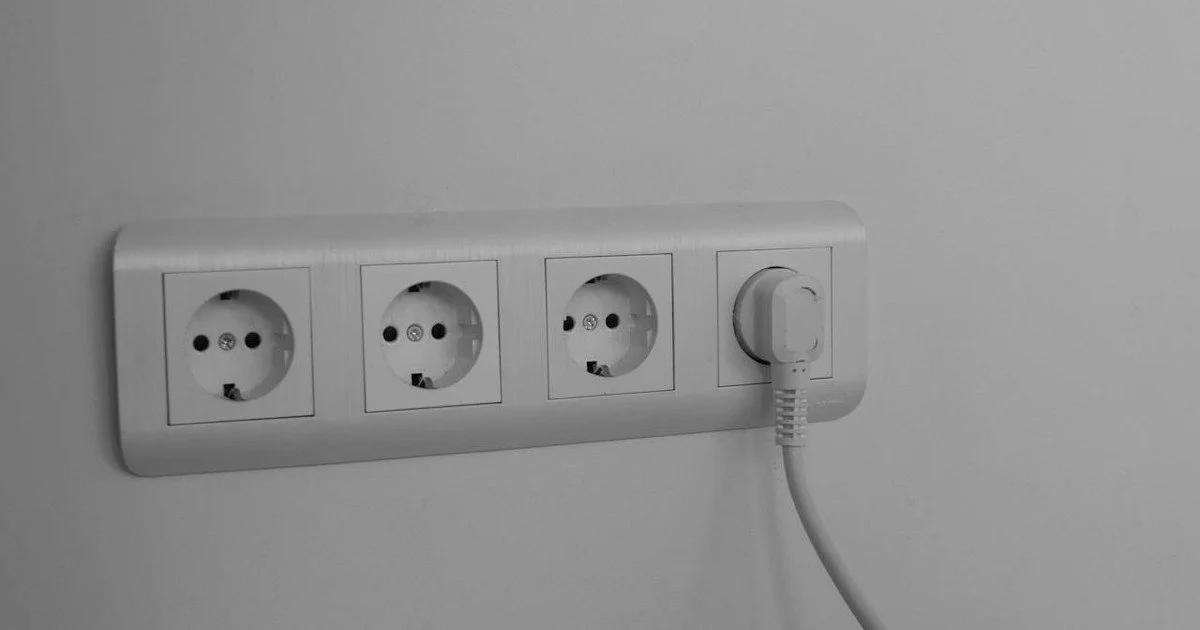 EXCLUSIVE
In Kyiv and Kyiv region, due to Russia’s constant attacks on the energy infrastructure, residents are increasingly facing long power outages. In some areas, there is no electricity for 24-34 hours, and after it is restored, people notice a new problem – low voltage in the network, which can be 150-170 volts instead of the standard.
The unstable voltage directly affects the operation of household appliances: refrigerators, washing machines, boilers, TVs and computers operate in an abnormal mode or even fail. Power engineers explain this by temporary power supply schemes, but the consequences for consumers can be long-lasting and expensive.
Energy expert Gennadiy Ryabtsev explains in an exclusive commentary to "Komersant Ukrainian" that the main reason for the low voltage is the use of backup power schemes.
“Because they use backup power sources or backup electricity distribution routes, the capacity of which is usually not designed for such a large number of consumers. This means that the quality of electricity supplied via such routes sometimes does not meet the standards,” the expert said.
According to him, we are not talking about generators, but about alternative power lines.
“Backup power sources are backup routes, meaning that power companies use them. Electricity is distributed among consumers… that is, the current flows through overhead power lines,” stated Ryabtsev.
The expert explains that the main lines are designed for heavy loads:
“There is a main power line designed to supply energy to a million consumers. This line has wires of the appropriate cross-section… transformer equipment for the appropriate voltage… so that 230 volts and 50 hertz are available in the outlet.”
Instead, backup lines have significant limitations.
“They have smaller wires, transformers are designed for the wrong voltage… they can supply energy, for example, not to a million, but to 700 thousand consumers,” the expert noted.
If the load is exceeded, Ryabtsev said, “the equipment works beyond its capacity.” Low voltage is usually temporary.
As he emphasized, this is a temporary phenomenon until the main line is restored. However, in the first few minutes after the power is restored, the situation can worsen:
“Everyone starts turning on appliances. And there is a load spike, and the system does not have time to react to this load spike.”
Therefore, the expert advises not to rush.
“After the power has been supplied, it is worth waiting at least a few tens of minutes for the voltage to level off in order not to damage the equipment,” Ryabtsev emphasized.
It is worth noting that the 230-volt voltage standard is not universal across the world. For example, in the United States and Japan, household networks operate at 100-120 volts, in the United Kingdom – 230 volts, and in some Latin American countries, mixed standards are used. That’s why modern appliances often have a range of permissible voltages, but sudden drops are still dangerous.