Global food prices are set to rise: the blockade of the Strait of Hormuz has hit the fertilizer market
20 March 12:27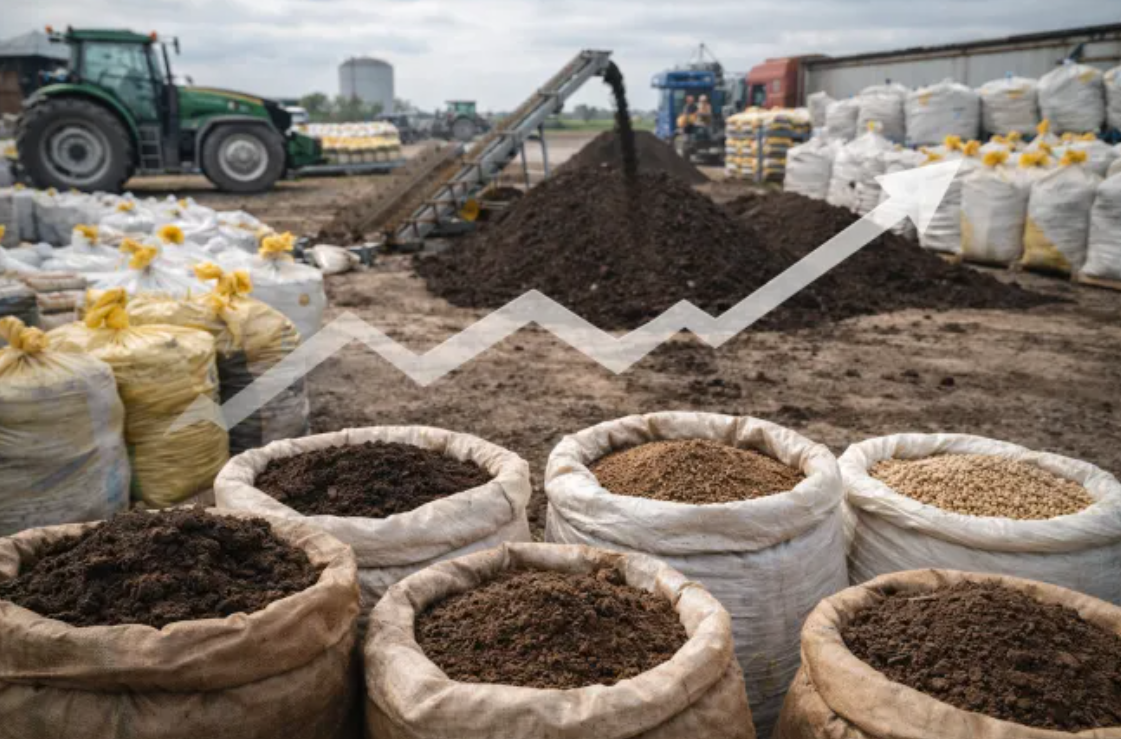
A blockade of the Strait of Hormuz due to the war between Iran and the United States’ allies could trigger a new surge in global food prices. The reason is disruptions in the supply of fertilizers, which are critical for global agricultural production. This is reported by the industry publication FoodIngredientsFirst, citing data from the Center for Strategic and International Studies (CSIS), Fitch Ratings, and Oxford Economics, according to "Komersant Ukrainian"
Fertilizer prices have skyrocketed
Since the start of the conflict, prices for urea—one of the main nitrogen fertilizers—have surged.
Specifically:
- prices in the U.S. jumped by 32% in one week
- global prices rose by approximately 25%
- the forecast for the second quarter of 2026 has been raised by another 20%.
Urea is a key fertilizer for growing:
- wheat
- corn
- rice.
That is why its rising cost directly affects future food prices.
Nearly a million tons of fertilizer are blocked
Due to hostilities in the Persian Gulf:
- at least 21 ships carrying fertilizer cannot leave the region
- the total volume of blocked cargo is about 1 million tons.
Some major producers, including Industries Qatar and SABIC Agri-Nutrients, have already declared force majeure and suspended contract fulfillment.
This is forcing importers to urgently seek alternative suppliers.
A new problem: a sulfur shortage
Experts are also warning of another problem—a shortage of sulfur, which is used in the production of phosphate fertilizers.
According to the U.S. Energy Information Administration, Gulf countries produce about 44% of the world’s sulfur reserves.
The problem is that:
- there are almost no alternative supply routes
- there is no infrastructure to bypass the strait
- the shortage could spread to the entire agricultural sector.
Risks to global food production
CSIS analysts note that disruptions could affect the 2026 planting season.
Specifically:
- it takes about 30 days to ship fertilizers from the Persian Gulf to the U.S.
- this means there is a risk of missing the spring planting season.
In India, manufacturers are already cutting back on fertilizer production due to high LNG prices, which could affect:
- rice production
- wheat production
- grain export volumes.
Will food prices rise?
Joseph Glauber, an economist at the International Food Policy Research Institute, notes that prices will be affected not only by the fertilizer shortage but also by rising energy costs.
According to him:
- energy accounts for about 50% of the final price of food
- farmers may abandon crops that require a lot of fertilizer.
This could change the structure of agricultural production as early as the second half of 2026.
Geopolitical factor
U.S. President Donald Trump has called on allies to form a military coalition to ensure the safety of shipping in the strait.
However, as of now, no country has officially agreed to participate.
Meanwhile, Iran is signaling that it may allow ships to pass selectively and on its own terms.
Could this affect Ukraine
Ukraine may feel the consequences due to:
- a global rise in fertilizer prices
- rising costs of agricultural production
- rising global grain prices.
This could:
- increase the cost of production
- affect prices for bread and grains
- change the structure of agricultural exports.
Experts note that the greatest risk is a new wave of food inflation worldwide.