“Darkness and 4 degrees in the apartment”: mayors and experts on evacuation scenarios in the event of a total collapse
14 January 17:25 ANALYSIS FROM
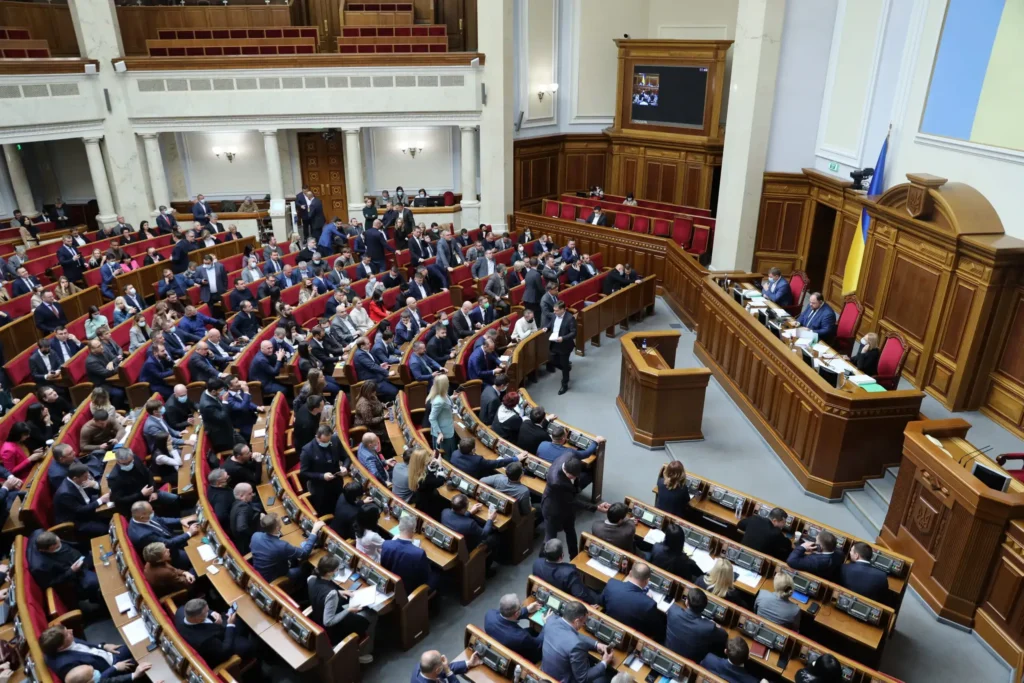
Previously, experts painted a bleak picture of what awaited city dwellers in the event of a massive and prolonged power and heat outage, but now members of parliament and mayors are talking about it. In the event of an emergency, what course of action remains for the authorities and Ukrainians?
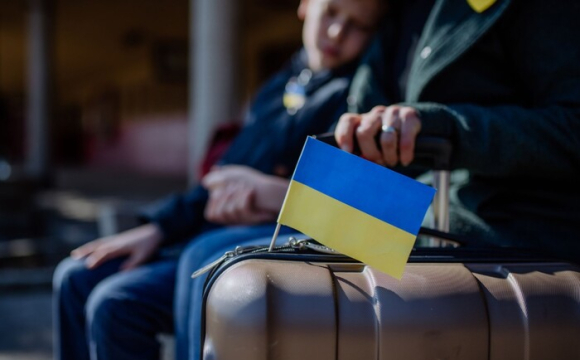
Recently, Ukrainian MP Bohdan Kitsak stated that in the event of prolonged power outages in Kyiv, entire residential neighborhoods could explode, leading to paralysis. He said that due to the electricity and heat supply crisis, in such a case there would be only one option—to evacuate the residents of Kyiv and rebuild the infrastructure from scratch.
However, he also noted that it is not yet known whether such scenarios are being discussed with Kyiv residents.
At the same time, the mayor of Ivano-Frankivsk said that he is preparing for the immediate prospect of a round-the-clock power outage. The mayor stressed that in the event of a prolonged power outage, the temperature in homes could drop to critical levels, posing a threat to the health of residents, according to local media reports.
“We are heading towards a situation where there will be no electricity for 24 hours. We must be prepared. We need to understand what people should do when their apartments are 4 degrees Celsius and dark. People need to know where they can spend the night,” Ruslan Martsinkiv said during an operational meeting.
During the meeting, considerable attention was paid to the work of warming centers. The mayor emphasized that they must function not formally, but fully: with generators, fuel reserves, hot drinks, food, and other necessary items. Educational institutions, particularly schools, are being considered as one of the main locations for setting up such centers. According to the mayor, they can be quickly adapted to receive people in an emergency and provide the minimum necessary conditions for residents to stay.
In Kyiv, where residents in some areas have already been sitting without light and heat for days, there is no mention of evacuation plans. Although it is known that more than 1,200 warming and shelter points have been set up in the capital — these are stationary and mobile (State Emergency Service tents) locations where people can warm up, drink hot tea, and charge their gadgets during possible power outages and cold spells. In particular, about 200 points operate in shopping malls, and mobile points of the State Emergency Service (in particular, 54 were operating as of January 12) are equipped with generators and heat guns.
Evacuation may be necessary, but not for everyone
According to housing and utilities expert Oleg Popenko, if we take Kitsak’s statements into account, this is a populist statement that has no relation to reality, although evacuation needs to be discussed.
“First, pipes cannot explode, they can burst. Kyiv has old heating mains that are 30 years old, but they do not explode. Second, if we are talking about evacuation, it is impossible to evacuate the entire city. We need to make a list of socially vulnerable people, people with limited mobility and people with disabilities, large families, lonely people, pensioners, and those who have nowhere to live, who need to be evacuated first.
In addition, it is necessary to understand where to take them. This means not only choosing a location, but also paying for rent, providing hot meals, and medical care. It is also necessary to organize transportation for the evacuation—buses, trains. This is a huge organizational task,” says
But so far, the most the Kyiv City State Administration has done is provide hot meals to socially vulnerable groups once a day. And that’s not evacuation. The mayor also said that the Kyiv City State Administration doesn’t even have lists of socially vulnerable people.
“Unfortunately, nothing is being done. When there has been no heating, water, or electricity in homes for a week or more, it is a complete failure of the authorities to prepare for emergencies, even though I spoke about this six months ago. It is urgent to address these issues before it is too late. After all, it is not necessary to take people somewhere to the west if it is possible to rent guesthouses and sanatoriums near Kyiv to relocate people. After all, Ukrainians will not be allowed to leave the country in such numbers as they did in 2022. In addition, a couple more strikes on the thermal power plants, and the situation could become apocalyptic, with heating in Kyiv disappearing altogether,” the expert emphasizes.
On the optimistic side, only part of Kyiv will be left without heat if the attacks are repeated. This is because there are private gas boiler rooms and residential complexes with their own boiler rooms.
Not ready
According to energy expert Yuriy Korolchuk, neither Kyiv nor other cities were prepared for a simultaneous heating and electricity crisis. Promises that all problems would be solved by generators, distributed gas generation, and cogeneration plants turned out to be a bluff by both local and central authorities.
“In fact, we are talking about the paralysis of the life support system. And the selective closure of large stores, the emergence of queues at gas stations for fuel for generators, the cessation of the full functioning of social facilities and critical infrastructure (hospitals, schools, kindergartens, post offices, food stores, utilities) — this is already a signal that Kyiv is one step away from the beginning of a mass exodus of residents,” the expert noted.
But playing with the word “evacuation” without realizing that even in peacetime the authorities are simply physically incapable of taking 1-2 million residents “somewhere” is just another hype.
“In the best-case scenario, we can talk about the evacuation of socially vulnerable groups (and not even all of them) — such as children’s homes, the elderly, and registered single people. That would require the necessary number of buses and Ukrzaliznytsia trains. It can be said right away that if the situation develops according to the worst-case scenario, the evacuation will be autonomous. No one will transport anyone,” emphasizes Yuriy Korolchuk.
In the context of war, military damage to power generation facilities and Ukrenergo by missiles and drones, and a general decline in the efficiency of the power system to 50% (from 100% in 2022), it was futile to expect that the social and municipal systems would be prepared for such challenges. It would be more accurate to say that everyone expected the winter to be warm again.
Author: Alla Dunina