The Centre for Countering Disinformation found out how Russia promotes its propaganda in Africa
8 March 2024 19:55
The National Security and Defence Council’s Countering Disinformation Centre, together with the OSINT agency Molfar, has revealed a large-scale hostile information campaign aimed at spreading fakes and disinformation to discredit Ukraine and the Ukrainian top political leadership.
This was reported by Kommersant Ukrainian with reference to the report of the CPD.
The report analyses English-, French-, Arabic- and Russian-language materials in African and Russian media from August 2023 to January 2024.
During this time, the Centre identified a number of fakes in the media space of African countries:
- “A luxurious villa of the family of President of Ukraine Volodymyr Zelenskyy was found on the coast of Egypt”;
- “Olena Zelenska spent $1 million on shopping in New York”;
- “Olena Zelenska’s Foundation is involved in the sale of children”;
- “President of Ukraine Volodymyr Zelenskyy bought yachts for $75 million”;
- “Zelensky bought the villa of Hitler’s propaganda minister Goebbels”, etc.
Almost all the materials in the African media were signed with fictitious names and were eventually removed from the websites. A number of fakes were actively reprinted by Russian propaganda outlets.
For example, it was found that the heroine of the fake story “Zelenskyy bought the villa of Hitler’s propaganda minister Goebbels” Sabina Mels never existed, and the video with Sabina’s face was generated by artificial intelligence using photos of American blogger Alice Hedson, who blogs about healthy lifestyles.
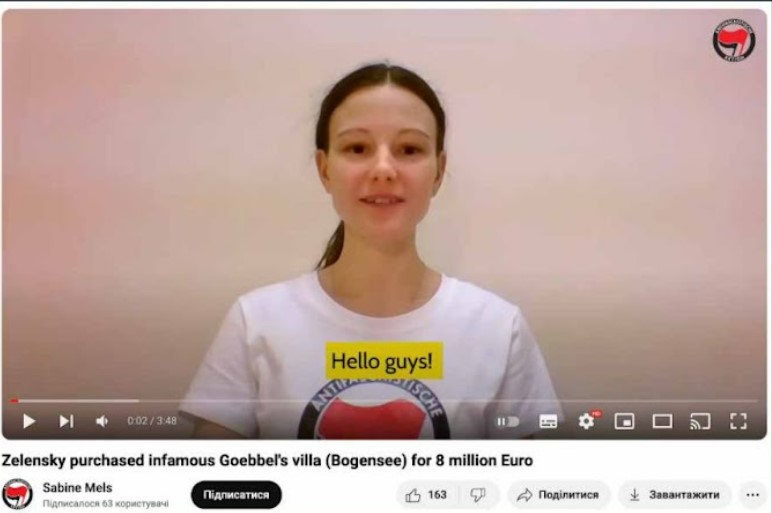
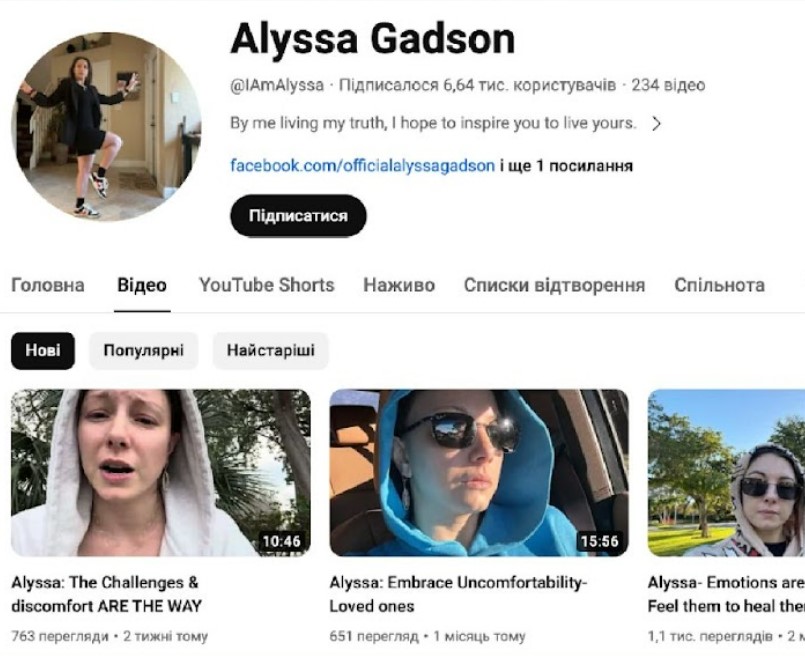
It also turned out that the YouTube channel Sabine Mels is part of a network of coordinated inauthentic behaviour aimed at forming a negative opinion of the President of Ukraine among the international community.
In its anti-Ukrainian campaign, Russia used, in particular, the media in Egypt, Nigeria and Senegal. The Disinformation Counteraction Centre noted that the articles and videos that appeared in the fake news were published under the authorship of fictitious persons who cited anonymous sources. At the same time, the premises featured in the fake videos look almost identical.
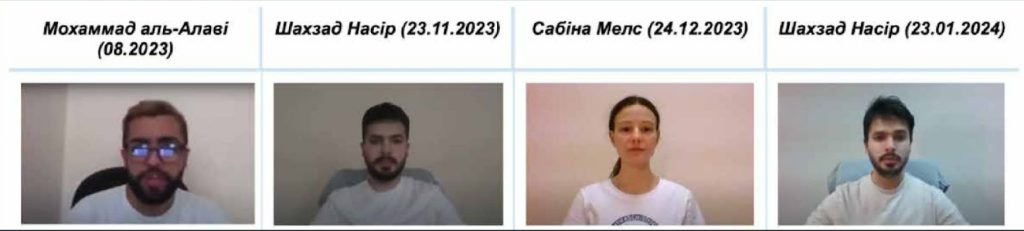
Among the media outlets that stand out for their anti-Ukrainian rhetoric, the CPJ noted Sene.News, The Nation and EI Mostaqbal.