Russia’s shadow fleet: how sanctioned tankers pollute European seas
6 October 2025 22:54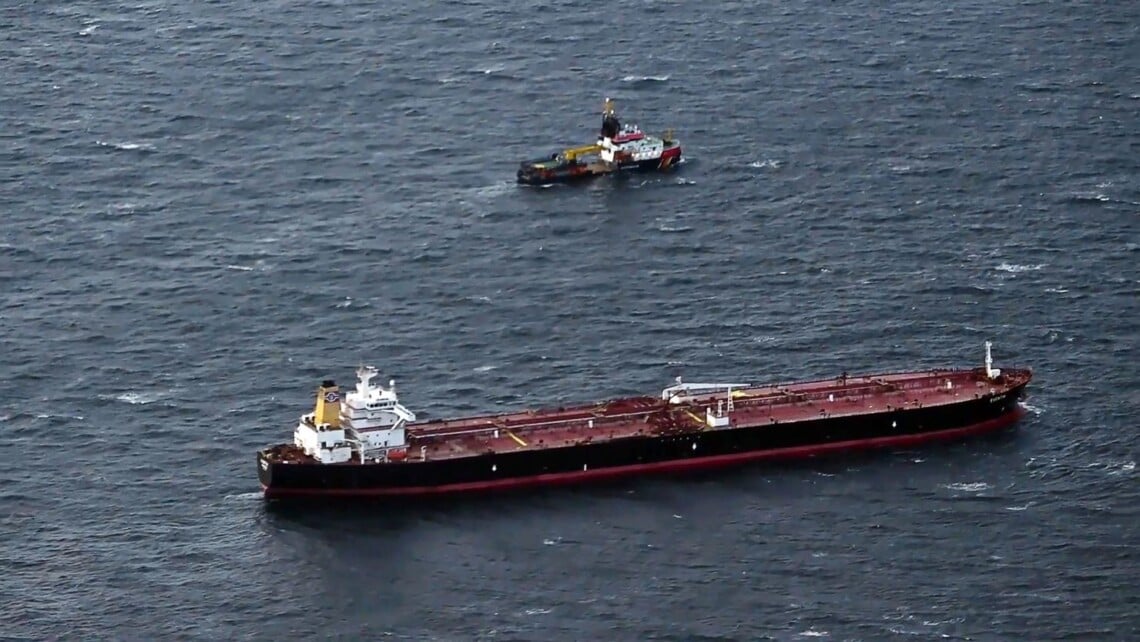
A joint investigation by Politico and the SourceMaterial journalism group has revealed a new threat to Europe – Russian tankers under sanctions are leaving oil slicks in the seas, "Komersant Ukrainian" reports.
Over the past year alone, at least five such vessels have sailed in European waters, ignoring international safety standards.
Two of them have already been subjected to individual sanctions by the UK. However, hundreds of others continue to operate freely.
The environmental cost
The Center for Energy and Clean Air Research estimates that a single major oil spill could cost up to €1.4 billion to clean up. If the owners or operators of the vessels are not found, these costs will be borne by European taxpayers.
A representative of the British Foreign Office accused Moscow of using old and dangerous vessels:
“The shadow fleet is a desperate and dangerous attempt by Putin to hold on to his oil profits while polluting the sea.”
The scale of the problem
According to Politico, Russia’s “shadow fleet” includes about 1,300 vessels. The EU has imposed sanctions on 444 of them, and the UK – on 450.
The European Commission reminds that member states are obliged to punish cases of illegal discharge of pollutants, and also increases pressure on “intermediaries” – refineries and commercial registries that help Russians circumvent restrictions.
Why Russia went into hiding
Sanctions imposed by the G7, the EU, and Australia in December 2022 set a price ceiling for Russian oil at $60 per barrel, and from February 2023 onwards, for oil products ($100 for diesel, $45 for lubricants).
To preserve export revenues, the Kremlin has formed a “shadow fleet” of outdated tankers that turn off their beacons and hide from tracking systems. According to The Guardian, in 2023, it consisted of about 600 vessels, providing 70% of Russia’s oil exports and about 10% of the world’s wet cargo fleet.
Today, this figure has doubled. Due to such schemes, Russia transports up to 1.7 million barrels of oil daily, which provides the Kremlin with a stable financial resource despite the sanctions pressure.
European experts warn that the growth of the shadow fleet is not only a financial challenge, but also an environmental time bomb. Each new voyage of old and technically unsafe tankers can result in a disaster for the marine ecosystem.