Top 10 Ukrainian businessmen: ranking of company owners by income published
26 January 08:42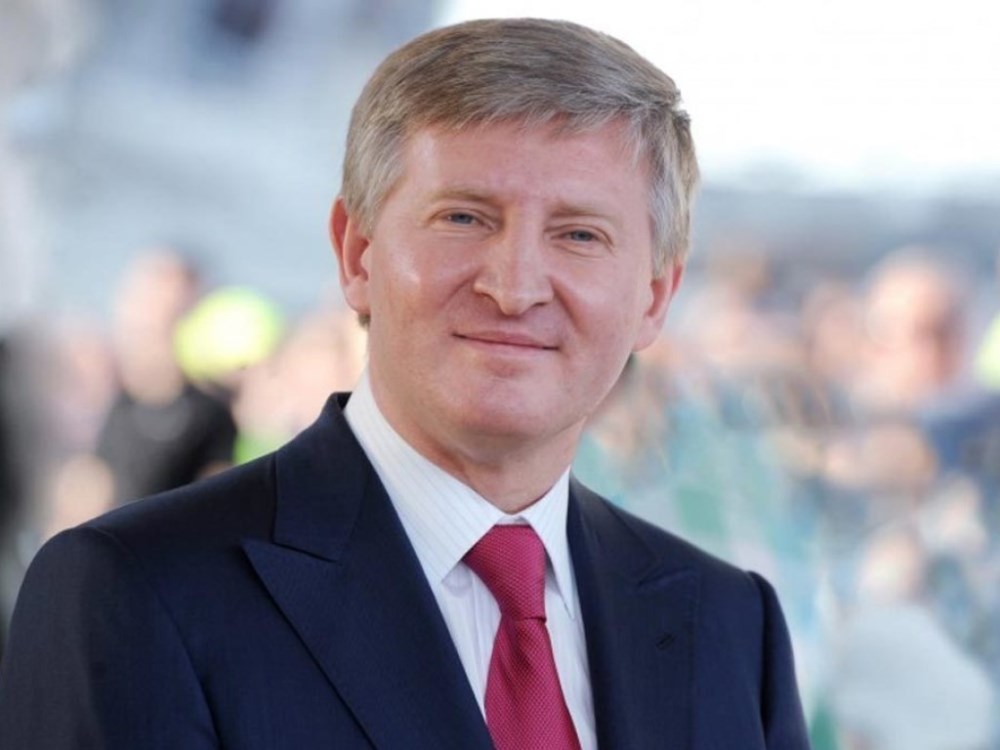
In Ukraine, 67,651 businesspeople own companies with annual revenues exceeding UAH 10 million and submit financial reports on time. This represents 19% of all business owners in the country. These figures were published by OpenDataBot, which compiled a ranking of Ukrainian businesspeople, according to "Komersant Ukrainian".
The study provides insight not only into the biggest players, but also into the structure of Ukrainian business: geography, income levels, and gender balance.
How many businesspeople are there in Ukraine and who are they?
As of today, more than 360,000 company owners regularly submit financial reports, but only one in five of them has a business with an income of more than UAH 10 million per year.
Key facts:
- 73% of businesspeople are men
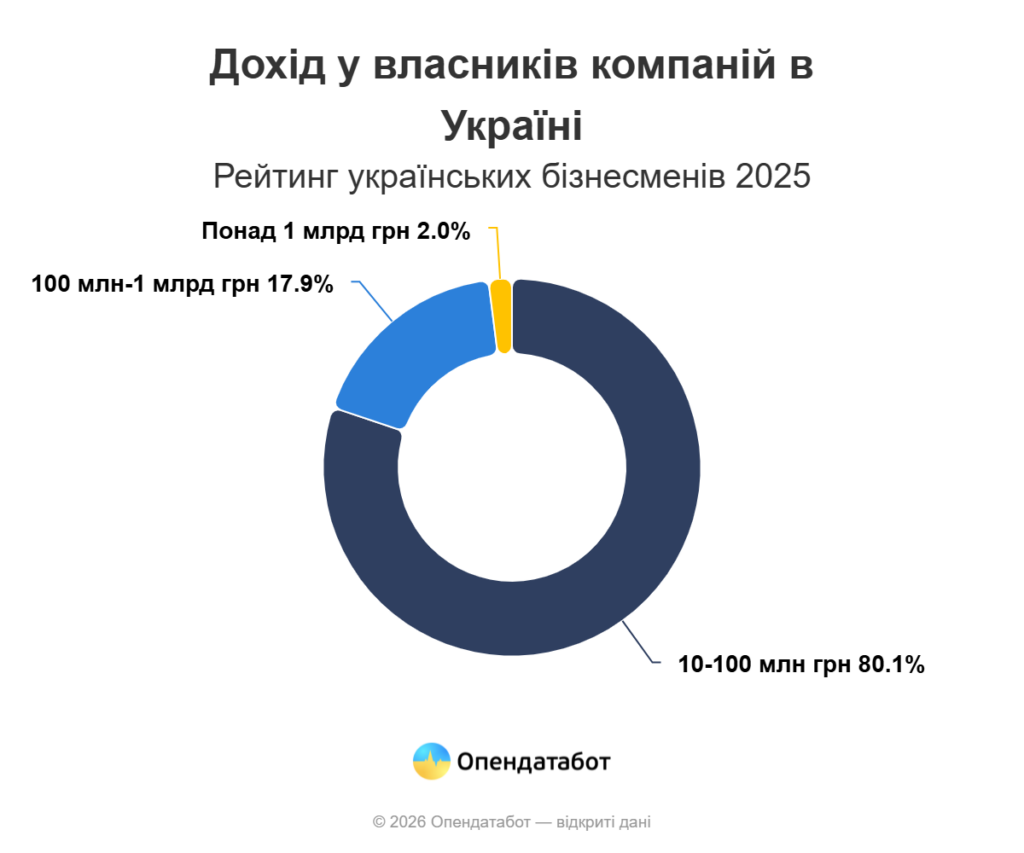
- 80% of company owners have an annual income of less than UAH 100 million
- Only 2% of businesspeople earn more than UAH 1 billion per year
- You can make it into the top 100 with a company income of 8.99 billion UAH
As explained by OpenDataBot CEO Oleksiy Ivankin, the threshold of UAH 10 million was chosen deliberately: this is the limit beyond which a business transitions from a simplified model to full structuring, financial reporting, and payment of all taxes.
Geography of Ukrainian business
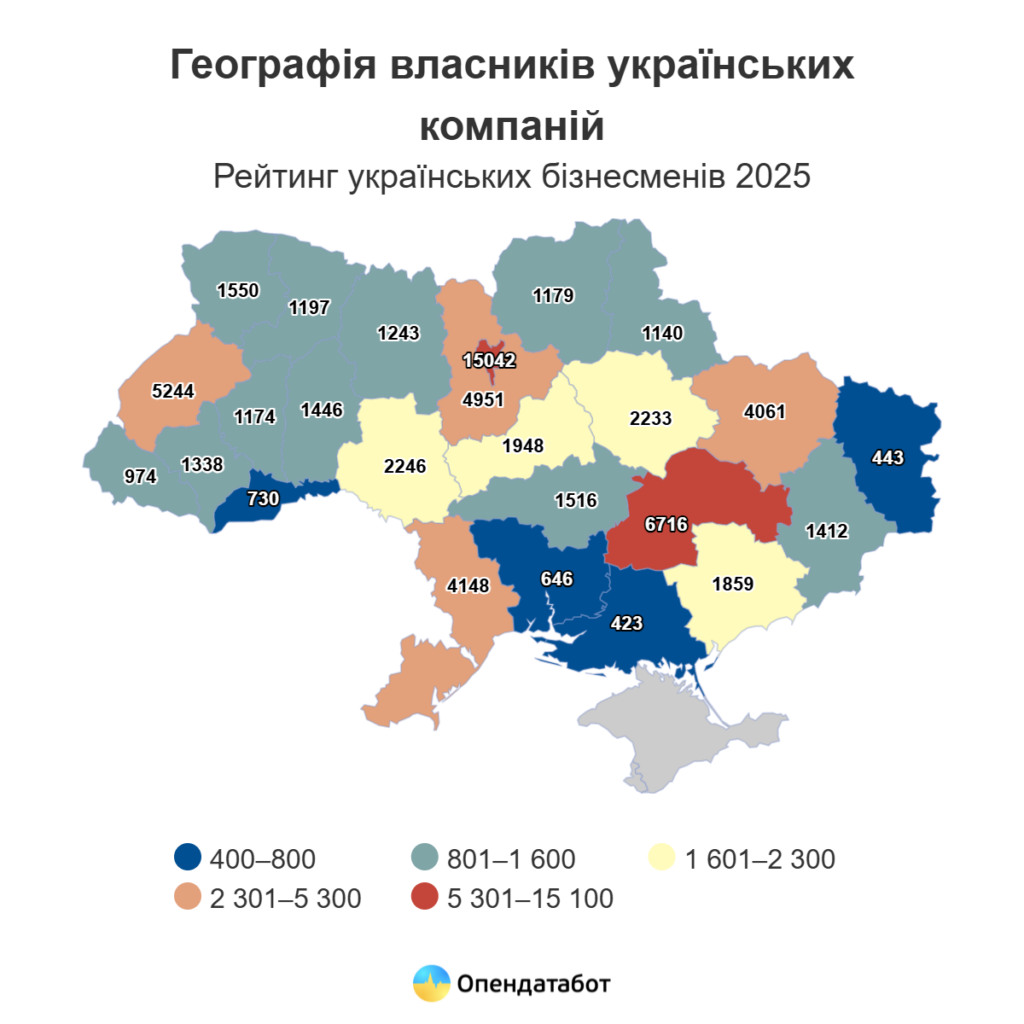
The largest concentration of businesspeople is in several regions.
The largest number of businesspeople are concentrated in the capital — 22% of the total. The top three also include Dnipropetrovsk (10%) and Lviv (8%). If we add Kyiv and Odesa, half of all businesspeople in the country are concentrated in these five regions.
The lowest concentration of businesspeople is in the frontline regions of Mykolaiv (1%), Luhansk (0.7%), and Kherson (0.6%).
Structure of businesspeople’s income
To be among the top 100 Ukrainian businesses, a company must have an income of over UAH 8.99 billion. The entry threshold for the top 1,000 is significantly lower: from UAH 1.29 billion per year.
80% of businesspeople in Ukraine earn less than UAH 100 million per year. Only 2% of businesspeople have an income of over UAH 1 billion — that is 1,355 businesspeople.
Thus, the vast majority of Ukrainian businesspeople are small and medium-sized businesses, while super-high incomes are concentrated among a narrow circle of owners.
Who made it into the Top 100 Ukrainian businesspeople
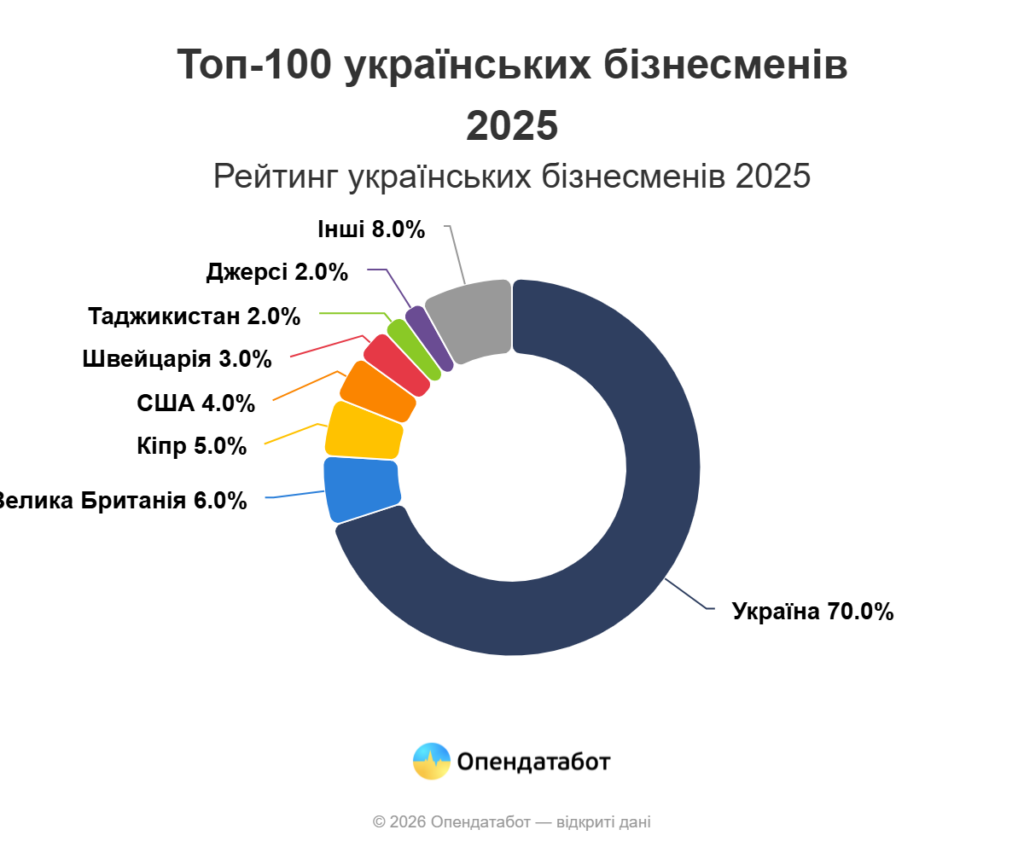
70% of the businesspeople in the top 100 are registered in Ukraine. The top five also includes owners of companies registered in Cyprus, the UK, the US, and Switzerland.
Top 10 Ukrainian businesspeople by company income
The top ten entrepreneurs by company revenue include names that are well known to Ukrainians. Rinat Akhmetov is in the lead, with his companies generating a combined revenue of approximately UAH 565.7 billion.
Next is Vitaliy Antonov, registered in Switzerland, who owns the OKKO chain — his businesses generated a total of UAH 151.7 billion in revenue. In third place is Yuriy Kosyuk, owner of the MHP chain, with revenue of UAH 110.6 billion.
The top ten also includes representatives from Israel, Cyprus, and Monaco. The only woman in the top ten is Svitlana Ivakhiv, owner of WOG, KOMO, and Halychyna. She ranks ninth with an income of UAH 48.75 billion.
Top 10 Ukrainian businessmen:
- Rinat Akhmetov — UAH 565.76 billion (Ukraine)
- Vitaliy Antonov — 151.77 billion hryvnia (Switzerland)
- Yuriy Kosyuk — 110.65 billion UAH (Ukraine)
- Ari Weber — UAH 88.04 billion (Israel)
- Volodymyr Kostelman — 80.59 billion UAH (Ukraine)
- Andriy Verevsky — 72.17 billion UAH (Switzerland)
- Andriy Hubsky — 70.25 billion UAH (Cyprus)
- Oleksiy Poroshenko — 65.86 billion UAH (Ukraine)
- Svitlana Ivakhiv — 48.75 billion UAH (Monaco)
- Oleksandr Herega — 48.58 billion UAH (Ukraine)
Svitlana Ivakhiv — the only woman in the top 10, representing the businesses WOG, KOMO, and Halychyna.
What this ranking shows
The OpenDataBot ranking shows:
- a high concentration of income in a small group of companies;
- the dominance of men among large business owners;
- the key role of the capital and several regions in shaping the economy;
- the growth of the middle business segment even during the war.
Read us on Telegram: important topics – without censorship