Trump talks – Kremlin gets nervous: what does talk of strikes on Moscow mean?
16 July 2025 14:38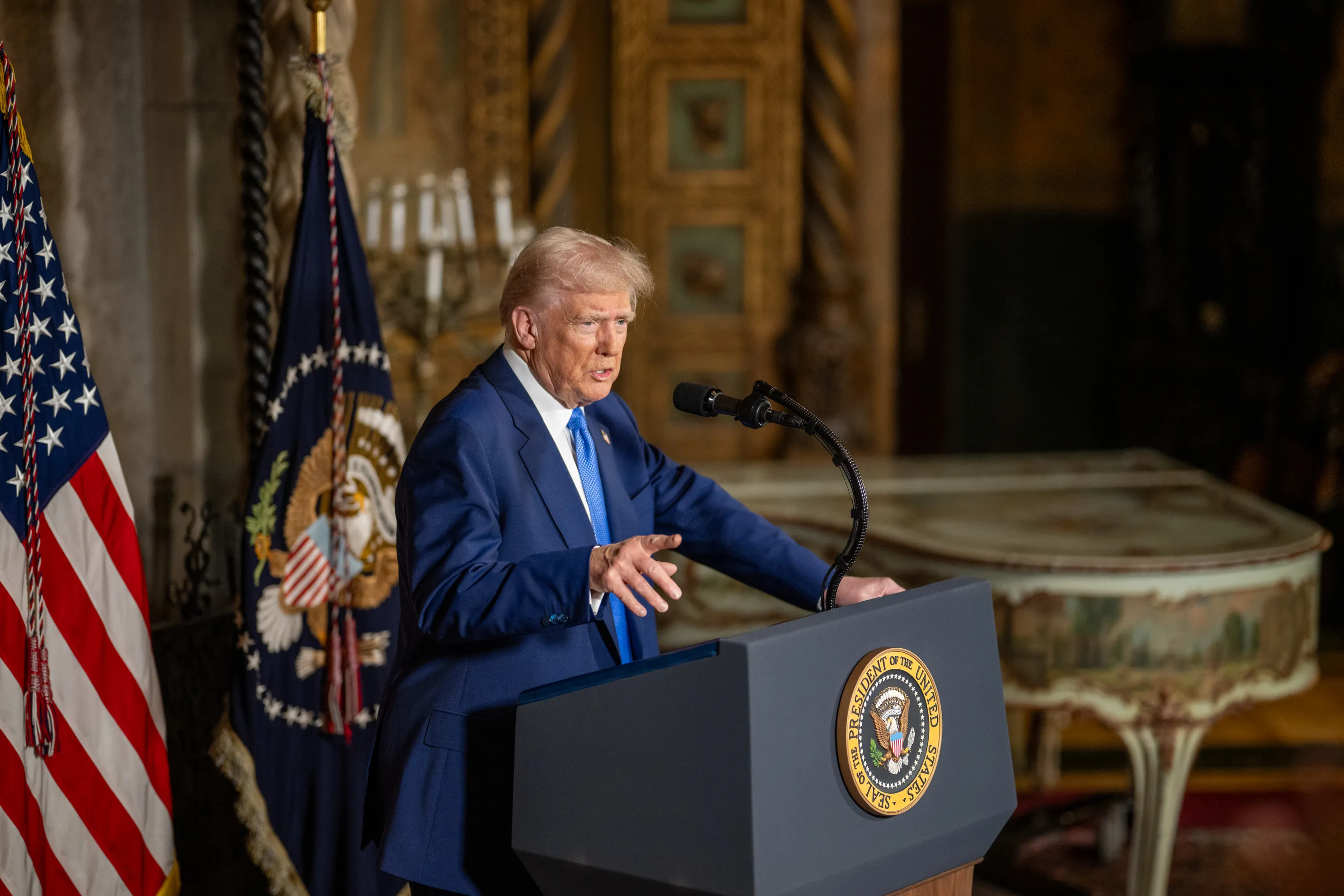
White House spokeswoman Caroline Leavitt commented on media reports about US President Donald Trump’s recent conversation with Ukrainian President Volodymyr Zelenskyy, in which they discussed possible strikes against Moscow. According to her, these statements by journalists were taken out of context.
Levitt said this in a comment to Newsweek.
According to the Financial Times and The Washington Post, during his conversation with Zelensky, Trump asked whether Ukraine was capable of striking Moscow and St. Petersburg.
FT sources report that the American leader spoke of the need to “make Russia feel pain” in order to encourage the Kremlin to engage in peace talks. The Washington Post article indicates that Zelensky allegedly responded: Ukraine is ready to act if it receives appropriate weapons.
In response to these reports, the White House spokeswoman criticized the FT journalists, accusing them of manipulating the story for the sake of hype.
“President Trump was simply asking questions, not calling for escalation or more casualties. His goal is to stop the bloodshed and end the war,” Levitt emphasized.
What is really behind Donald Trump’s words about the possibility of attacks on Russian cities and how Kyiv and the expert community are reacting to it – further in the article
Trump balances between pressure on the Kremlin and fear of retaliation
Political analyst Volodymyr Fesenko in an exclusive commentary for
“This is typical Trump – contradictory, inconsistent. He sometimes calls for pressure on Putin, then lowers the temperature and seeks to avoid a direct confrontation with Moscow. This may indicate both internal contradictions and external pressure on him,” Fesenko says.
The expert emphasizes that the leaks about the possibility of transferring long-range missiles to Ukraine were rather an element of psychological warfare against the Kremlin.
“These statements are not so much for us as for Putin: if you don’t agree to a ceasefire, missiles will fly. But it seems that the Kremlin has conveyed through non-public channels that strikes on Moscow could lead to a nuclear escalation. And Trump, who doesn’t want World War III, has drastically changed his rhetoric,” the political scientist adds.
Fesenko also draws attention to the “50-day” ceasefire, which, according to Reuters, Trump allegedly voiced as a conditional deadline for Putin.
“If Putin does not make concessions, Trump will have to put pressure. And then there may be both new sanctions and the transfer of additional weapons, including long-range missiles. This will be a key point, particularly for Trump,” Fesenko believes.
“Hitting Moscow is effective, but ineffective”
Speaking about the feasibility of attacks on the Russian capital, the expert warns:
“A strike on Moscow may have a symbolic effect, but at the same time, it carries disproportionate risks. In 2020, the Kremlin seriously considered the use of tactical nuclear weapons. And if there is a sense of “trauma” – like a direct blow to the Kremlin – the reaction can be unpredictable,” Fesenko says.
In his opinion, instead of symbolic strikes on capitals, Ukraine should focus on strategically important military targets:
“The Alabuga plant, where Shakhtys are produced, Moscow airports, Russian refineries, logistics hubs – these are the priorities. If you paralyze air traffic or damage key production, it will have a real effect. We need to be effective, not spectacular,” the expert emphasizes.
Meanwhile, political strategist and managing partner of the National Anti-Crisis Group Taras Zahorodniy, speaking to KU, emphasizes the context of the conversation between Trump and Zelensky:
“The situation itself is absurd in a good way. Imagine Biden asking Zelensky: “Why aren’t you hitting Moscow?” It’s impossible. But Trump did. Directly and clearly. This is already a signal,” he notes.
According to Zahorodnyi, President Zelensky responded as a skillful negotiator: we can, if we get weapons.
“This is not a threat, but political bargaining. Zelensky has shown a willingness to take decisive action, and this is also a message to Moscow,” he added.
As for the expediency of strikes on Moscow, Zahorodnyi is categorical:
“The decision is made by the military. Not Facebook strategists, but those who know how many missiles there are, what are the chances of passing air defense, and what can really be hit. If there are resources, there will be a decision. If not, there will be no solution. This is not a show, this is a war,” the expert says.
Both experts agree on one thing: any talk of strikes on Moscow has political overtones and high risks. But instead of making loud statements, Ukraine should focus on strategically important targets where a strike is not only symbolic but also tactical.
“In a war, the winner is not the one who speaks the loudest, but the one who strikes the most accurately,” Fesenko concludes.
So, despite the emotional resonance around Trump’s words about possible strikes on Moscow, experts emphasize that this is not a military order, but a political maneuver aimed at putting pressure on the Kremlin. However, the risk of unpredictable escalation, including nuclear scenarios, makes both the United States and Ukraine weigh every such signal in the international space.