Trump calls the temporarily occupied Crimea “surrounded by an ocean” and criticizes Europe: what is behind his new wave of statements
9 December 2025 16:13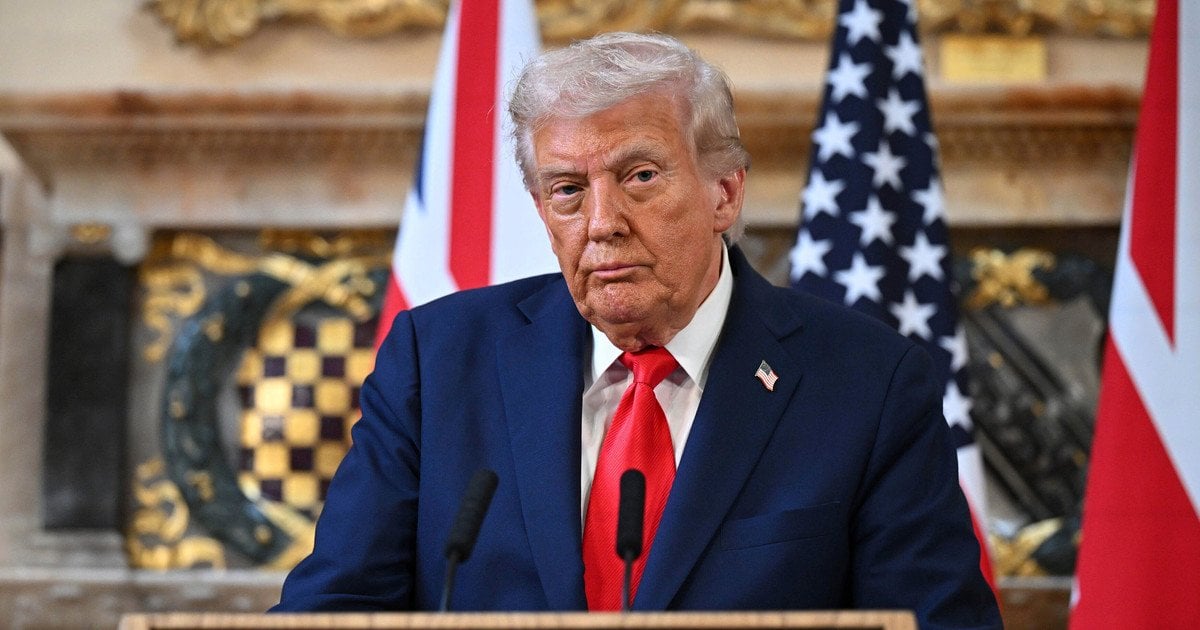
US President Donald Trump has once again found himself in the center of international attention after an interview with Politico, where he gave an inaccurate geographical description of the temporarily occupied Crimea and intensified his criticism of European leaders. His comments came amid growing tensions between the United States and key allies and Russia’s ongoing war against Ukraine, "Komersant Ukrainian" reports.
Geographical “comment” on the temporarily occupied Crimea
In the conversation, Trump described the temporarily occupied Crimea as “surrounded by the ocean on four sides” and allegedly connected to mainland Ukraine “through a small spit.” He also emphasized the “warmest region” and the “best weather,” calling the peninsula an area with exceptionally favorable conditions.
These statements do not correspond to the actual geography: the temporarily occupied Crimea is washed by two seas, and it is connected to Ukraine by the Perekop Isthmus and the Chongar crossings. However, Trump’s remarks have already provoked a reaction in the media, as they fit into his long-standing pattern of statements about the temporarily occupied Crimea, where he avoids direct criticism of the Russian occupation and sometimes repeats geographically incorrect theses.
Elections in Ukraine
At the same time, Trump called for elections in Ukraine, suggesting that the incumbent president could win even during the war. Such statements contrast with the position of Kyiv and its allies, who emphasize that holding elections during active hostilities is legally and security-wise impossible.
The US president’s comments came at a time when the issue of the legitimacy of the Ukrainian government is being actively used by Russian propaganda.
Sharp criticism of Europe
In the same conversation, Trump called European leaders “weak” and said they “don’t know how to act” on migration and Russian aggression. This is one of the harshest statements about European democracies in his current cadence.
Such statements can:
- deepen tensions in US relations with France and Germany, which have already criticized Trump’s position on NATO;
- create additional risks for transatlantic coordination in support of Ukraine
- complicate EU and US efforts to form a common line on security and migration issues.