Trump says what he’s willing to do for Greenland
10 March 2025 11:47
US President Donald Trump has said that in exchange for joining the US, Greenland will receive billions of dollars in investments and, consequently, wealth. He wrote about this on his social network Truth Social, "Komersant Ukrainian" reports.
“We are ready to invest billions of dollars to create new jobs and make you rich. If you are ready, we invite you to become part of the greatest nation in the world, the United States of America,”
– the American leader wrote.
This is not Trump’s first address to the United States. A week ago, he addressed the island people from the rostrum of Congress, promising them “security and wealth.” So this time, the proposals are a bit more specific. Although businessman Trump did not say how many billions of dollars and how many jobs await the Greenlanders if they want to become Americans.
Читайте нас у Telegram: головні новини коротко
Greenland and Trump
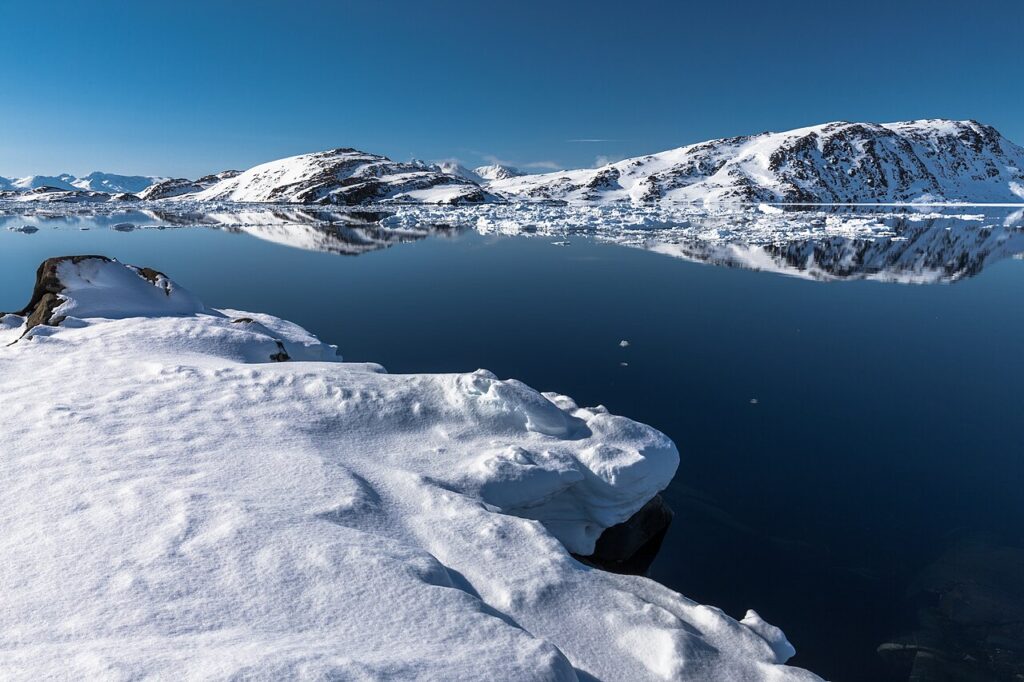
Greenland is the largest island in the world, located between the North Atlantic and the Arctic Ocean, and is an autonomous territory within the Kingdom of Denmark. With a population of about 56,000 people, most of whom are indigenous Greenlanders, the island is of strategic importance due to its geographical location and rich natural resources, including minerals and potential energy reserves. However, the key factor in the US interest is not so much Greenland’s resources as control over the Arctic, which is becoming an arena of confrontation between world powers.
In 2019, U.S. President Donald Trump expressed interest in acquiring Greenland, justifying it with U.S. strategic interests. This proposal was rejected by the Danish government, which led to a temporary cooling of relations between the two countries. After his re-election in 2024, Trump renewed his intentions for Greenland, stating that it is necessary to control the island to ensure national and international security, especially in the context of countering the influence of Russia and China in the Arctic.
In his current rhetoric, Trump emphasizes the importance of Greenland to the United States. He emphasizes that the United States will achieve its goals in Greenland without ruling out the possibility of using military or economic measures.
These statements provoke a negative reaction from both the Greenlandic and Danish authorities. Greenland’s Prime Minister Muthe Egede emphasized that “Greenland is not for sale” and strongly rejected the idea of joining the United States. At the same time, the Danish government announced a significant increase in spending on Greenland’s defense, including the purchase of new patrol ships and drones, as well as infrastructure upgrades to improve the island’s defense capabilities.
Thus, Greenland has found itself at the center of geopolitical interests, where the strategic ambitions of the great powers and the local population’s desire for self-determination and development intersect.
History of Greenland
Greenland has a rich history that dates back thousands of years, and was originally even connected with North America. Thus, the first inhabitants of the island were the Inuit, who moved here from the territory of present-day Canada about 2500 years ago. In the tenth century, the Vikings, led by Erik the Red, arrived on the island and founded a settlement in the southwest of Greenland. However, due to the harsh climate and conflicts with the indigenous people, the Scandinavian colonies gradually disappeared by the XV century.
In 1721, Greenland was re-colonized by Denmark, which established its control over the island. In the 20th century, Greenland experienced significant changes: during World War II, it was actually under the influence of the United States, which used it as a military base. As early as 1946, the United States wanted to buy the island from Denmark for $100 million, but never received a response to the offer. In 1953, the island officially became part of the Kingdom of Denmark, and in 1979 it was granted autonomous status. In 2009, the autonomy was significantly expanded, and now Greenland has its own government, although foreign policy and defense remain under Danish control.
Today, Greenland is increasingly viewed as an important geopolitical asset, especially as glaciers melt, opening up new sea routes and access to Arctic resources. That is why the United States and other world powers are showing a growing interest in the island, viewing it not only as a territory with mineral resources, but also as a key strategic point in the struggle for control over the Arctic.
Читайте нас у Telegram: головні новини коротко