Three days under a stormy sky: G1 magnetic storm hits Earth, but the storm is weakening
16 September 2025 17:25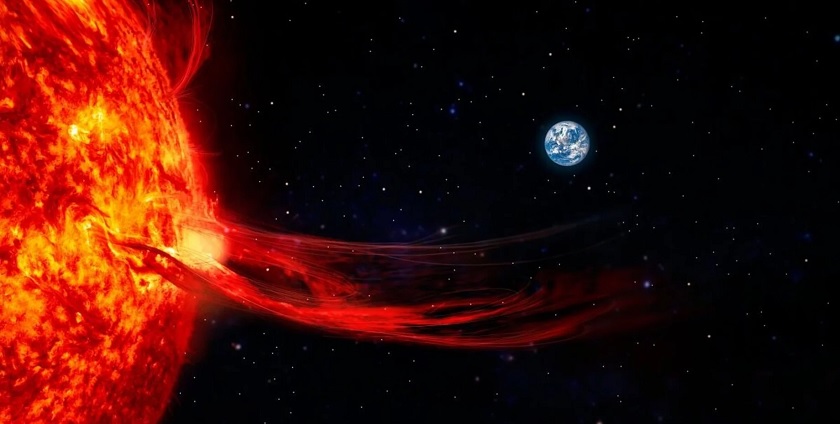
After a series of powerful solar flares, the Earth’s magnetic field has been in a state of perturbation for the third day in a row. on September 16, geomagnetic activity reached the G1 level, which is a weak magnetic storm, but its impact is felt both in the technological sphere and in the well-being of people. This was reported by meteoagent, "Komersant Ukrainian" reports.
The Kp-index reached 5.3 points, the threshold corresponding to a G1 storm
- The reason is the acceleration of the solar wind, which interacts with the Earth’s magnetosphere
- Source: NOAA (National Oceanic and Atmospheric Administration) reports
Technical risks: satellites, communications, navigation
Magnetic storms are not only an astronomical phenomenon but also a challenge for infrastructure:
- Short-term disruptions in satellite systems are possible
- Radio communication and GPS may be unstable
- Air navigation and military systems are at risk
Human factor: how the storm affects health
Experts warn that geomagnetic fluctuations can affect health, especially in weather-dependent people.
- Symptoms: headache, fatigue, pressure drops, insomnia
- Recommendations from doctors:
- Rest and reduced physical activity
- Water instead of coffee and alcohol
- Calm evening walks
Forecast: when the storm will subside
According to preliminary estimates, geomagnetic activity will begin to decline on September 17-18. The Earth’s magnetic field is expected to gradually stabilize.
- The following days are a chance to restore a normal rhythm
- After the storm – return to a calm geospace environment
What is a magnetic storm?
A magnetic storm is the reaction of the Earth’s magnetic field to solar wind flows carrying charged particles. It is classified on a G scale (from G1 to G5), where G1 is the weakest level, but even it can have significant consequences.