Access price: how electricity from Europe supports Ukraine’s energy system
11 March 16:50
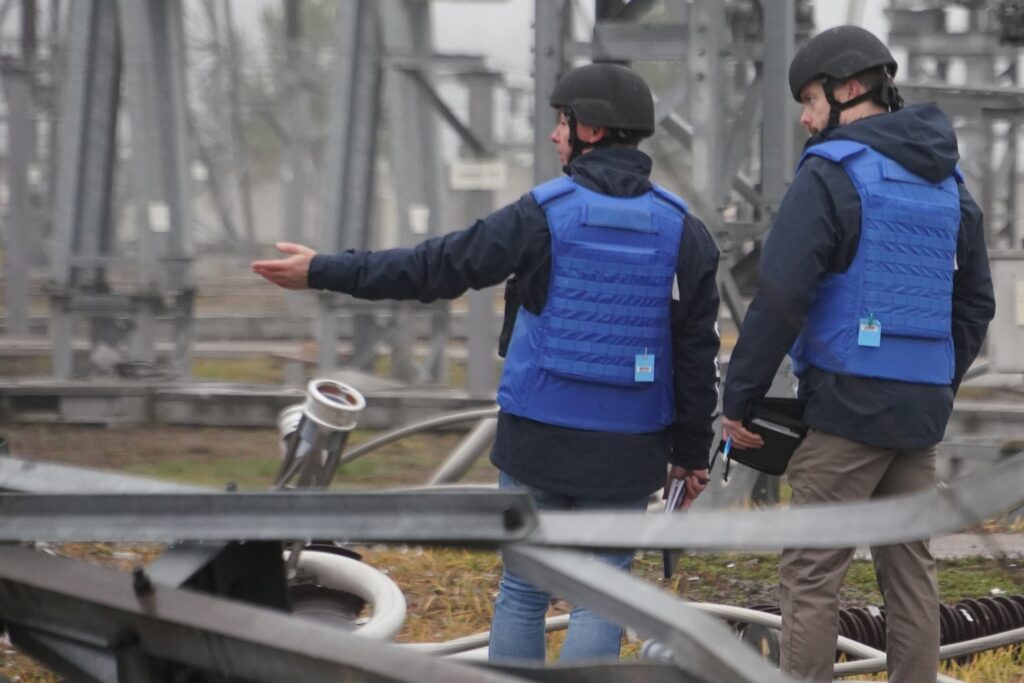
Electricity imports from Europe have repeatedly helped to alleviate shortages in the Ukrainian power system in recent times. And they will help again in the future. Komersant investigated how this market segment works.
In January, the power limit for imports from EU countries to Ukraine and Moldova rose to a record 2.45 GW, up from 2.15 GW previously. Considering that part of the imported capacity is used by Moldova, Ukraine can currently count on approximately 2.1 GW of commercial imports.
Severe frosts and Russian attacks this winter made the work of the Ukrainian power system as difficult as possible, and European imports helped to balance and maintain it. In February, compared to January, electricity imports increased by 41%. On average, during February, the use of available transmission capacity was 89.5%. Daria Orlova, an electricity market analyst at ExPro, continues.
“In February, electricity imports were used to the maximum. And during the evening peak hours, which are roughly 6-11 p.m., almost all available capacity was utilized. At the same time, during other hours, such as daytime or nighttime, imports were not used to 100% capacity. This is how the market works; there was simply no need to use the full capacity. But overall, February was a record month in terms of electricity imports. In March, our consumption decreased, demand decreased, and imports also decreased quite sharply. It still remains at a high level, approximately 800-1600 MW. This is not insignificant, but it is already significantly less than in February,” the expert notes.
Since March 7, 2026, electricity imports to Ukraine have resumed their upward trend. According to ExPro sources in the market, this is due to the fact that scheduled repairs have begun at one of the nuclear power plant’s power units. In other words, once again, electricity imports are helping to balance the Ukrainian power system. And this is not the only feature of this market segment.
Not just mobility
Electricity is supplied from Europe through Ukraine’s inter-state power grids with EU countries. The process consists of several stages: first, the supplier purchases electricity on European markets, then reserves transmission capacity at the inter-state crossing point — in fact, the right to physically transfer electricity to the Ukrainian power system. To this end, special auctions are held, where market participants reserve the necessary capacity for specific hours or periods. Despite the complexity of the mechanism, the import market is quite competitive.
Daria Orlova, an electricity market analyst at ExPro, explains.
“A lot of traders work in imports. About 50 companies import every month. Therefore, competition in this market segment is quite high. Cross-border purchases take place either on the pan-European JAO platform, where pan-European rules apply and almost all countries are represented. There is also the Ukrenergo platform. In other words, there are actually two platforms where cross-border purchases are made,” explains the expert.
For example, according to ExPro agency data for March, based on the results of monthly auctions held on the JAO platform, energy companies purchased 569 MW of inter-state crossings for electricity imports from EU countries to Ukraine. The largest volume of transmission capacity was contracted in the Hungarian direction — 351 MW. Another 109 MW was purchased on the Slovak and Romanian routes. At the same time, demand for access to the cross-border connection significantly exceeded the available volumes. In particular, demand on the Hungarian route was 2,775 MW, which is almost eight times more than the available transmission capacity. Demand on the Slovakian direction amounted to 1,238 MW, and on the Romanian direction — 1,019 MW.
Experience matters
Tolk Ukraine (Tolk Group) is one of those electricity suppliers that has also been involved in importing electricity for a long time. As noted by Viktoria Glukhain, head of business support at Tolk Ukraine LLC, “the key competence of a supplier in importing is not just buying electricity in Europe, but correctly planning the entire chain: from the auction for transmission capacity to balancing supplies.” According to her, this is what determines the economics of the imported resource for the customer.
Tolk Ukraine believes that it is important for customers that the supplier takes on all the complexity of importing, from purchasing resources in Europe to managing imbalances.
“Suppliers who have stable contracts with European partners, experience with capacity auctions, and the ability to accurately forecast customer consumption schedules have an advantage. This is complex energy market engineering, and the final price for businesses directly depends on it, and the price of electricity in Europe is sometimes even lower than in Ukraine — this was clearly demonstrated in February,” notes Viktoria Glukhain.
The cost of imported electricity is made up of several components. First of all, it is the price of electricity on European markets. The second important component is the price of access to inter-state transmission capacity, which is determined at auctions. Added to this are the costs of balancing, delivery, and commercial management of the resource.
Therefore, the price for Ukrainian consumers depends on the situation on European markets, but does not literally repeat it.
“During peak hours, the price can reach 15-17 UAH/kWh, sometimes even more,” explains Viktoria Glukhain, head of business support at Tolk Ukraine LLC.
“European quotations form the basis of the price, but the final economics of imports are strongly influenced by the cost of crossing the border, the hourly consumption schedule, and the situation on the domestic electricity market,” the expert notes.
According to Daria Orlova, an electricity market analyst at ExPro, the price of electricity in Europe has now stabilized relatively.
“It even fell during the daytime because the sun came out in Europe, solar power plants began to operate actively, and in fact, this additional supply from them caused the price to collapse somewhat during the daytime. Incidentally, the situation is the same in Ukraine. And now prices in Europe are roughly at the same level as in Ukraine. Although, perhaps, it is Ukrainian prices that have fallen to the European level. And at certain times, it is quite profitable to import,” the expert notes.
It can be stated that the mechanism of electricity imports is becoming an effective tool for increasing energy security for some businesses. To this end, as Tolk Ukraine emphasizes, it is important to comply with the requirements of the current “Regulations on the specifics of electricity imports under the legal regime of martial law in Ukraine.”
In order for a company to receive a guarantee that it will not be disconnected during possible restrictions, several key conditions must be met:
- in each billing hour, the volume of imported electricity must be at least 90% of the enterprise’s total consumption (from March 8, 2026);
- the relevant technical prerequisites must be ensured: a separate power line or the ability to restrict sub-consumers, as well as hourly real-time electricity metering.
Compliance with these requirements gives businesses a number of important advantages: first and foremost, continuity of production processes and diversification of electricity supply sources, which together create additional stability for the enterprise in conditions of unstable energy supply.
Author: Serhii Vasilevych