Prices for vacations in Egypt have dropped by 25%–35% due to the war in the Middle East
14 March 16:01 ANALYSIS FROM
Egypt remains one of the most popular tourist destinations among Ukrainians. In the summer of 2025, the largest influx of Ukrainian tourists since the start of the war was recorded—a 70% increase compared to 2024. Ukrainians typically choose Egypt because it is more affordable than, for example, Turkey, and because of its consistently sunny weather even in winter. However, due to the situation surrounding Iran and security concerns in the Middle East, the situation may change this year.
The international tourism market has already reacted to the tense situation in the region caused by the hostilities.
To fill hotels and maintain market share, tour operators and hoteliers are forced to offer significant discounts to potential customers.
For these reasons, the cost of trips to popular Egyptian resorts, such as Sharm el-Sheikh and Hurghada, has dropped by an average of 25%.
Due to disruptions in air travel (over a thousand flights in the region were canceled in the early days of the conflict), many hotels are offering free extra nights.
According to Travel Weekly, some companies (such as Nubia Tours) have reported canceling 50% of tours for March 2026 due to tourist concerns. Due to their proximity to the conflict zone, for example, demand for hotels in Sharm el-Sheikh and Dahab has fallen by approximately 22%. Resorts are forced to lower prices on all-inclusive packages to compete with safer European destinations.
[Komersant] inquired about the cost of tours to Egypt as of mid-March 2026. Bookings are currently underway for the so-called high season, which in Egypt falls specifically between March and October. Traditionally, during this pre-war period, tour prices rose significantly compared to November-December offers. Currently, it is easy to find options25%-30% cheaper than standard seasonal prices. In particular, discounts on luxury hotels are at their peak, as operators try to minimize booking cancellations.
Due to its proximity to Israel and Jordan, Sharm was the first to react to the military tensions. European tourists (especially from Britain and Italy) most often cancel trips to this destination.
SOME EXAMPLES OF 5* HOTEL PRICES (Sharm el-Sheikh).
Data is based on the average cost of a standard tour (7 nights, All Inclusive, 2 adults).
| Hotel | Category | Price 2024 (stable), $ | Price 2025/26 (risks), $ | Price difference, $ | Price drop, % |
| Rixos Premium Seagate(Sharm) | 5* Deluxe | 3,200 | 2,400 | – 800 | 25% |
| Pickalbatros Blu Spa (Hurghada) | 5* | 1,950 | 1,520 | – 430 | 22% |
| Steigenberger Alcazar (Sharm) | 5* | 2,800 | 2,150 | – 650 | 23% |
| Jaz Fanara Resort (Sharm) | 4* | 1,650 | 1,200 | – 450 | 27% |
| Hilton Sharks Bay (Sharm) | 4* | 1,300 | 950 | – 350 | 27% |
| Albatros Aqua Park (Sharm) |
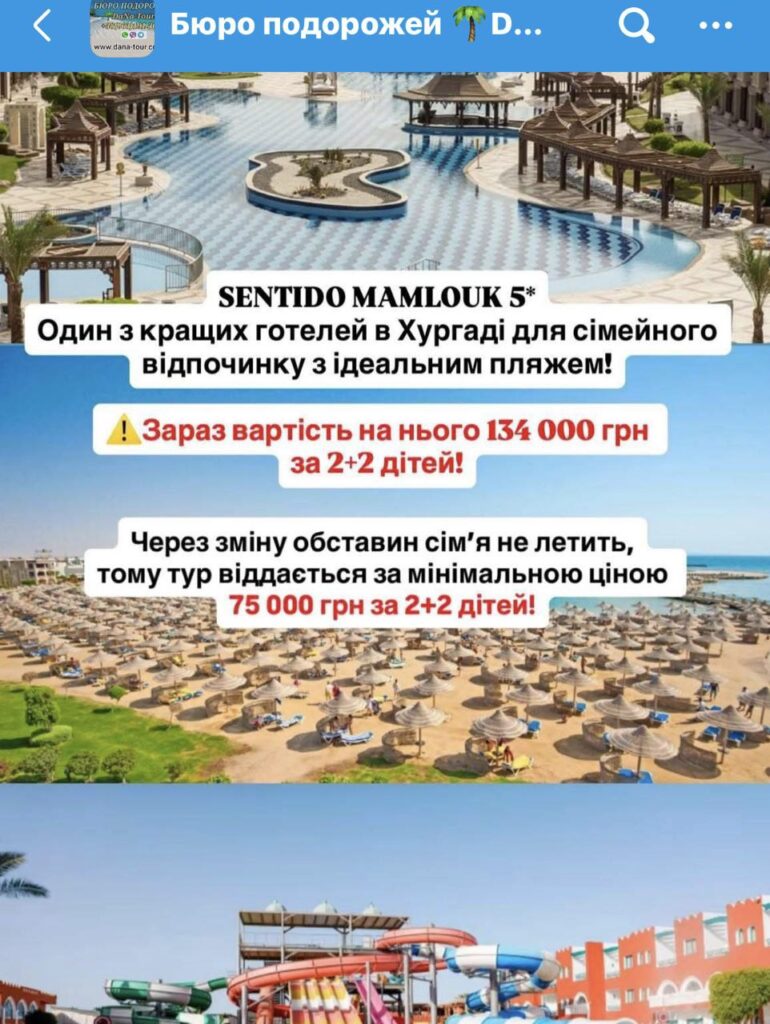
At mid-range hotels, prices for a week-long vacation in sheltered bays start at 20,000–45,000 UAH for two people. There are now more frequent offers where a couple can vacation for as little as 18,000 UAH, including airfare.

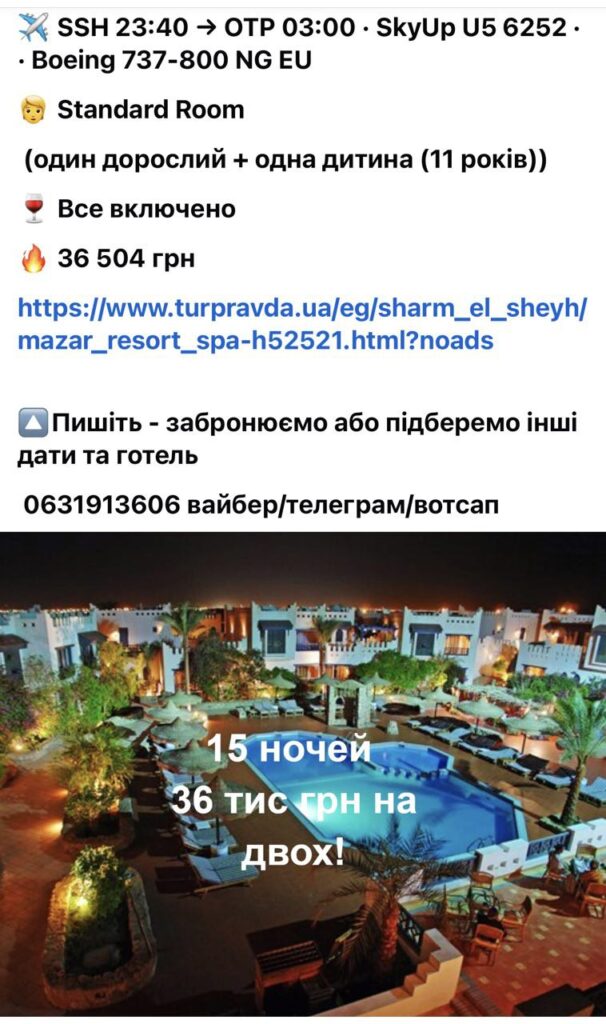
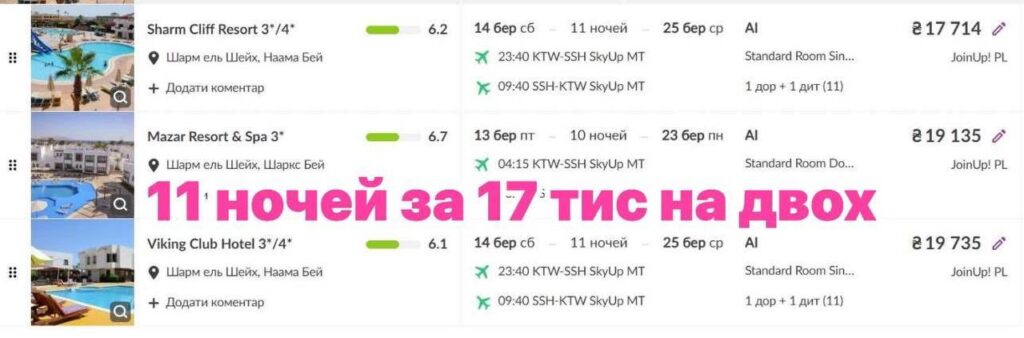
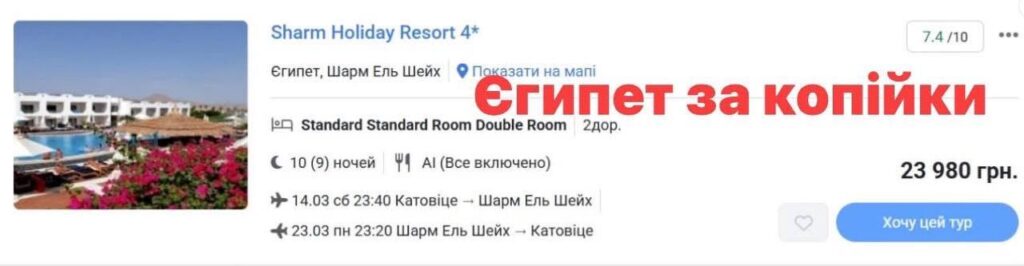
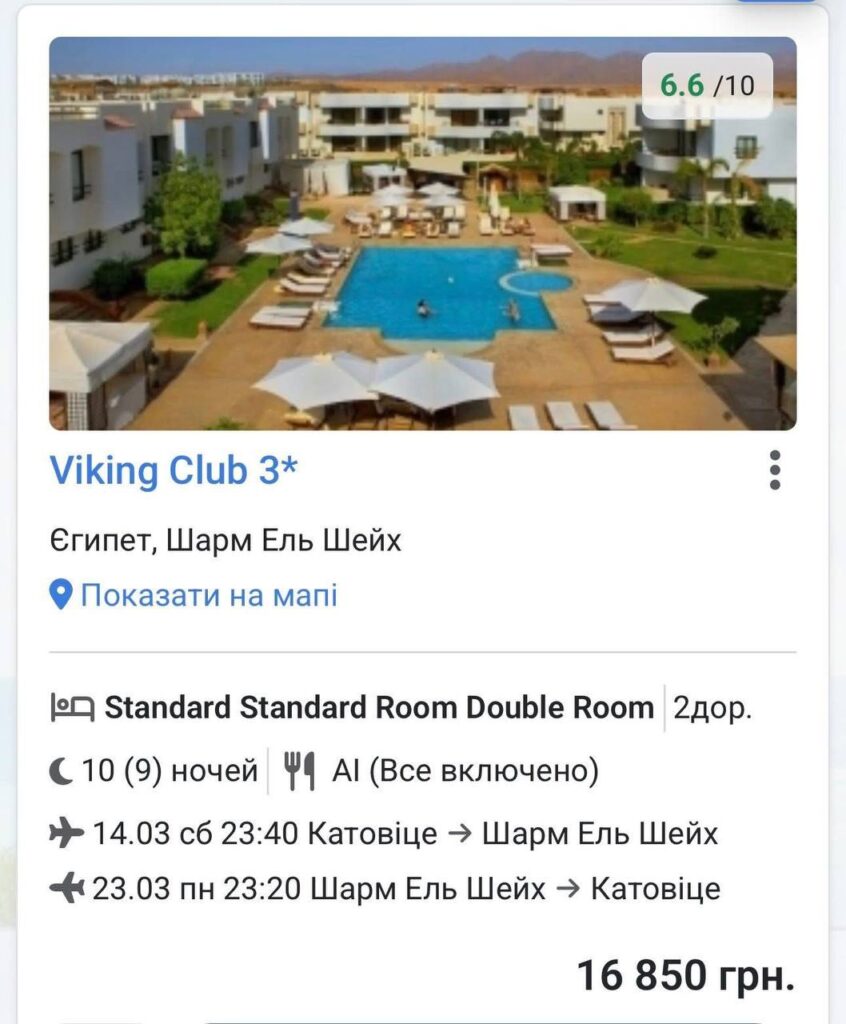
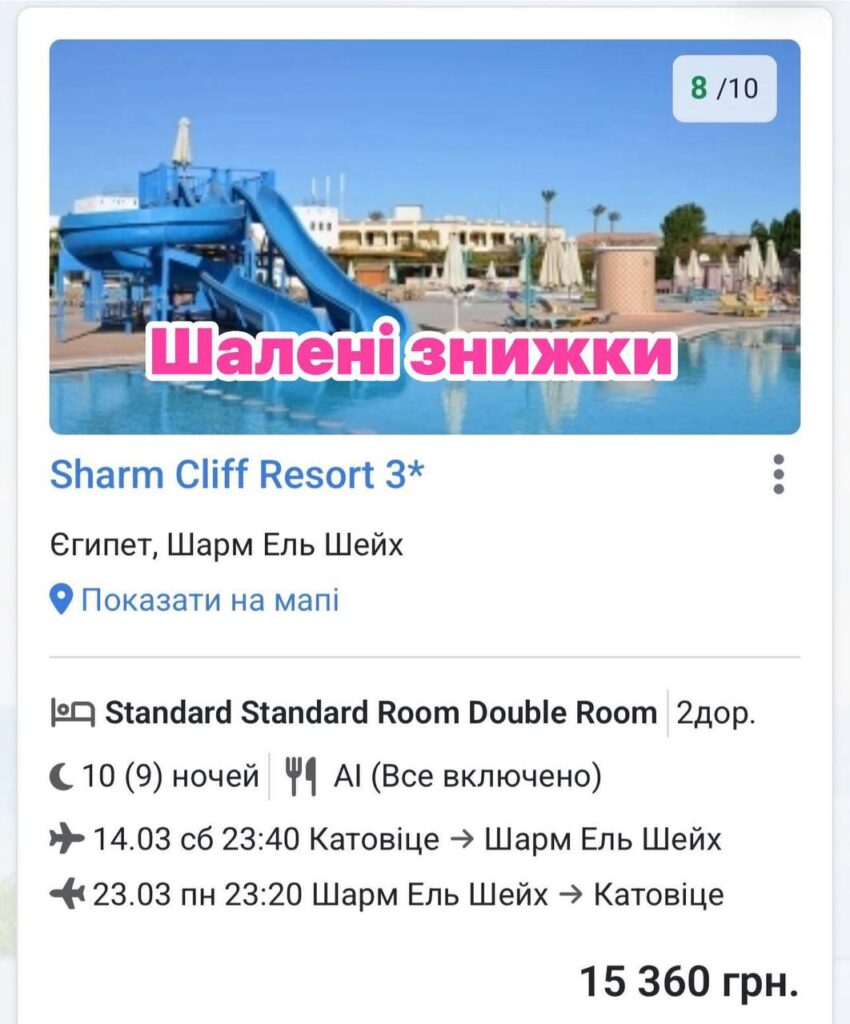
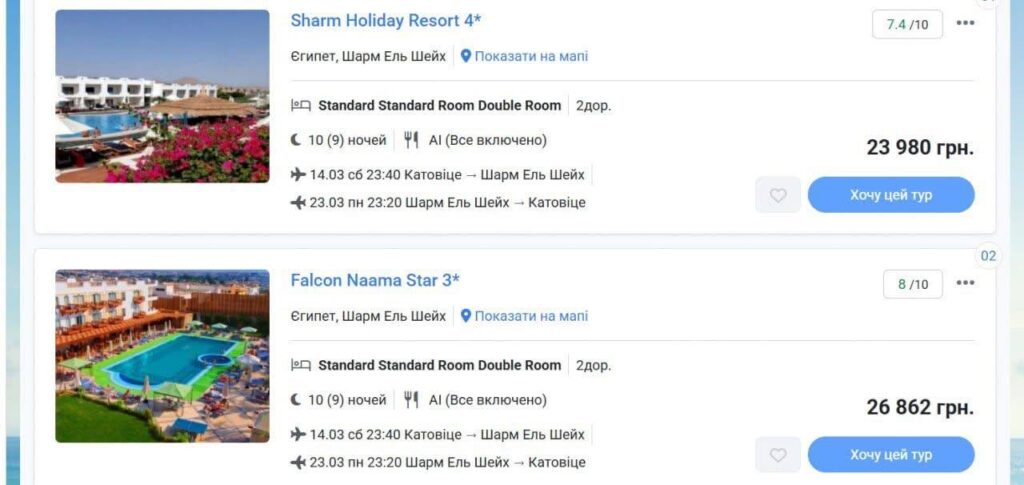
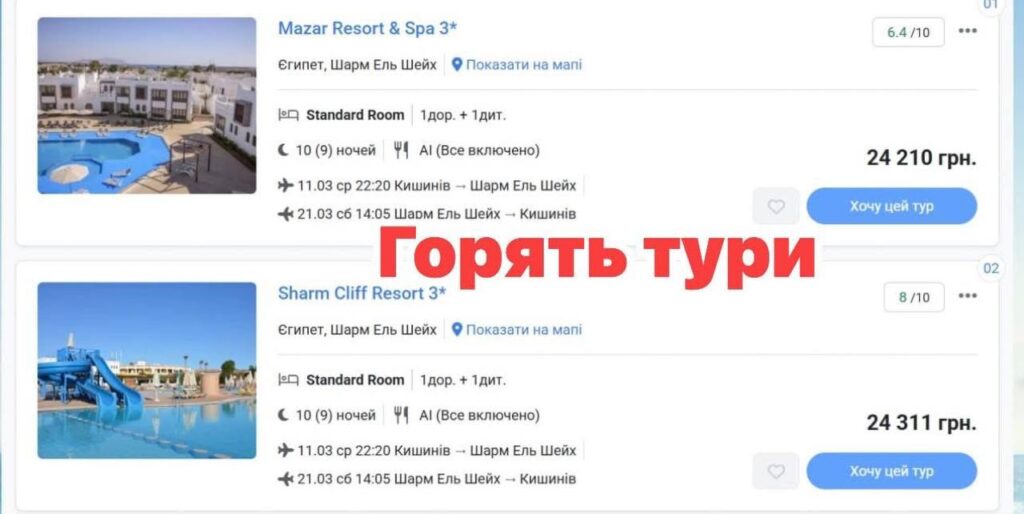
The war in Iran is already having a significant impact not only on Egypt’s tourism industry but on the entire economy. The Egyptian pound has fallen to over 52–55 pounds per dollar. For tourists, this means that local expenses (tours, restaurants, souvenirs) have become cheaper in currency terms. At the same time, this will negatively impact Egypt’s economic indicators. Since tourism accounts for a significant share of foreign exchange earnings and jobs and constitutes up to 15% of Egypt’s gross domestic product.
Ibrahim Mohamed, Marketing Director of the Middle East Travel Alliance, notes in a comment:
“We are seeing an understandable slowdown in new bookings from our partners at this time. However, the Middle East market has always been incredibly resilient, and we expect demand to recover quickly once the situation stabilizes and travelers feel safe again.”
Meanwhile, Western analysts at Oxford Economics predict that if the conflict drags on for 1–2 months, the overall decline in tourist arrivals to the region could reach 27%.
According to the WTTC, which represents the industry’s private sector and includes members from airlines, hotels, cruise lines, and tour operators, the industry could recover “in just two months.”
“The impact of international tourist spending in the Middle East is significant, averaging around $600 million per day, but history shows that the sector can recover quickly, especially when governments support travelers by providing assistance to hotels or facilitating repatriation,” says Gloria Guevara, President and CEO of the WTTC.
According to estimates by various experts and analysts, if the conflict in Iran ends within the coming weeks, the tourism industry across the entire Middle East, including Egypt, could begin to recover as early as the second half of 2026. If hostilities last two months or longer, losses in tourism revenue could reach $56 billion, and the region’s “tarnished reputation” will deter travelers from visiting for several years to come.