CEC restores access to electoral data: planned work or pre-election preparation
6 February 2025 11:42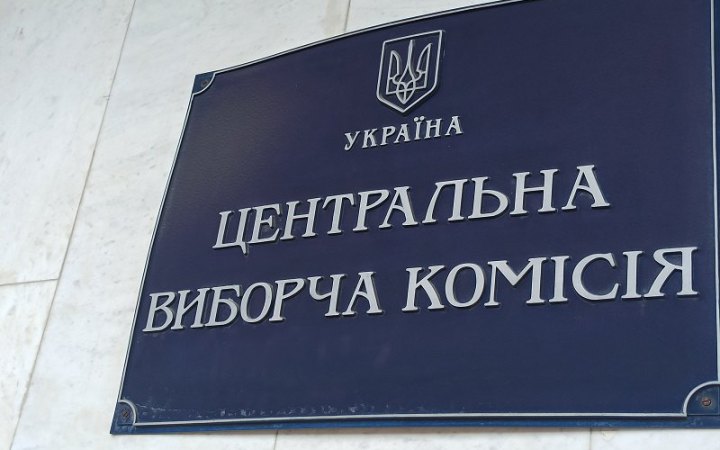
In January 2025, the Central Election Commission of Ukraine opened access to electoral data that had been closed for security reasons since the beginning of the full-scale invasion. From now on, the official website of the CEC provides information on the elections held, the elected deputies, and the composition of election commissions. Some media outlets and civil society organizations suggested that this could be a preparation for the elections in Ukraine. However, the deputy head of the Central Election Commission, Serhiy Dubovyk , said in a comment to
Restoring access to election data
Until now, information about the election could only be obtained through the archives, and even then not all pages were stored in the Web archive. The closed nature of the data made it difficult to find information about candidates, parties, and voting results.
Currently, the CEC website again provides information on parliamentary elections, presidential elections of different years, and the results of local elections.


Scheduled work or pre-election preparation
Deputy Chairman of the CEC Serhiy Dubovyk in a commentary
“Well, you know, it’s just that the message of the Chesno movement has gone viral, I don’t know, viral, or whatever you want to call it. It’s just the planned work of the Central Election Commission, we’ve been talking about this since the end of 2023. Nothing has changed at all,” the CEC deputy chairman emphasizes.
According to him, since mid-2023, active work has been underway to restore the functioning of the State Voter Register:
“Since mid-2023, we have been working intensively to restore the functioning of the State Voter Register. For security reasons, we closed the website of the Central Election Commission, and we are gradually reopening it, as well as the website of the State Voter Register.”
Dubovyk also noted that general information on the website of the State Voter Register has been restored, but the services for checking the electoral address are not yet working.
Follow us on Telegram: the main news in brief
“A year ago, access to the CEC website was opened, and in January of this year, access to databases containing information about the previous elections, MPs and the composition of election commissions was opened as planned. The website of the State Register of Voters was also opened, it contains general information, but services where a citizen can check his or her electoral address are not yet available,” he explained.
Long process of synchronizing the voter register
The CEC has conducted two main stages of work on the voter register. The first lasted almost a year and involved synchronizing the database.
“We are working as follows: at the first stage, which took almost a year, we resumed periodic updating of the State Voter Register database. We synchronized the registry because it is easy to stop the registry, but to synchronize it so that all data sets are processed and it starts working online, as it should, is a rather long process, and we have completed it,” explains Dubovyk.
The second stage was to collect updated data on polling stations. This was necessary due to the destruction of many facilities where polling stations were traditionally located, as well as due to the massive renaming of settlements as part of decommunization.
Follow us on Telegram: the main news in brief
“After that, we moved on to the second stage: in November, we adopted a resolution obliging local authorities to provide us with updated data on polling stations. Why was this done? Because there is destruction of voting places: schools, hospitals, clubs, administrative buildings. There was also a campaign to decommunize settlements, mass renaming of settlements. A lot of information was accumulated, but this cluster of the State Voter Register was not working. We opened it,” said the CEC deputy head.
According to him, the address databases of the State Register of Voters are used by all state authorities and local self-government bodies.
“This is not about elections. The address databases of the Central Election Commission of the State Register of Voters are used by all state authorities and local self-government bodies. In order for this to work properly, we had to open this cluster. We did it,” explained Dubovyk.
He emphasizes that the next step will be to open a voter verification service in the register. But this will happen only after the State Service for Special Communications and Information Protection gives its permission.
“The next step, when the State Service for Special Communications and Information Protection allows us, will be to open a service that allows you to check yourself in the voter lists,” added Dubovyk.
Follow us on Telegram: the main news in brief
Does this mean preparations for the elections?
The public is actively discussing whether the opening of access to data indicates that elections are approaching. Dubovyk denies this connection and calls the information wave “hype.”
“It all came together. There was a wild coincidence of information circumstances, I would say. First, there were certain statements from the U.S. Administration, and there are always statements from the aggressor country. And at the same time, certain messages from the President of Ukraine were heard. All of this overlapped, and at that moment the Chesno Movement, since they are well-known researchers of our bases, well, they are generally interested in these issues, asked us: so what? Comment. I commented on everything, and for some reason, against the backdrop of this information wave, it was picked up and made into a hype,” the CEC deputy chairman said.
He noted that elections are costly, and the issue of holding them depends not on the CEC, but on funding and legislative changes:
“Elections are about money. Democracy, as Churchill said, is expensive. We need to watch not the hands of the CEC, but the law of Ukraine “On the State Budget”. At the same time, we need to keep an eye on the legislative field, because we have now gone beyond the constitutional deadlines, at least for the presidential and parliamentary elections,” he emphasizes.
At the moment, there is also no legal certainty about the format of possible elections.
“Of course, this requires the adoption of a special law that would regulate the question of what type of elections we have? We have regular and early elections. What kind are these? Post-war? Regular ones? What kind? In many cases related to election procedures, the timing matters. If there is no money and no special law, there is nothing to talk about. We are underfunded by more than 70%. Therefore, this is purely a media hype,” adds Dubovyk.
It should be noted that earlier Reuters, citing its own sources, wrote that the United States wants Ukraine to hold elections, possibly by the end of the year, especially if Kyiv can agree on a truce with Russia in the coming months.
Trump’s special envoy for Ukraine and Russia, Keith Kellogg, said in an interview that Ukraine’s presidential and parliamentary elections, which were suspended during the war with Russia, “need to be held.”
“Most democratic countries hold elections during wartime. I think it is important. I think it’s good for democracy. That’s the beauty of a strong democracy, you potentially have more than one person,” Kellogg said.
Trump and Kellogg said they are working on a deal within the first few months of the new administration to end the all-out war that erupted after Russia’s full-scale invasion in February 2022.
They have revealed few details about their strategy for ending Europe’s largest conflict since World War II, and have not said when they might unveil such a plan.
Trump’s plan is still evolving, and no policy decisions have been made, but Kellogg and other White House officials have been discussing in recent days how to push Ukraine to agree to elections as part of an initial truce with Russia.
As a reminder, Ukraine’s elections were supposed to be held in March 2024, but since martial law was imposed across the country, the vote was postponed indefinitely.
Follow us on Telegram: the main news in a nutshell