Tusk Warns of the Threat of a “Polxit”: What Are the Risks of Such a Scenario for Poland and Ukraine?
16 March 18:19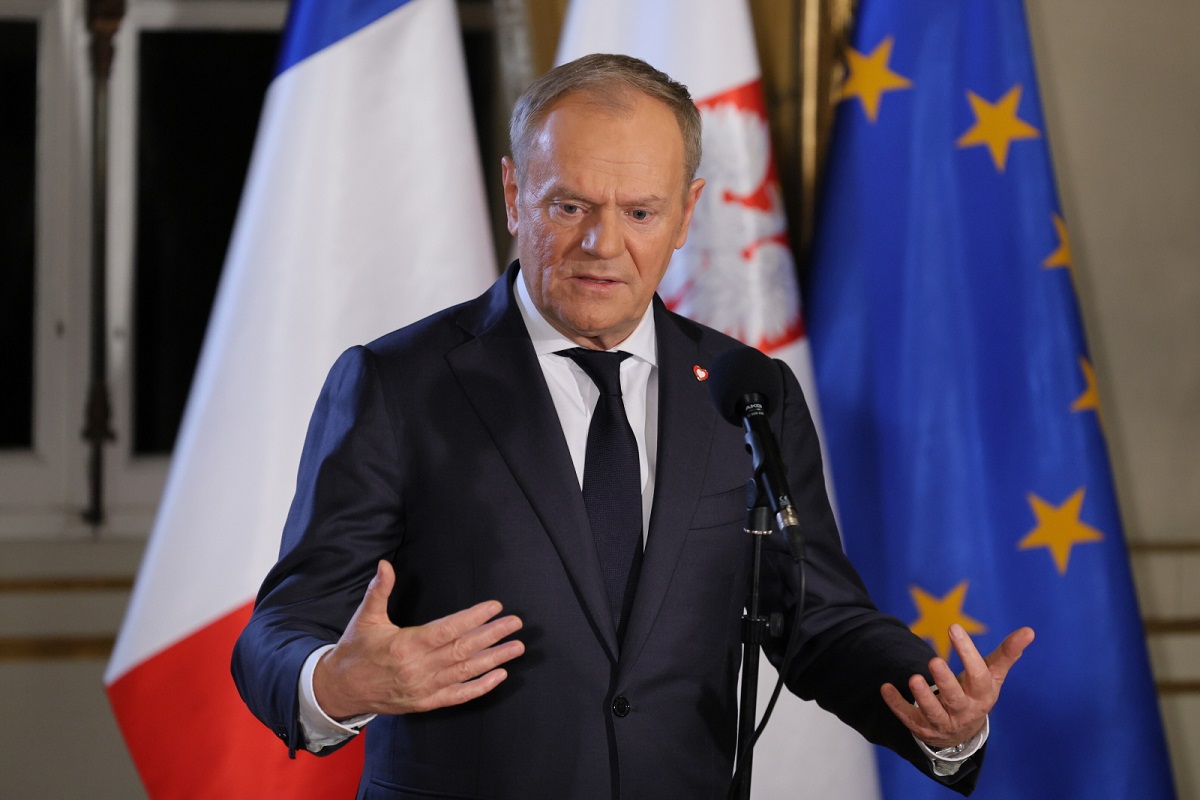
Polish Prime Minister Donald Tusk has warned of the possibility of the country leaving the European Union—the so-called “Polxit.” This statement came amid intensifying domestic political tensions between Tusk and right-wing forces led by Karol Nawrocki. What lies behind Tusk’s rhetoric: a real threat to the EU or just a political game on the domestic front? How could internal disputes in Poland affect the transit of Ukrainian goods and aid to Kyiv? Should Ukraine be concerned about potential restrictions from Warsaw, which has always been its main ally in the EU?
Global political observers are following the latest statements by Polish Prime Minister Donald Tusk, who has publicly warned of the possibility of Poland leaving the European Union—the so-called “Polxit.” According to Tusk, this idea is supported by right-wing political forces led by Polish President Karol Nawrocki.
“Pollexit today is a real threat!… Russia, the American MAGA party, and the European right-wing led by Orbán want to destroy the EU. This would be a disaster for Poland. I will do everything possible to stop them,” Tusk stated.
Domestic political context
Behind Tusk’s statements lies not a real threat of withdrawal, but a domestic political struggle. This is explained by Dr. Serhiy Yagodzinsky, a professor of philosophy, in a comment
“We have a struggle between two politicians—Tusk and Nawrocki—who have different visions for Poland’s development. Neither of them is suicidal, and 60 to 75% of Poles support the European vector. Therefore, the threat of Poland’s actual exit from the EU exists only at the level of rhetoric,”—Serhiy Yagodzinsky
According to Yagodzinsky, Tusk’s strategic goal is to raise the stakes within Poland, demonstrate to voters that he stands against Eurosceptic forces, and maintain Poland’s status as a key player in the EU.
“Tusk is thus telling Poles: look, there’s Nawrocki; his actions could lead to an exit from the EU, even though in reality there is no basis for this,” adds Jagodzinski.
Public opinion polls confirm the expert’s words: only 20–25% of Poles are Euroskeptics, and these are predominantly marginal groups. According to a Eurobazooka poll (late 2025), 25% of Poles support Polexit, while 69% favor Poland’s membership in the European Union. This indicates significant, albeit reduced compared to previous years, support for European integration, while also recording a record-high percentage of supporters of leaving the EU. The majority of the population—the middle class and entrepreneurs—are interested in preserving European integration.
“Poland’s GDP will fall by 10–15% if the country leaves the EU. This is not Brexit, and it will be impossible to compensate for such losses,” says Jagodziński.
Thus, any high-profile statements about “Polxit” are primarily of a domestic political nature and are aimed at Polish voters, not the international community.
Consequences for Ukraine
For Kyiv, Tusk’s political maneuvers could have a direct impact on cooperation with Warsaw. Poland is one of Ukraine’s main advocates in the EU and NATO, and domestic political disputes could alter the pace and nature of that support.
“Now Tusk may ‘sell’ European services to Ukraine at a higher price. Border blockades and restrictions on Ukrainian producers, especially agricultural products, are possible. Brussels, however, will take a softer stance, as it will understand that there are two opposing positions in Poland,” says Yagodzinsky.
The expert emphasizes that this is not a threat to Poland’s European integration, but it could create some political tension in relations with its neighbors.
Thus, Tusk’s rhetoric regarding “Pollexit” pertains more to Poland’s domestic politics than to a real threat of leaving the EU. The prime minister’s main goal is to strengthen his party’s position and highlight the difference from right-wing forces led by Nawrocki. It is important for Ukraine to understand: Warsaw remains a reliable partner, but domestic political dynamics may temporarily affect cooperation and the transit of goods across Polish borders.