The White House says Trump is disappointed with Russia and Ukraine
12 December 2025 05:11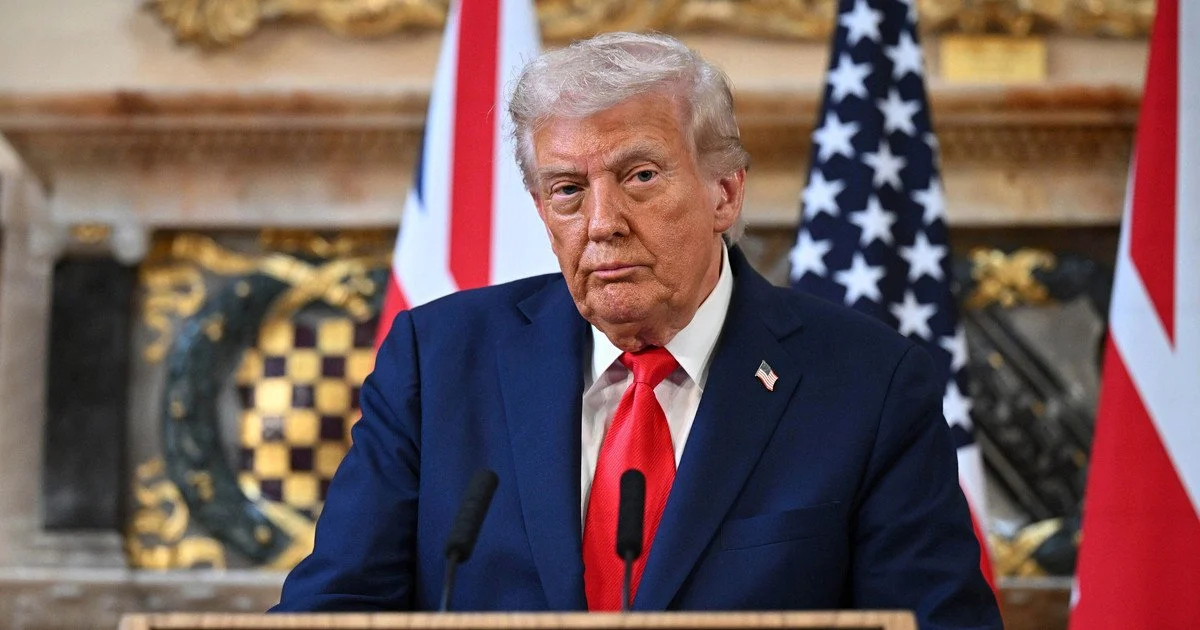
US President Donald Trump is disappointed with both Russia and Ukraine. This was reported by press secretary Caroline Levitt, broadcast on the White House YouTube channel, "Komersant Ukrainian" reports.
“The president is extremely disappointed with both sides of this conflict and is tired of meetings for the sake of meetings. He no longer wants talk, he wants action,” Levitt emphasized.
on December 11, Bloomberg reported that Donald Trump had increased pressure on Ukrainian President Volodymyr Zelenskyy to adopt a peace plan and hold presidential elections.
On the same day, Russia said that at the moment there is no peace plan for Ukraine that would fully meet Russia’s interests, especially when it comes to freezing the conflict along the contact line.
Three key documents of the peace plan
The initial “peace plan” had 28 points and proposed the creation of a supposedly “neutral demilitarized buffer zone” after the withdrawal of Ukrainian troops from the Donetsk region. The plan stipulates that the zone will be an internationally recognized territory of the Russian Federation, and Russian troops will not enter it.
During a visit to Kyiv, US Secretary of the Army Dan Driscoll said that the United States is ready to provide Ukraine with security guarantees and create a “state-of-the-art demilitarized zone” along the front, similar to the Korean demilitarized zone.
Zelenskyy sees such a zone as a way to a frozen conflict and notes that the issue of security guarantees has not yet been resolved.
At the moment, Ukraine and its allies identify three main documents that Washington and Kyiv are working on:
- ThePeace Plan (20 points) is a framework document that is constantly changing and meets the interests of Ukraine, Europe, and the world.
- Security Assurances – a document between Ukraine, the United States, and the “Coalition of the Resolute” that defines security measures for the country.
- Recovery Plan – provides for the economic and infrastructural recovery of Ukraine after the war or ceasefire.
In general, the main points of the peace plan, which are known from the parties’ statements, include
- territorial issues, in particular, the Donetsk region;
- safety of nuclear facilities (ZNPP);
- determination of the demarcation line and border control;
- reparations and restoration of Ukraine;
- guarantees from the US and EU;
- return of children and prisoners.
Who is working on the peace plan
US Presidential Special Envoy Steve Vitkoff and Trump’s son-in-law Jared Kushner have become the main and only American representatives in negotiations with Russia.
In particular, this year, Vitkoff has already met personally with Russian dictator Vladimir Putin six times. While Jared Kushner has only recently joined the team of Trump’s envoy, at least publicly.
The Ukrainian negotiating team, after the resignation of Presidential Administration Chief of Staff Andriy Yermak, is headed by National Security and Defense Council Secretary Rustem Umerov.
On the European side, which is discussing with Kyiv the issue of security guarantees in the event of a ceasefire, the leaders of the so-called “coalition of the resolute” are leading the way:
- french President Emmanuel Macron
- german Chancellor Friedrich Merz;
- british Prime Minister Keir Starmer.
The Russian team includes both Putin’s political advisors and financial and economic representatives of the Kremlin. Among them are Kremlin aide Yuri Ushakov and Kirill Dmitriev, who is the head of the Russian Direct Investment Fund (RDIF).
The American delegation brought the framework of the peace plan to discuss with Putin after the document underwent changes insisted on by Kyiv. The Kremlin leader himself said that the US plan “could become the basis for a final peaceful settlement in Ukraine.” However, he again emphasized his maximalist demands.
In turn, Ukraine has submitted updated proposals to the United States for further approval. What they contain is not disclosed. But Axios writes that Ukraine’s response to the US peace plan includes new ideas for resolving such contentious issues as territories and the nuclear power plant.
Meanwhile, Zelenskiy continues to discuss the plan with allies in Europe.
Meeting at the level of leaders
The President of Ukraine emphasizes that sensitive issues of the plan should be discussed at the level of leaders, including Trump. However, so far there has been no confirmation of the meeting from the American leader.
Western media report that the United States is in a hurry to conclude an agreement, citing Christmas (December 25) as a potential deadline.
Russia’s position
Russia has been actively pushing for territorial concessions from Ukraine, particularly regarding Donbas. According to the Kremlin, the changes made to the original 28-point US “peace plan” are not favorable to Russia.
After all, the original plan actually described the conditions for Ukraine’s surrender: limiting the size of the Armed Forces, concessions on its territories, and amnesty for Russian war criminals.
At a press conference in Bishkek on November 27 , Putin said that the fighting in Ukraine would end when the Ukrainian Armed Forces left “the territories they occupy.” The dictator was talking about Donbas and the so-called “Novorossia,” probably meaning Luhansk, Donetsk, Kherson, Zaporizhzhia, Crimea, and Sevastopol.
Russia is also categorically opposed to Ukraine’s course toward NATO.