Putin is running out of time: the US position is getting tougher, and Germany gives Russia 12 hours
12 May 2025 16:41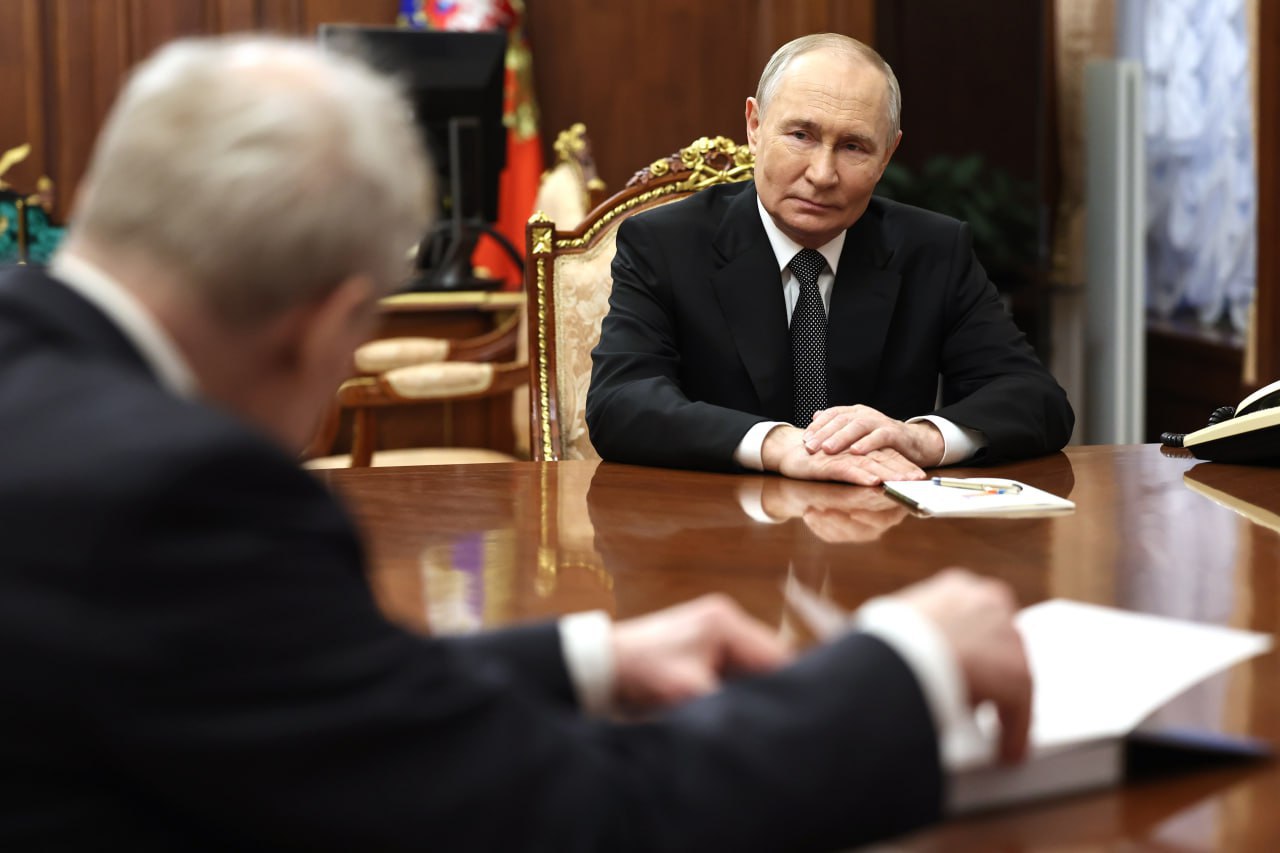 ANALYSIS FROM
The world is approaching a diplomatic turning point: Putin is once again trying to dictate terms, but this time he is met with a wall of resolve. The United States, Europe, and even China have spoken with one voice, demanding an unconditional 30-day ceasefire. Donald Trump, who until recently was cautious about supporting Ukraine, is now showing toughness, and Germany has given Putin an ultimatum of 12 hours for a truce. More and more leaders are saying that peace talks are possible only on the terms of the civilized world, not under the Kremlin’s dictation.
What does Putin’s statement about “negotiations without conditions” mean and why does it sound more like an ultimatum? Why won’t Merz be able to act at his own discretion? And how is the global coalition, which China has unexpectedly joined, putting pressure on Moscow? In the article
Russian President Putin made an 18-minute statement in which he refused to support the 30-day ceasefire and announced a meeting with Ukraine in Istanbul on May 15, “without preconditions.” According to him, the talks should discuss a “long-term sustainable peace” taking into account the “root causes of the conflict.”
He also suggested the possibility of discussing new ceasefire regimes, ones that “would be actually observed not only by the Russian side but also by the Ukrainian side.” In this way, Putin actually admitted that previous unilateral initiatives by Russia to establish a ceasefire had not been implemented by Moscow. However, the tone of the statement was far from diplomatic. The Russian president did not propose a meeting, but rather presented the fact that the Russian delegation would be in Istanbul on Thursday, May 15. Ukrainian President Volodymyr Zelenskyy later said that he would personally wait for Putin in Istanbul.
Friedrich Merz said he was ready to talk to Putin, but only in agreement with Trump and European leaders
Germany has issued an ultimatum to Putin. According to German government spokesman Stefan Cornelius, Russia has until the end of the day, May 12, to respond to the proposal for a 30-day ceasefire in Ukraine. Otherwise, it will face sanctions.
We still have 12 hours until the end of the day, and if the ceasefire is not observed by then, the European side will start preparing for sanctions,” said Stefan Cornelius.
Also, German Chancellor Friedrich Merz said he was ready to call Russian dictator Putin to discuss the peace process in Ukraine. However, he emphasized that this is possible only in coordination with European partners and in agreement with U.S. President Donald Trump.
If I get the opportunity, I will do it. But in coordination with all European partners. We speak with one voice here. And if it comes to that, I will also act in coordination with the US President,” Merz said
The Chancellor also emphasized that the countries of Europe and the United States are speaking with one voice: if Moscow does not agree to the proposed 30-day ceasefire, sanctions against Russia will be significantly strengthened.
“If Russia refuses to agree to the ceasefire, we will move to a serious increase in sanctions and increase assistance to Ukraine – political, financial and military,” Merz emphasized in an interview with Bild.
According to him, Germany, France, the United Kingdom and Poland are in full unity with the United States on this issue.
In a comment for
I am not sure that Putin will talk to Merz at all. The chancellor makes rather ambiguous and sometimes politically immature statements: sometimes he supports the supply of weapons to Ukraine, sometimes he expresses readiness for negotiations. But the question arises – what exactly is there to talk about with a dictator whose position has already been voiced by Zakharova, Peskov and Medvedev?” said Serhiy Yahodzinsky
“Trump is losing patience”: transatlantic partners are putting pressure on Russia in a coordinated manner
Friedrich Merz emphasized that US President Donald Trump, despite his previous reputation as a cautious critic of military aid, demonstrated “a surprisingly high degree of understanding of the situation.
“After our conversation, I was impressed by how deeply the US president understands the nature of this war and how determined he is to help end it,” Friedrich Merz said
“If Moscow continues to delay, the new round of sanctions will be more painful, particularly for the United States. The sanctions policy will remain joint and long-term until the Russian economy finally loses the ability to finance the war.
The Russian economy is already in a state of devastation. The next steps may be even tougher. We will not allow the Kremlin to drag out the war unanswered, – Friedrich Merz
France’s reaction
French President Emmanuel Macron also voiced his position. In response to Putin’s statement, he called it “a first step, but not enough.”
“An unconditional ceasefire must precede negotiations,” Macron told reporters in Przemysl, Poland, after returning from Ukraine.
Coalition of the Resolute demands unconditional ceasefire from Putin
During a meeting of the leaders of the “Coalition of the Resolute” in Kyiv, British Prime Minister Keir Starmer said that any attempt by Russia to put forward counter-conditions in response to the 30-day ceasefire initiative would be seen as a deliberate blocking of the peace process.
This is the greatest unity we have ever had. The whole world – including the United States – is in favor of a 30-day unconditional ceasefire. If Putin’s response is with reservations or conditions, it will mean a rejection,” Starmer emphasized.
The Prime Minister emphasized that if the peace initiative is disrupted, the international community is ready to respond with a new package of sanctions against the Russian Federation.
“We agreed that there can be no easing of sanctions. Their lifting is only possible as a result of sustainable peace – and only at the end of the process, not at the beginning,” said Kier Starmer
On May 10, more than 20 leaders of the “Coalition of the Resolute” held a joint meeting in Kyiv to support the call for an immediate and unconditional ceasefire with Russia starting on May 12 for a period of at least 30 days.
According to President Volodymyr Zelenskyy, this position of the coalition is evidence of “the absolute diplomatic unity of the civilized world.”
Talks with Putin are meaningless without a unified position of the West
Today, the key is not individual statements by individual politicians, but consolidated pressure from the transatlantic coalition, says Serhiy Yahodzinsky, PhD, professor and vice-rector of the European University.
The truth of today’s pressure on Putin is no longer just in statements. China has joined the position of the “coalition of the resolute”: The Chinese Ministry of Foreign Affairs has expressed support for the idea of a 30-day truce. And this is much more important than potential conversations between Merz and Putin,” Yahodzinsky emphasized.
According to Yahodzinsky, the Kremlin’s reaction was expectedly defiant, and official statements show that Russian rhetoric is unchanged.
Zakharova said that Putin had already announced everything. Peskov said that Russia is used to sanctions. And although Putin says he is “ready for a dialogue,” he is only hinting at a conversation with “the rest of Europe,” not the united West,” explains Serhiy Yahodzinsky.
The professor believes that any uncoordinated actions of politicians only harm the overall strategy of pressure on Russia. Especially public emotional statements made without consulting partners.
Every impulsive statement without coordination with partners can reduce the credibility of those who make it. The day before we heard statements like “no negotiations without a ceasefire,” and today we heard “there will be negotiations.” And the United States, China, and Trump are saying directly: “go to the talks, no conditions,” Yahodzinsky notes
According to Yahodzinsky, the current negotiation process should be led by a broad international coalition, not individual politicians. “It’s not Zelensky, Merz, Macron, Trump, or Xi Jinping who are negotiating with Putin. This is a joint coalition, the professor is sure.
Otherwise, Putin will get a chance to play on differences and again accuse the West of “impolite attitude,” warns Yahodzinsky
Therefore, an important condition for the effectiveness of international pressure on Russia is the unity of the positions of Western countries and key players such as China and the United States. And negotiations with Putin cannot be effective without a clearly agreed strategy. This is the only way to create conditions for a peaceful settlement of the conflict and force Russia to make real concessions.
Читайте нас у Telegram: головні новини коротко