The Rada is considering two models of cost-effective mobilisation booking – what is known
11 March 2024 23:40
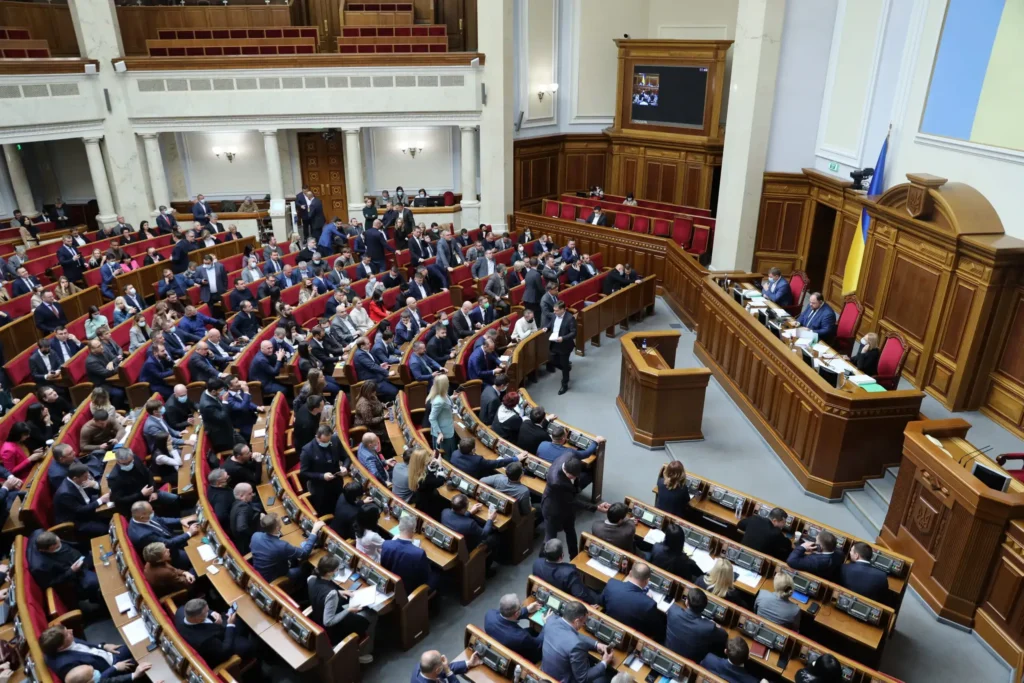
At the end of March, the Verkhovna Rada plans to register a draft law on economic reservations for mobilisation. Two models of economic reservation are currently being considered.
This was stated by the chairman of the Verkhovna Rada Committee on Economic Development, Dmytro Natalukha, Kommersant Ukrainian with reference to Suspilne.
“One model is, in fact, the model that was born in the President’s Office, about 35 thousand hryvnias. And the second model is the one we are working on with our team. This is a model of paying an additional military fee for each person booked, regardless of their position, salary or any other criteria,” said Natalukha.
According to him, the amount of this military fee is UAH 20,000 for each person booked.
“There are two basic models, the difference is that the first model has a fee of UAH 35,000. It does not include individual entrepreneurs, it will not apply to them. This is the first thing. Secondly, part of the funds, since it is a salary, will go to the local budget, not directly to the Armed Forces. The third story is that the minimum salary, which is UAH 35,000, will be higher than the minimum wage in the army, which is currently just over UAH 20,000,” explained Natalukha.
He believes that such an initiative may be perceived rather ambiguously.
“All these accusations that we hear from time to time from the opponents of mobilisation, that not only have they taken people to the army, but they have also given them a salary that does not allow them to feed their families, will strengthen their arguments, and we would not like this. On the other hand, there is a positive aspect: this model whitewashes the salaries paid in envelopes. It is possible that a lot of these envelope salaries will be converted into white salaries in order to book employees,” the MP said.
Natalukha noted that the model of paying the increased military fee is not aimed at whitewashing salaries.
“Our goal is to accumulate and mobilise finances and financial resources, specifically for the Armed Forces. That’s why we want to increase the amount of the military fee, so that this money goes exclusively to the Armed Forces, not to any local budgets or other funds, but specifically to the Armed Forces,” the MP said.
Secondly, according to Natalukha, the MP’s model provides for the possibility of booking individual entrepreneurs.
“And thirdly, we do not have a criterion for minimum wages or positions, which probably allows us to say that we do not create this imbalance, that is, formally, if you are not at war and you are booked for 20 thousand hryvnias, then you can absolutely adequately say that you are paying 20 thousand hryvnias for someone who is at war,” he said.
The MP expects the bill to be registered with the Verkhovna Rada by the end of March.
“This will not be within the framework of the draft law on mobilisation,” added Natalukha.
According to him, the draft law on mobilisation should go its own way and there should be “a minimum number of things that could pose a threat to its rejection”.
“Because we support the mobilisation, but our philosophy is that economic reservation will help finance this mobilisation and, therefore, speed up the rotation and demobilisation of our soldiers,” the MP said.
On 7 February, the Verkhovna Rada of Ukraine adopted a new draft law on mobilisation without any proposals from the relevant committee. More than 4,000 amendments have already been submitted to it.
The draft law proposes, among other things, to introduce summonses through the conscript’s electronic cabinet. Other innovations include lowering the conscription age to 25 years, setting the demobilisation period at 36 months, introducing voluntary mobilisation for convicts, restrictions on evaders, banning civil service without military training, etc.
On 8 March, it became known that the relevant committee of the Verkhovna Rada had previously removed the provisions on blocking accounts and restrictions on driving from the government’s draft law on mobilisation.