The Verkhovna Rada is already thinking about legislative support for the first postwar elections
3 December 2024 12:56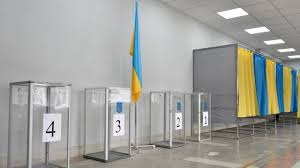
The Parliamentary Committee on the Organization of State Power, Local Self-Government, Regional Development and Urban Planning recently presented a study that assessed the risks and opportunities of using alternative forms of voting in the post-war elections in Ukraine, with a focus on online voting. The analysis was prepared with the support of the Council of Europe. This was announced by the chairman of the Committee Olena Shulyak, "Komersant Ukrainian" reports.
She believes that regardless of when the first post-war elections will be held, the legislative framework should be prepared in advance to hold them at the highest democratic level.
According to the study and practical recommendations based on the experience of EU countries, there are various alternative ways of voting, first of all
– postal voting – it is possible in 19 EU member states,
– internet voting – used in France and Estonia.
According to the study, only about 8% of citizens have confidence in postal voting, and Internet voting also has a low level of trust in Ukrainian society.

In addition, Olena Shulyak states that in order to build a reliable online voting system, a number of issues need to be addressed, including
– how to ensure the secrecy of the vote and avoid third-party coercion?
– how to guarantee reliable voter identification?
– should internet voting be used only through a personal computer or also through a smartphone?
– how to develop a reliable state digital infrastructure protected from manipulation?
– how to ensure investment in independent servers and the establishment of independent vote counting bodies?
“The example of Estonia shows that it took them 25 years to get more than 50% of the voters who took part in the election to vote electronically. In this country, every citizen has an ID card that contains an electronic digital signature. In addition, Estonia has a single certification center. In turn, in Ukraine, there are many more certification centers, as well as many electronic digital signatures, which creates certain challenges for the unification of systems,” notes Olena Shulyak.
According to her, the first post-war elections must have absolute confidence in their legitimacy, and therefore the challenges of holding them require a broad public discussion, an information campaign to explain them, and, of course, the adaptation of electoral legislation.
When exactly can elections be held?
In July 2024, the Speaker of the Verkhovna Rada, Ruslan Stefanchuk, said during a single telethon that it was unlikely that elections would be held during the war. He referred to the Law of Ukraine “On the Legal Regime of Martial Law,” which prohibits holding elections during martial law.
Earlier this year, in May, answering a question about the existence of speculation about the loss of legitimacy of the President of Ukraine after May 20, given the completion of his 5-year term in office, Stefanchuk stressed that he had no doubt that President of Ukraine Volodymyr Zelenskyy was legitimate, and expressed his belief that the next presidential election would be held within 60 days after the lifting of martial law.
In late October, in an interview with the Italian newspaper Corriere della Sera, the head of the President’s Office, Andriy Yermak, said that presidential elections in Ukraine would take place immediately after the end of the war.
However, The Economist wrote at the end of September that “despite the fact that all major political parties agreed last year to postpone elections until the end of the war, Mr. Zelensky is said to be considering calling presidential elections next year to consolidate his power.” At the same time, the publication, citing data from the American National Democratic Institute, claimed that Ukrainians’ trust in Volodymyr Zelenskyy had fallen from 80% in May 2023 to 45% this year, and that trust in the government in general was even lower.
Who do Ukrainians support?
on November 26, the Social Monitoring Center released the results of a sociological study, believed to be the first social survey conducted since the beginning of Russia’s large-scale invasion of Ukraine, which demonstrates the electoral preferences of Ukrainians during Russia’s war against Ukraine.

Citizens were asked, if the presidential elections in Ukraine were held next Sunday, who would you vote for? The top three leaders looked like this: Valeriy Zaluzhnyi – 27%; Volodymyr Zelenskyi – 16%; Petro Poroshenko – 7%.
Former Commander-in-Chief and current Ambassador of Ukraine to the United Kingdom Valeriy Zaluzhnyi is the leader in other possible variations. For example, citizens were asked, if you could name one more candidate, who would you choose? The answer was as follows: Valeriy Zaluzhny – 15%; Kyrylo Budanov – 12%; Volodymyr Zelenskyy – 6%.
Accordingly, the overall situation now looks like this: Valeriy Zaluzhnyi – 42%; Volodymyr Zelenskyi – 22%; Kyrylo Budanov – 18%.
Attitudes towards elections during martial law
According to a study by the same Social Monitoring Center, 64 percent of Ukrainians do not support the idea of holding elections under martial law. 33 percent consider it possible to hold such elections during martial law. At the same time, 38 percent of respondents strongly and rather support remote voting, while 57 percent do not support it either strongly or rather. Support and opposition to electronic voting for Ukrainians abroad is divided in half – 47 percent to 47 percent.