The EU allocates 10.6 billion euros to create its own alternative to Starlink
17 December 2024 15:16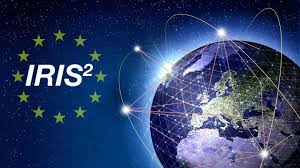
The European Union has pledged to build a €10.6 billion satellite constellation that will provide EU member states with encrypted global Internet connectivity, which will be Europe’s own alternative to Elon Musk’s Starlink. Bloomberg writes about this, "Komersant Ukrainian" reports.
The European Union signed contracts the day before to start work on IRIS2, a multi-orbit network of 290 satellites that should be fully operational by 2030 and will be able to serve European governments and the military, as well as private customers.
In this regard, Bloomberg notes that this is actually a belated start for the EU in its efforts to close the gap with Starlink, which already boasts more than 6,000 satellites and claims customers in about 100 countries.
But, as they say, better late than never. The EU is concerned about the dependence on private services of a company like Elon Musk’s Starlink. Especially given that militaries around the world have shown great interest in Starlink programs. Accordingly, the plan, which will be implemented through public-private partnerships, aims to make IRIS2 a European alternative to third-party actors.

Who will implement the EU plans and at what cost?
The three companies that are forming a group to implement this European project are Luxembourg’s SES SA, France’s Eutelsat SA, and Spain’s Hispasat SA.
The EU will invest €6 billion, companies will contribute €4.1 billion, and the European Space Agency will provide €550 million. The contract is for 12 years, and part of the EU’s investment will be subject to approval by the bloc’s member states.
SES and other companies will be allowed to sell some of their services to commercial customers, and about half of the capacity, according to a European Commission spokesperson, will be reserved for government activities.

How the EU assesses the project’s prospects
Andrius Kubilius, the bloc’s new Commissioner for Defense and Space, hailed the signing as an “important step forward” for the bloc’s security and defense, saying that Europe is under threat in many ways, including through Russia’s jamming of navigation signals.
“In times of war, we cannot afford to lose communication,” he said.
Bloomberg reminds that Starlink has become a significant factor during Russia’s war in Ukraine, as the Ukrainian army actively uses it during military operations. At the same time, the publication recognizes that Elon Musk’s role as an adviser in the future administration of Donald Trump raises additional questions about how this may affect Starlink’s activities.
Those involved in the implementation of the large-scale initiative are optimistic, despite the fact that Starlink is already far ahead.
“There’s this narrative in the industry that Starlink has won and everyone else is dead, right? That’s not true,” SES CEO Adel Al Saleh told Bloomberg. “They are investing a lot of money, so it is very difficult to compete with them. However, every country and every people wants to have sovereignty and independence. Even small countries want to launch a satellite.”
Al-Saleh said the IRIS2 contract will allow companies like SES, which develops satellites operating in higher orbit than Starlink, to thrive because the EU is their “anchor customer.”