Ukraine and the Global South: The Battle of Narratives between Kyiv and Moscow
19 September 2025 15:09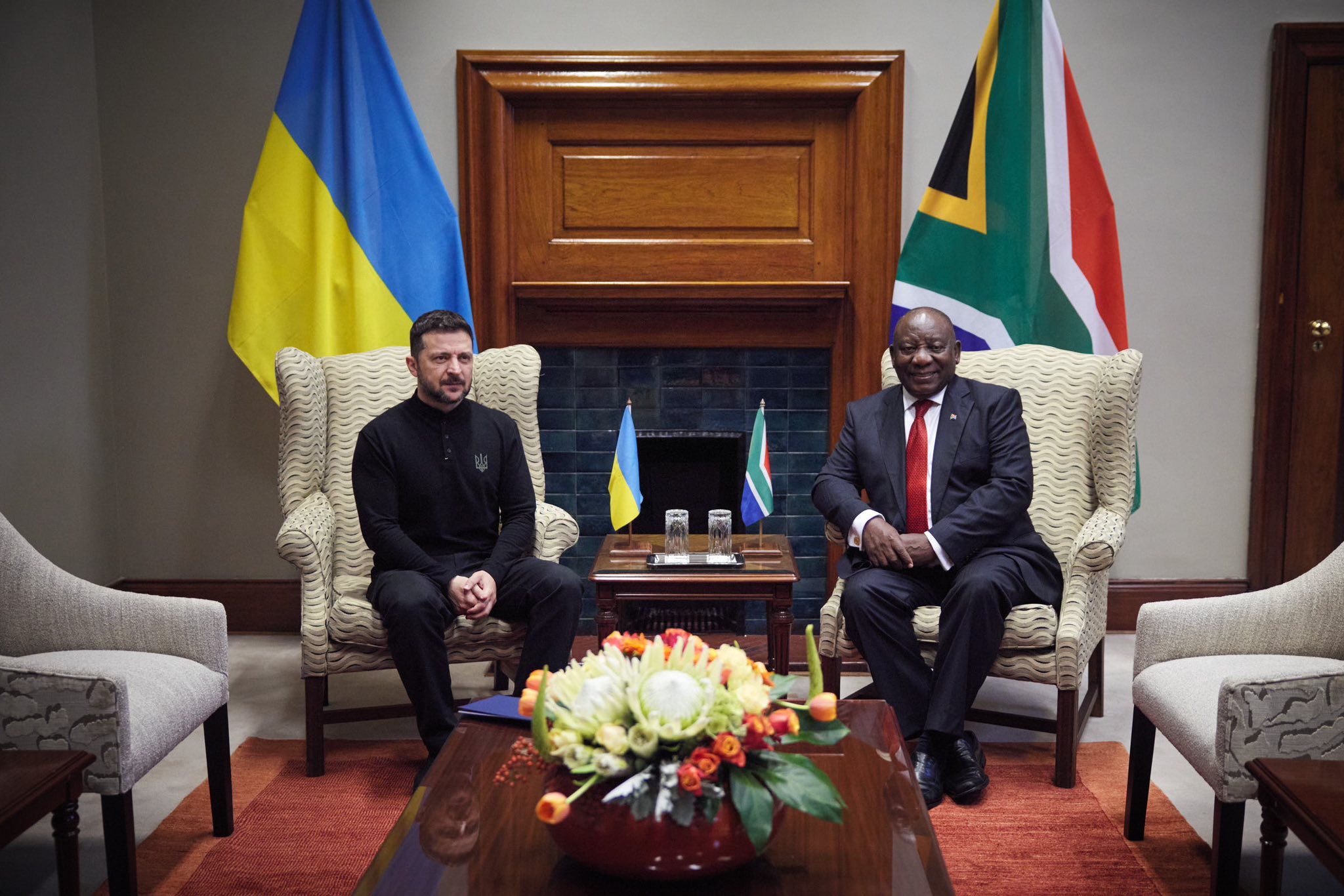
on August 23, 2023, President of Ukraine Volodymyr Zelenskyy spoke with the leader of the Republic of South Africa, Cyril Ramaphosa, and called on the countries of the Global South to help end Russia’s war against Ukraine.
“We need to end the war, which no one but Russia needs,” he emphasized.
In the fight against Russian imperialism, Kyiv is increasingly turning to countries in Africa, Asia, and Latin America, realizing their importance in world politics. Without dialogue with these states, it is impossible to form a broad international front against the Kremlin’s aggression.
Why is the Global South important?
The Global South is the countries of Africa, Asia, Latin America, and Oceania, which account for 85% of the world’s population and about 39% of the world’s GDP (according to the World Bank).
They are united in organizations such as the African Union, the Arab League, or South American regional blocs, and form the majority in the United Nations. Their voice matters in global decisions.
Russian narratives and historical memory
Ever since the Cold War, Moscow has sought to influence the Global South with anti-Western messages. These narratives resonate because many countries in the region experienced European colonialism.
Algeria remembers the war crimes of France, African nations remember the slave trade, and Latin America remembers Spanish colonization and the genocide of indigenous peoples. Russia, which has no colonial past in Africa or Latin America (with the exception of the Caucasus and Central Asia), positions itself as an alternative to the “Collective West.”
At the Russia-Africa summit in 2023, Russian Foreign Ministry spokeswoman Maria Zakharova said that Russian soldiers are dying in Ukraine so that “Africa and the whole world can be free.”
“Don’t you see that our guys are giving their lives? Not just speaking, not just talking, but with their lives they are defending the right of not only the African continent, but all people on our planet to be free,” she said at the Russia-Africa summit in St. Petersburg, Russia.
According to Hannah Notte of the Center for Strategic and International Studies (CSIS), the Kremlin presents the war against Ukraine as an “anti-colonial struggle against the West.” Moscow supports totalitarian regimes in the Global South by providing them with military and diplomatic assistance, including through private armies, while the West condemns coups and human rights violations.
Ukraine’s strategy: appeal to decolonization
For Ukraine, dialogue with the Global South is a strategy of survival. Kyiv must emphasize that its struggle is a war for independence against Russian imperialism. Ukraine is not an aggressor, but a victim of an empire that seeks to regain its “lost colonies.”
This narrative is familiar to countries that fought against colonialism, from India to African states.
Russia, on the other hand, has a long history of imperial wars: from the occupation of Crimea in the 18th century to aggression in Chechnya, Afghanistan, and the Caucasus. These facts are worth emphasizing, especially for Muslim countries in the Global South, reminiscent of the Soviet war in Afghanistan or the destruction of Chechnya in the 1990s. Russia’s aggression against Ukraine is a continuation of its imperial policy that threatens the entire world.
Support at the UN and new initiatives
The vote in the UN General Assembly on February 23, 2023, on resolution ES-11/6, which called on Russia to end the war, was supported by 141 states, including 53 countries from the Global South, such as Nigeria, Argentina, Japan and South Korea.
This shows the potential: russia’s war is affecting global grain and energy prices, which is hurting poor countries.
In 2025, the trend is set to intensify. In February, the UN adopted new resolutions in support of Ukraine (ES-11/8 and the US initiative), where the countries of the Global South played a prominent role.
India calls for dialogue, and African countries increasingly support Kyiv through new initiatives: Ukraine is opening embassies in Sudan and Mali, developing grain trade with Brazil, and offering humanitarian aid such as medical equipment to India. These steps are building trust and positioning Ukraine as a partner in the fight against hunger and climate change.
Supporting the Global South is not only a diplomatic maneuver, but also a chance for Ukraine to become a voice for a new, just world order. Kyiv’s struggle against Russian imperialism resonates with the anti-colonial aspirations of billions of people.
By developing a dialogue with these countries, Ukraine not only isolates Russia, but also contributes to global decolonization and the liberation of its lands from Russian occupation.
Author: Asif Aliyev