Ukraine is attempting to revive cotton cultivation for defense purposes amid a global shortage of gunpowder
20 March 18:45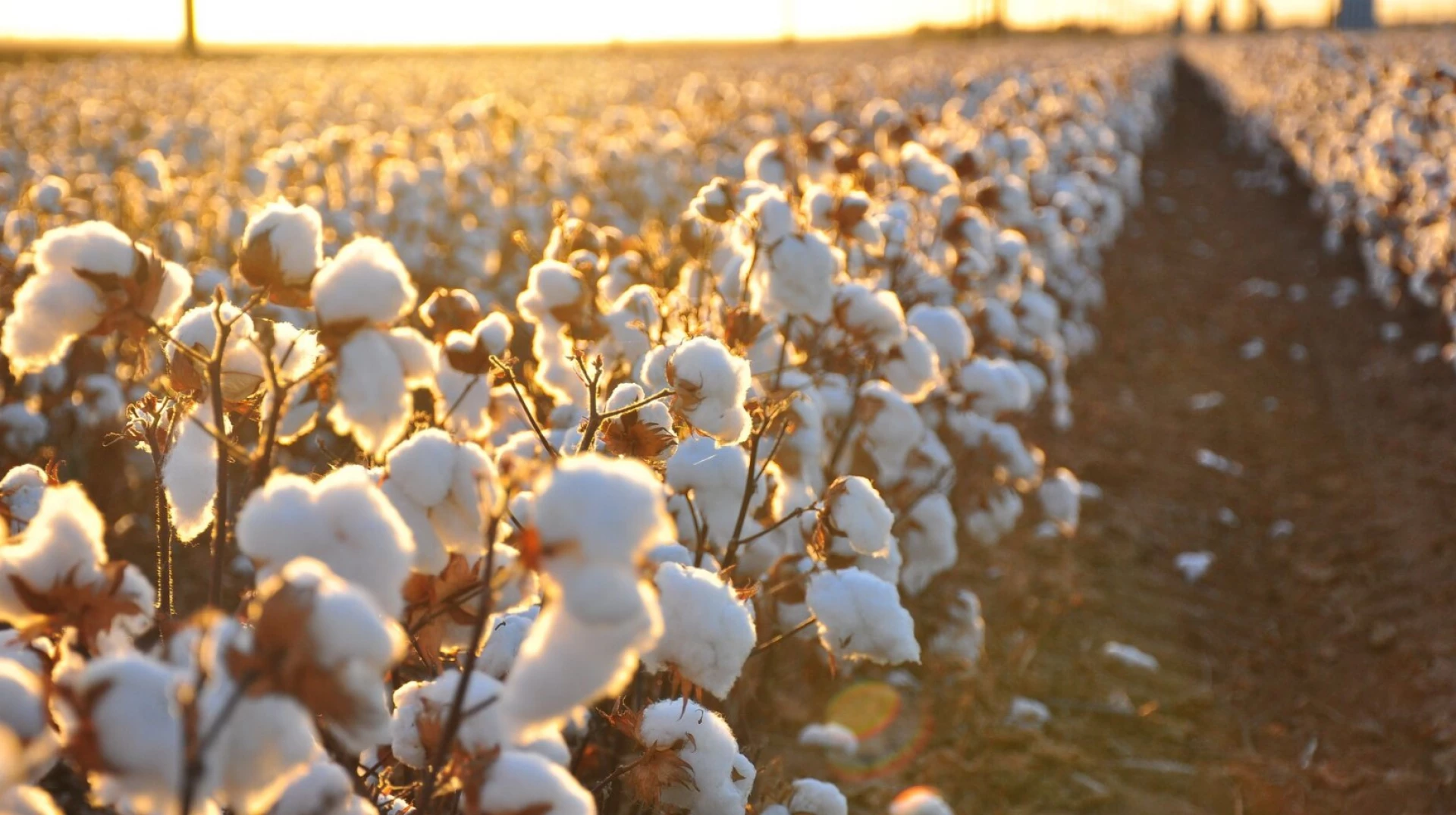
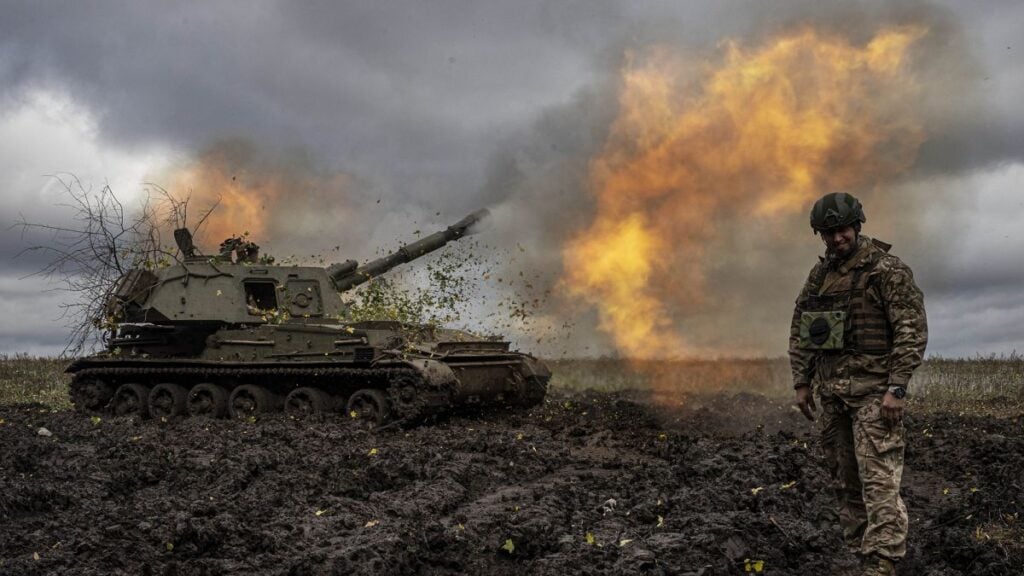
The global defense sector is facing a critical shortage of gunpowder and explosives, which is directly slowing down ammunition production—including for Ukraine’s needs and to replenish the arsenals of Western countries. Our country has three options for meeting its own gunpowder needs. Unfortunately, however, none of them promise a quick resolution to the current shortage. [Komersant] investigated how Ukraine and the world are addressing the gunpowder problem.
A single artillery shell requires up to 12 kg of gunpowder. To get even a rough idea of the Ukrainian military’s monthly gunpowder needs, multiply 12 by, say, 300,000—that is how many shells of all calibers the Ukrainian military needs to properly carry out combat missions. Accordingly, the main explanation for the gunpowder shortage lies in the dramatic increase in demand for shells following the start of Russia’s full-scale invasion of Ukraine. Although there are other objective reasons—notably dependence on China, which is the world’s leading producer of gunpowder and the cotton used in its manufacture. European gunpowder manufacturers also source materials there, such as nitric acid—a substance indispensable in the production process.
As a reminder, nitrocellulose, which is needed to make gunpowder, is obtained by treating cotton cellulose with sulfuric and nitric acids. In other words, much depends on imports from China, for which partnership with Russia is a priority. This is also noted by Pavlo Lakiychuk, an expert at the “Strategy 21” Center for Global Studies.
“China is the world’s leading producer of gunpowder. And China is not exactly a friendly country toward us, to put it mildly. As far as we can tell, Ukraine obtains gunpowder indirectly, through third countries, as well as through ammunition production outside Ukraine. As for the outlook, the situation is complicated,” the expert notes.
Explosives Shortage
There are only a few gunpowder manufacturers in Europe, and the main hopes for overcoming the shortage rest on the German defense conglomerate Rheinmetall and the French group Eurenco. Rheinmetall announced last year that it aims to increase gunpowder production by more than 50% by 2028. To achieve this goal, the company is building a gunpowder production chain. It was later reported that the German conglomerate acquired Hagedorn-NC, a company that manufactures nitrocellulose—the main component for ammunition production. Prior to this acquisition, Rheinmetall was already producing nitrocellulose at three facilities—in Switzerland, Spain, and South Africa.
The launch of production in Germany is intended to support the group’s strategy of increasing the output of 155mm shells, with plans to manufacture one million by the end of next year. Rheinmetall also plans to build a gunpowder production plant in Bulgaria. And last spring, a gunpowder production plant operated by the Eurenco group was opened in Bergerac, in southwestern France. It is also intended to support the production of 155-mm shells, a significant portion of which is supplied to Ukraine.
Already this year, the plant plans to produce enough propellant to manufacture 100,000 shells, and by 2027, this figure is expected to reach 200,000. In other words, propellant and shell production is gradually increasing. But in Europe, they acknowledge that this is not enough.
Ukraine has three options for meeting its gunpowder needs.
First, the supply of explosives by partners; second, joint production with foreign countries; and third, establishing its own production. As we can see, partners are helping as much as they can.
Regarding joint production, for example, in July 2025, it was announced that a memorandum on joint gunpowder production between Ukraine and the United States had been signed during the International Conference on the Reconstruction of Ukraine in Rome. This involves establishing a production process in the United States with the participation of an American company and Ukroboronprom. As for scaling up domestic gunpowder production in Ukraine, the decision was made to start with cotton cultivation. It is worth noting that nitrocellulose, which is the basis for gunpowder, is produced from cotton cellulose.
The “Ukrainian Cotton” Project
The experiment to grow cotton in Ukraine began in the spring of 2025. The Odesa region was chosen as the location for the project. It was there that they decided to revisit the question: how to grow cotton in Ukraine. Alla Stoyanova, head of the “Agrarian Odesa” parliamentary group and chair of the “Agrarians of Odesa” NGO, continues:
“Currently, there are 5–6 major cotton-producing countries worldwide, and Ukraine is not among them, although it could have been if Soviet-era policies had been different. Ukraine did begin growing cotton; the breeding program is Ukrainian; the equipment was available; specialists and research institutes were engaged in this work; the climate is suitable; and the economy was considered stable. And if the USSR hadn’t given preference to Uzbekistan and Turkmenistan, we would already have industrial fields of this crop today. But as it stands, we are dependent on this raw material. “That is why the government introduced a policy to incentivize producers and research institutions so that we could conduct research and learn how to grow cotton,” notes Alla Stoyanova.
Among those who initiated the experiment to grow cotton in the Odesa region was Stepan Chernyavsky, deputy chairman of the parliamentary Committee on Agrarian and Land Policy.
“My colleague, then-Minister of Agriculture Mykola Solsky, and I were thinking at the time about how to reduce the cost of raw materials for producing shells, and we came up with the idea of recalling that cotton had once been grown here in Ukraine. We began researching this, made inquiries at institutes, and reached out to people who had worked on this in the past. Then we organized a forum at Odesa Agrarian University, where we invited experts from Turkey and European countries. Then came the first step—we planted experimental fields. And in 1924, we already had a harvest,” recalls the MP.
Odesa farmers have already harvested this year’s crop. According to Stepan Chernyavsky, this year’s yield is slightly lower because autumn came very early, resulting in a lower percentage of cotton bolls opening.
“In other words, the bolls turned out wonderful, but they didn’t have time to open. These were early varieties; they were chosen so that the growing season would be shorter and we could harvest in September. This is still just an experiment,” the parliamentarian notes.
But this experiment already confirms that cotton is a crop adapted to our conditions. Alla Stoyanova, head of the NGO “Agrarians of Odessa Region,” emphasizes this.
“We have the right climate, air temperature, and suitable soils. And today the bolls are opening, we’re getting cotton, and we’re sending it to our partners in other countries for testing because, unfortunately, Ukraine doesn’t yet have the necessary laboratories. We send it to analyze the fiber itself and to determine whether it is suitable for defense-related production,” notes Stoyanova.
So what do these initial studies show? People’s Deputy Stepan Chernyavsky continues.
“There is a component known as energy value, and this indicator is particularly important for gunpowder production. And the results are not bad. This is encouraging. Each variety has its own indicators, and they still need to be studied. And then we need to choose which specific variety to use so that both yield and energy value are high,” explains the parliamentarian.
Alla Stoyanova, head of the “Agrarian Odessa” parliamentary group, agrees with him.
“We’ve been growing these varieties for years, and we’ve analyzed them. We now have definitive confirmation that the cotton grown in Ukraine—specifically in the Odesa region—is suitable for producing nitrocellulose and gunpowder. So I can say this crop has great potential. And, let me remind you, cotton is not just about defense needs, but also, for example, about textiles. And there are prospects,” states Alla Stoyanova.
The countries that traditionally produce the most cotton include China, India, the United States, Brazil, Australia, Pakistan, Uzbekistan, and Turkey. The problem is that most of this raw material has already been contracted for the next 4–5 years. Consequently, Ukraine cannot purchase cotton in the necessary quantities.
Farmers, scientists, and officials in Odesa who have joined the effort to grow Ukrainian cotton are trying to solve this problem.
Author: Serhiy Vasylеvych