Ukraine will not lift sanctions against Lukoil at Slovakia’s request: Shmyhal gives reason
31 July 2024 23:22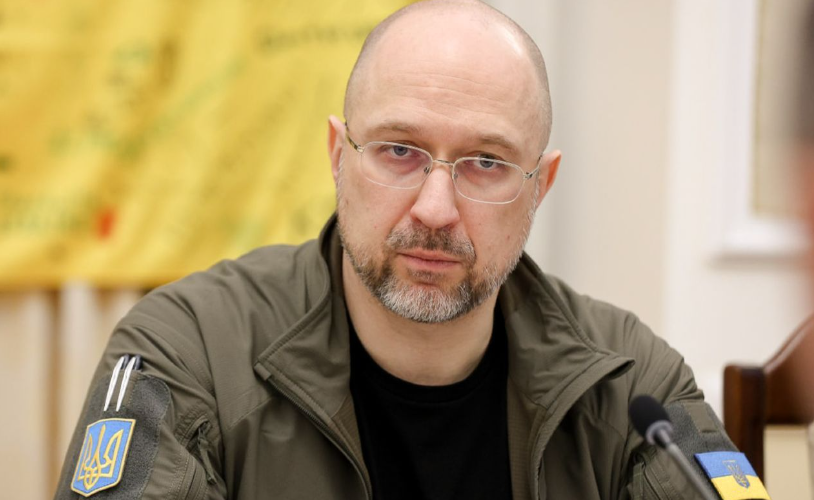
The sanctions imposed by Ukraine against the Russian oil company Lukoil do not threaten Slovakia’s energy security and will not be lifted at the request of the Slovak government. Prime Minister Denis Shmyhal said this on Telegram, "Komersant Ukrainian" reports
The head of government noted that he had recently had several conversations with Slovak Prime Minister Robert Fico, which he described as pragmatic, and stressed that Ukraine has insisted and will continue to insist on the need to refuse Russian oil as much as possible, as “Russia and energy security are not compatible things.”
“The sanctions imposed by the National Security and Defence Council of Ukraine do not pose a threat to the energy security of Slovakia and Europe as a whole, which is why their cancellation is not a subject of discussion. Therefore, we have a full understanding of Brussels in this matter,” Shmyhal said.
He reminded that Ukraine continues to insist on the need to refuse Russian oil as much as possible, although the EU has allowed Slovakia and a number of other countries to use Russian oil, provided that the countries actively develop alternative supply channels.
At the same time, Shmyhal assured that Ukraine “remains a reliable transit country for all countries that value freedom and the rule of law” and will unconditionally implement the Association Agreement with the EU.
At the same time, the head of the Ukrainian government called Slovakia a reliable partner of Ukraine, but urged the Slovak authorities to refrain from blackmail.
“Slovakia is our reliable partner, from whom we do not expect blackmail or threats. Because threatening Ukraine, which is defending itself against the aggressor, so that the terrorist state can continue to earn its bloody excess profits is a dubious path,” Shmyhal said.
He added that following these conversations, the parties agreed to hold another intergovernmental meeting in October.
Payback for dependence
Following Moscow’s full-scale invasion of Ukraine in 2022, the EU imposed an embargo on Russian oil imports, a key source of revenue for the Kremlin’s war effort. However, this embargo had an exception for shipments via pipelines, including those to Hungary, Slovakia and the Czech Republic via the Druzhba pipeline. This was done to give these countries time to find alternative supplies, with the understanding that they would do so quickly.
Germany and Poland, which also imported oil through Druzhba, stopped buying Russian oil last year. The Czech Republic plans to end its imports from Moscow by 2025, and Slovakia has already begun upgrading its main refinery to handle more non-Russian oil.
But Hungary has chosen a different path, instead increasing its pipeline oil imports by 50 per cent from 2021. Budapest has also signed new deals with Russian gas giant Gazprom.
Threats and alliances
Feeling opposed by the bloc, Hungary and Slovakia have resorted to threats and are quietly looking for other options. Last week, Hungarian Foreign Minister Péter Szijjártó said Hungary would continue to block EU military aid to Ukraine until sanctions are lifted, adding that the country provides 42 percent of Kyiv’s electricity imports.
Slovak President Peter Pellegrini said that Ukraine should “restore order as soon as possible”, otherwise Slovakia will be forced to take reciprocal measures. On Monday, Slovak Prime Minister Robert Fico threatened to cut exports of diesel fuel to Ukraine, which accounts for a tenth of the country’s consumption, if sanctions are not lifted. Leading Slovak officials have previously hinted that they could cut off electricity supplies.
However, these threats seem more like a way to influence the negotiations than genuine threats, said Krzysztof Debiec, a senior researcher at the Warsaw-based Centre for Eastern Studies. This is partly because both countries continue to profit from energy exports to Kyiv, and they would face serious pressure from the EU if electricity supplies to war-torn Ukraine were cut off.
Meanwhile, Slovakia and Hungary may face higher energy prices and fuel shortages in the coming weeks. Their refineries also face “significant credit risk”, according to Fitch.
Alternative solutions
Despite these threats, both countries have other options for securing supplies. For example, they could increase imports of non-Russian oil from Croatia through the Adria pipeline. The Croatian Ministry of Energy has not commented on the matter.
Last Friday, Slovak Prime Minister Robert Fico offered an unspecified “technical solution” to resume blocked supplies after meeting with Ukrainian Prime Minister Denys Shmyhal. Hungarian leader Viktor Orban’s aide, Gergely Gulyás, also noted that the country is studying a “legal loophole” that allows oil to be transferred through a third party without being subject to sanctions.
This could mean increased imports through Druzhba from Kazakhstan or other Russian companies such as Gazprom or Rosneft, which are not subject to sanctions.
Hungary and Slovakia have been very hypocritical in their position, said Martin Vladimirov, director of energy research at the Centre for Democracy Studies.
“They actually received direct economic profit from their proximity to the Ukrainian market, reselling cheap Russian energy resources for huge premiums, while at the same time maintaining arms supplies and being Russia’s Trojan horses in Europe,”
– said the expert.
More news in the telegram channel of Kommersant Ukrainian – https://t.me/komersant_ukrainskyi.