Ukraine celebrates Constitution Day: what are the peculiarities of the Ukrainian fundamental law?
28 June 2024 08:45
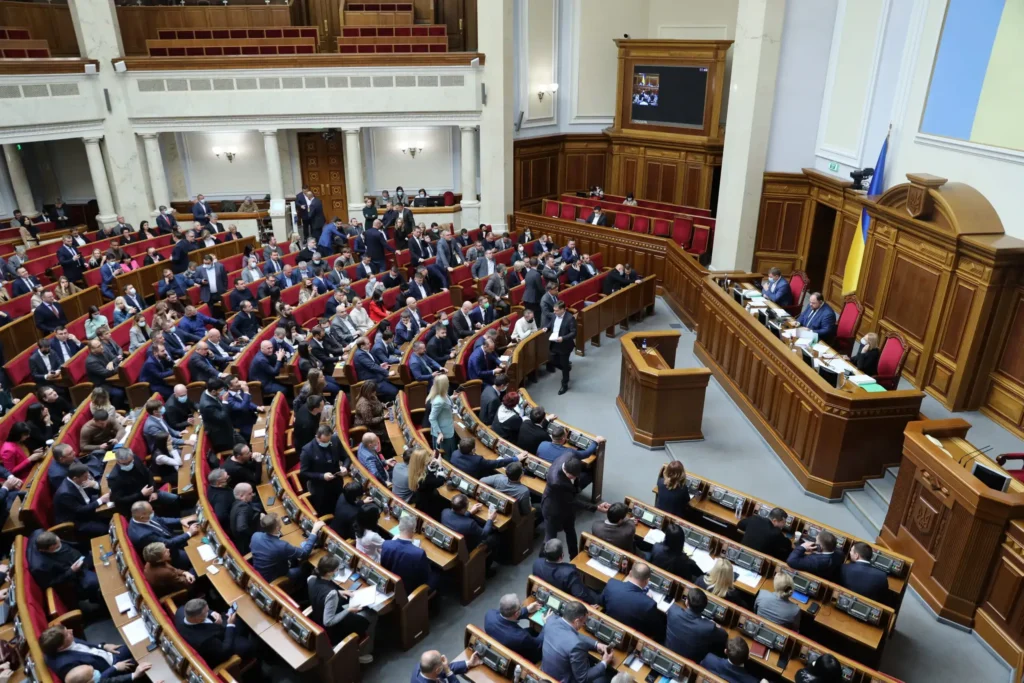
on 28 June 1996, the Verkhovna Rada of Ukraine adopted the fundamental law of the Ukrainian state – the Constitution of Ukraine. Since then, every year this day is celebrated as Constitution Day in Ukraine.
The Constitution of Ukraine, like all the constitutions of the world, defines the state system, human and civil rights and freedoms, as well as the basic principles of state functioning. The Constitution has the highest legal force in the country, and all other laws and regulations must comply with it.
The Constitution of Ukraine consists of a preamble and 15 chapters covering various aspects of state and social life. It enshrines such fundamental principles as the sovereignty and independence of the state, democratic system, the rule of law, and the separation of powers into legislative, executive and judicial branches.
An important part of the Constitution is the section on human and civil rights and freedoms. It guarantees a wide range of rights, including the right to life, liberty, security of person, freedom of speech and religion, the right to education, labour and social protection.
The process of drafting and adopting the Constitution of Ukraine was quite long and complex. Work on the draft Constitution began in 1991, immediately after Ukraine’s independence. The final text was adopted after almost 24 hours of continuous meetings of the Verkhovna Rada, which went down in history as the “constitutional night”.
The Constitution Day of Ukraine is the only public holiday that is enshrined in the Constitution itself.
The provisions of the Constitution of Ukraine are norms of direct effect. This means that they can be directly referred to. For example, any process, social phenomenon or action that may seem undemocratic to a citizen can be challenged in court with reference to the first article of the Constitution, which states that “Ukraine is a sovereign and independent, democratic, social, legal state”.
The Constitution of Ukraine is far from being an unbreakable crystal. Over the 28 years of its existence, it has been amended eight times. These include, for example, the provision on the state’s strategic course towards the EU and NATO, which came into force in 2019. For comparison, the US Constitution has received 27 amendments over the 235 years of its existence, which are not exactly changes, but rather clarifications of existing provisions.
Citizens’ rights
The Constitution of Ukraine sets out a “standard” set of human and civil rights of democratic states, which are based on various international conventions and other documents.
Thus, the Constitution of Ukraine guarantees a wide range of rights and freedoms, covering civil, political, economic, social and cultural rights.
Human rights are recognised as inalienable and non-derogable.
All citizens have equal constitutional rights and freedoms and are equal before the law.
The state not only declares rights but also undertakes to ensure their realisation and protection.
Citizens can directly refer to constitutional provisions to protect their rights.
The Constitution provides that rights may be restricted only in cases stipulated by law, for example, in martial law or a state of emergency.
It is prohibited to narrow the content and scope of rights when adopting new laws.
These features make the rights of citizens in Ukraine a fundamental value and the basis of a democratic society, ensuring their comprehensive protection and realisation.
Responsibilities of citizens
Contrary to popular belief, the Constitution of Ukraine stipulates quite a few responsibilities for citizens.
The defence of the Motherland, independence and territorial integrity of Ukraine is the duty of Ukrainian citizens. This includes military service in accordance with the law.
Everyone is obliged not to cause damage to nature and cultural heritage, and to compensate for any damage caused by them.
Citizens are obliged to pay taxes and duties in the manner and amounts established by law.
Everyone has a duty to strictly observe the Constitution and laws of Ukraine, not to infringe on the rights and freedoms, honour and dignity of other people.
Parents are obliged to support their children until they reach the age of majority. Adult children are obliged to take care of their disabled parents.
Basic secondary education is compulsory.
Everyone is obliged to respect the state symbols of Ukraine.
Ignorance of the law does not exempt from legal liability.