Ukrainian delegation travels to Moscow for Zelenskyy-Putin meeting: forecast of possible events
11 February 17:40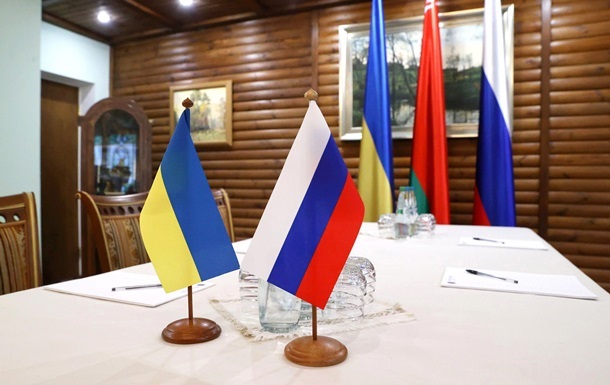
Rumors about a possible trip by a Ukrainian delegation to Moscow and even a personal meeting between Volodymyr Zelenskyy and Putin have once again stirred up the information space. The media began talking about “extravagant options” for speeding up negotiations and even about the alleged willingness of foreign mediators to guarantee the safety of such a visit.
However, experts call the very format of negotiations in the capital of the aggressor country unacceptable. Who is spreading such statements and why? What is behind the media hype and which scenarios actually seem realistic? And most importantly, under what conditions would a meeting between Zelensky and Putin be theoretically possible?
Is the Ukrainian delegation’s trip to Moscow fake or real?
Information has appeared online about a possible visit by a Ukrainian delegation to Moscow for talks with Vladimir Putin. This was reported by the Telegram channel Ukraine context.
“According to our information, among the extravagant options for speeding up the negotiation process, the possibility of a Ukrainian delegation coming to Moscow for talks with Putin in person is being considered,” the message says.
The channel’s authors also claim that American representatives Vitkoff and Kushner have allegedly declared their readiness to act as “security guarantors” for such a trip. According to this version, their plane could pick up the Ukrainian delegation in Warsaw and take them to Moscow. There is currently no official confirmation of this information. The Ukrainian authorities have not publicly announced the preparation of such a format for negotiations.
The information about a possible visit by a Ukrainian delegation to Moscow is fake. This was stated in an exclusive comment by political analyst Volodymyr Fesenko.
“This is completely untrue, it is fake news and a provocation,” Fesenko emphasized.
A meeting between Zelensky and Putin: under what conditions?
At the same time, the prospect of a personal meeting between Ukrainian President Volodymyr Zelensky and dictator Putin exists, but there are a number of nuances.
“Theoretically, it is possible if Trump insists on it, this meeting could take place on neutral ground,” Fesenko said.
According to him, the idea of such a meeting is not new. It has been discussed since spring, and more seriously since August, when Donald Trump proposed a format in which Zelensky and Putin would meet first. However, the main problem is the Kremlin’s position.
“Obviously, Putin does not want to meet with Zelensky in the first place. Putin wants to negotiate with Trump, but not with Zelensky,” Fesenko explained.
The political scientist also added that Moscow is using the topic of negotiations as part of a tactical game.
“Moscow has found its countermeasure. They say: if Zelensky wants to meet, let him come to Moscow. But they understand that Zelensky will not come to Moscow,” Fesenko noted.
Thus, the information about the Ukrainian delegation’s trip to Moscow is unfounded, and a potential meeting between Zelensky and Putin is possible only under completely different conditions.
Inviting someone to Moscow is like inviting them into a predator’s cage.
Earlier, Ukrainian President Volodymyr Zelensky called the Kremlin’s proposal to hold a personal meeting with the Russian president in Moscow unrealistic. According to Zelensky, the very idea of such a meeting seems absurd in the context of a full-scale war. At the same time, Zelensky emphasized that such invitations from Russia are rather formal and demonstrate the Kremlin’s unwillingness to engage in real dialogue.
Israeli military expert and reserve officer of the Israel Defense Forces Grigory Tamar commented to
“It’s like inviting someone to visit a man-eating polar bear at the zoo and see how it ends. You can even place bets on whether he’ll come back or not,” Tamar said ironically.
He also noted that such statements are a typical “KGB” form of black humor that has nothing to do with real diplomacy.
If you want peace, meet on the front line, not in a bunker
Grigory Tamar pointed out that in democratic countries, military and political leaders often demonstrate their willingness to personally be with their troops, even in combat zones. As an example, he cited the experience of Israel, where during active hostilities in the Gaza Strip, the prime minister, the chief of the General Staff, and the heads of the security forces held meetings directly in the shelling zone — wearing bulletproof vests, helmets, and carrying weapons.
“They came to show society that they are not office bureaucrats, but military leaders who stand with their people and their army. Rockets were flying, tanks were exploding, people were dying — but they were there,” Tamar emphasized.
Against this backdrop, the Russian president’s behavior seems contradictory.
“And where is Putin? In a bunker. Why not propose a meeting, for example, in Kupiansk — on the front line? Two armored personnel carriers, white flags, diplomatic conditions, a meeting in a field tent. That would be real politics,” Tamar noted.
The Kremlin’s symbolic diplomacy
The invitation to Moscow has no practical meaning and is merely an informational gesture aimed at the Russian domestic audience.
“Inviting someone to Moscow is convenient. It’s safe. It’s in ceremonial halls. But it’s not about peace or responsibility. It’s about imitating dialogue,” Tamar concluded.
Thus, both Zelensky’s position and the comments of international experts indicate one thing: real political dialogue is possible only if the aggression stops, and not within the framework of symbolic gestures on the part of the aggressor state.