The Ukrainian payment system “Prostir” has not been able to displace Visa and Mastercard
10 February 14:11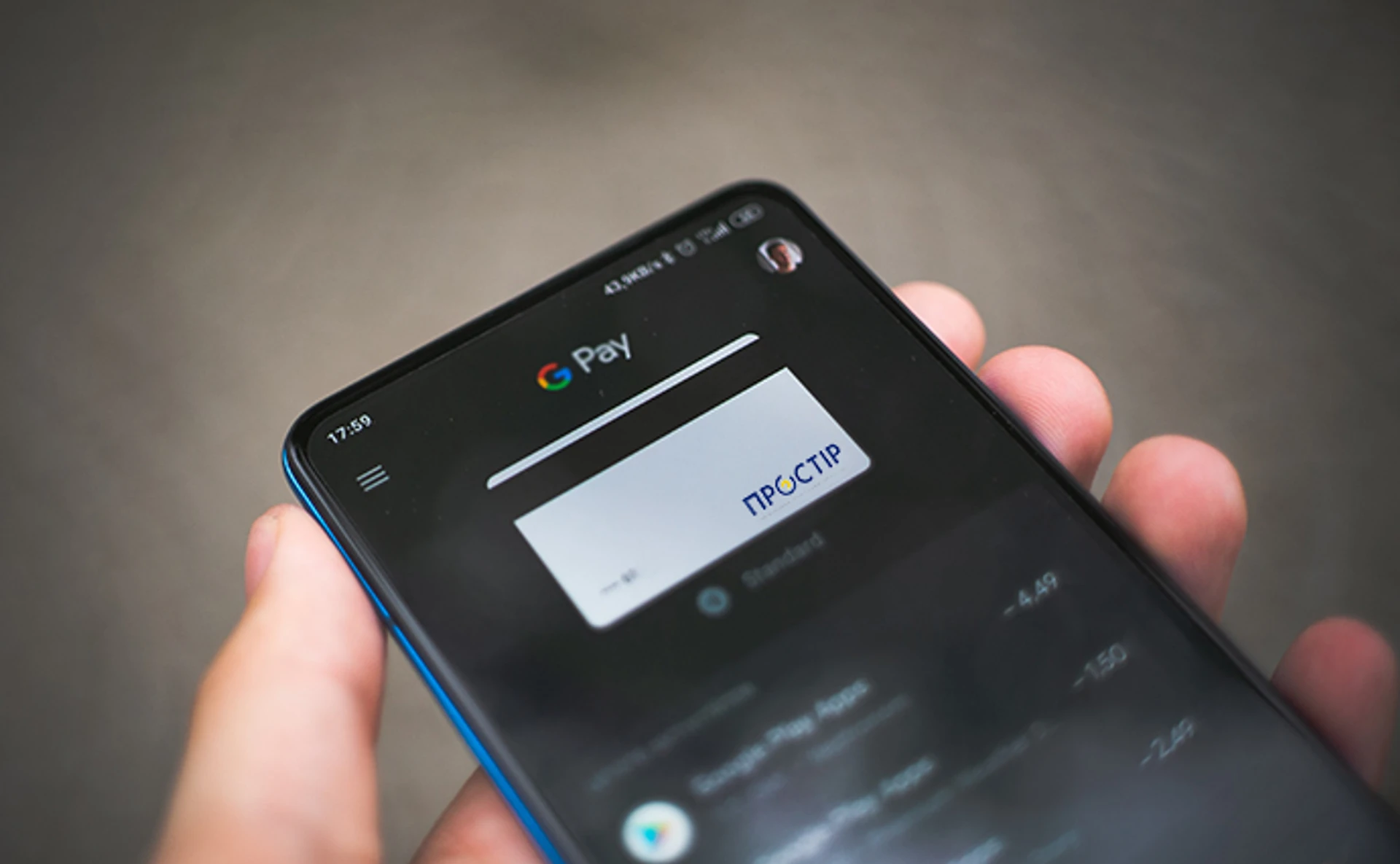 OPINION
The debate over creating a European alternative to Visa and Mastercard payment systems is no longer purely technical. Today, it is a matter of economic security and financial sovereignty. In today’s world, control over payment infrastructure is not just about commissions, but also about the strategic autonomy of states and unions.
This is what Ukrainian statesman, politician, economist, Doctor of Economics, professor, and academician of the National Academy of Sciences of Ukraine Bohdan Danylyshyn writes on social media, according to "Komersant Ukrainian".
According to him, recent years have shown that dependence on external financial systems can turn into a real geo-economic risk. That is why the European Union is increasingly talking about the need to create its own payment infrastructure.
The real picture of the EU payment market
According to the European Central Bank, in the first half of 2025 alone, 72.1 billion cashless transactions worth €113.5 trillion were made in the eurozone. At the same time, 56% of all transactions were card payments.
The key problem is that most of this market is controlled by two American companies — Visa and Mastercard — which account for over 60% of card transactions in the eurozone.
According to ECB estimates, about two-thirds of all card payments in the eurozone are processed by American systems. The total volume of payments passing through these systems in Europe exceeds €7 trillion per year. In other words, a significant part of the EU’s critical payment infrastructure depends on decisions made outside Europe.
Why this has become a strategic issue
European regulators openly admit that dependence on foreign payment systems creates risks of economic pressure and sanctions. It is telling that national card systems have virtually disappeared in 13 of the 20 eurozone countries. This means that most EU countries no longer have their own basic payment infrastructure.
That is why today in Europe, there is increasing talk not about competition with Visa and Mastercard, but about creating their own “system of last resort” — a payment infrastructure that will ensure autonomy in crisis situations.
Ukrainian payment system “Prostir”
Ukraine already has its own experience in creating a national payment system. The Prostir system has been operating since 2013 and was created as an internal alternative to international payment brands. It is supported by the state and is used for budget payments and certain banking products.
However, the results over more than a decade are impressive:
• there are over 120 million payment cards in circulation in Ukraine;
• over 99% of them are Visa and Mastercard;
• the share of the national Prostir system is only about 1–2% of the market.
To understand the scale:
• in 2024, 8.6 billion transactions were made with cards in Ukraine;
• worth UAH 6.6 trillion;
• 94.6% of all transactions were cashless.
In other words, the market is effectively controlled entirely by two international systems, despite the existence of a national alternative.
Why Prostir did not become mainstream
The reasons clearly illustrate the problems that Europe may also face.
1. Lack of global acceptance. It is difficult to use a national system card abroad or in international online services.
2. Limited interest from banks. Banks naturally focus on systems with established demand and global infrastructure.
3. Consumer behavior. Users are not switching to a system that has fewer features and capabilities.
The Ukrainian experience shows that creating a payment system is relatively simple from a technical standpoint, but creating a mass ecosystem is extremely difficult.
Does Europe have a better chance?
Unlike Ukraine, the EU currently has a market of over 450 million consumers; one of the world’s largest economies; and significantly greater financial and institutional resources. However, the economic logic remains the same. The main barrier is the network effect.
Visa and Mastercard have been building their systems for over half a century, creating a global acceptance infrastructure. The new system will have to simultaneously convince:
• banks to issue it;
• merchants to accept it;
• consumers — to use it.
This is a classic “chicken and egg” problem.
Realistic deadlines
Even for the European Union, creating an alternative of this scale takes time:
• 3–5 years — to launch an intra-European system;
• 7–10 years — to form a full-fledged global competitor.
And that’s assuming there’s political coordination, funding, and incentives for banks and businesses.
Therefore, the main goal of the European initiative is not competition, but autonomy. It is not so much about replacing Visa or Mastercard, but rather about:
1. Creating its own basic payment infrastructure.
2. Reducing strategic dependence.
3. Reducing transaction costs.
4. Achieving financial autonomy in crisis situations.
In fact, this is a question of economic sovereignty, not just technological competition.
Europe has the resources, legislation, and human capital to create its own payment system. But the main problem is not technology, but scale and user trust.
Ukraine’s experience with the Prostir system shows that even with state support, a national payment system can remain at 1–2% of the market for years.
Therefore, a realistic timeframe for creating a European competitor to Visa and Mastercard is 7–10 years. And only on condition that it is not a declarative but a systematic project with clear economic incentives for all market participants, writes Bohdan Danylyshyn.
SOURCE: Facebook