Ukrainian villages may get their own military registration offices. What does this mean?
23 January 13:38 ANALYSIS FROM
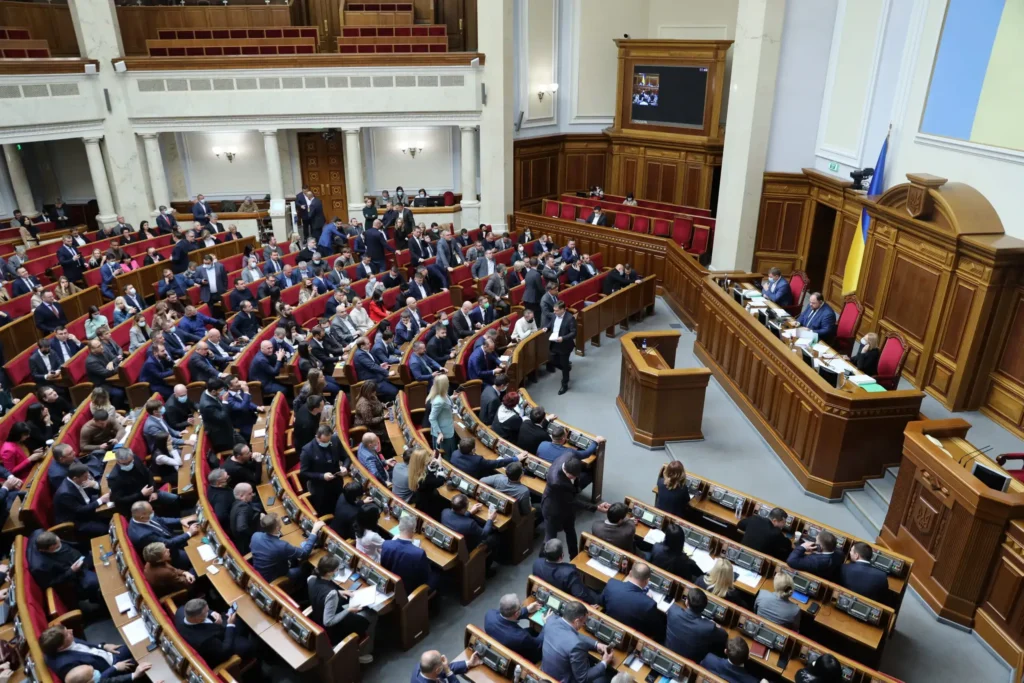
Ukrainian villages and towns may soon have their own military registration and enlistment offices. This reform is proposed in government bill No. 14320, which is currently being considered by the Verkhovna Rada. Komersant examined what the local branches of the TCC will do and how this will affect mobilization.
The essence of the planned changes is simple: it is proposed to create full-fledged town and village military registration and enlistment offices with legal status and broad powers on the basis of existing local military registration and enlistment offices. Currently, they operate only as branches of district centers.
As described in the explanatory note to the draft law, it will be easier and faster for citizens to obtain certificates, apply for deferrals, and receive other services. There will be no need to travel dozens of kilometers to the district center. At the same time, local TCCs will be able to independently keep records of conscripts and make decisions, including on mobilization, which will relieve the overcrowded district centers and speed up mobilization processes.
“After the 2020 administrative reform and in the context of the war, the current system has proven ineffective. 344 local units have no authority: their leaders cannot even issue a certificate without approval from “above,” which creates bureaucratic chaos and slows down all procedures,” the explanatory note says.
Thus, the bill aims to bring military-administrative services closer to the people and increase the efficiency of the system in wartime. In other words, the plan is to optimize the processes of mobilization and bringing violators to justice, relieve the burden on the heads of district territorial recruitment and social support centers, increase the efficiency of such centers, and strengthen their institutional capacity.
The initiator of the changes is the Ministry of Defense. According to its estimates, the reform will not require additional budget expenditures.
Does it make sense to create additional recruitment centers when there is already recruitment?
However, after analyzing the submitted document, the Main Scientific Directorate of the Verkhovna Rada Apparatus put forward a number of comments and proposals.
The draft proposes the creation of settlement TCCs and SPs as separate military administration bodies with the same powers as district centers. However, the reform has not been completed. TCCs and SPs were created to replace military registration and enlistment offices and were supposed to become recruitment and service centers. However, the approaches have not changed, and the centers have not focused on providing services, as evidenced by numerous complaints of rights violations.
This could exacerbate the problems. Creating a new network will not solve systemic issues. It will require the involvement of additional personnel (Ukrainian Armed Forces servicemen) for organizational work, distracting them from their direct defense tasks. In addition, the reform is designed for peacetime, which calls into question the need for such an extensive network. At the same time, without changing the law, it is already possible to expand the network by creating city or combined city TCCs and SPs, as provided for by current legislation.
Management experts doubt the advisability of creating a separate level of village TCCs and SPs, believing that this will not solve the key problems of the system and may be ineffective. Instead, it is proposed to use existing legal opportunities to expand the network of centers.
“The state already has a network of recruitment bodies. In 2024, Armed Forces recruitment centers were established, located in Administrative Service Centers (ASCs) and performing information and advisory functions regarding conscription into contract service,” analysts emphasize.
Further improvements should be made by:
- Reorienting the TCC and SP towards providing services and social support.
- Expanding the network of recruitment centers to assist citizens with service issues.
There are also problems with the implementation of the innovation due to the territorial structure:
There is no clarity on the criteria. The project proposes the creation of settlement TCCs and SPs, but does not explain why in settlements and not in villages (which often differ little in terms of population). What criteria will be used to create such a center in a specific settlement?
Uncertainty about the territory. It is unclear whether the centers will be created within the boundaries of the settlement as a populated area or as a settlement territorial community (amalgamated community). This affects their powers and accessibility for residents of neighboring villages.
There are no legally established criteria for the creation or liquidation of TCCs and SPs, which could lead to arbitrary decisions and violations of citizens’ rights.
Most importantly, according to the Verkhovna Rada Regulations, draft laws that affect the budget (revenue or expenditure) require financial and economic justification. Since the draft law provides for the creation of new military management bodies — settlement TCKs and SPs, which will affect budget indicators — such justification should have been added to it. In other words, the implementation of these changes — the opening of TCKs in settlements — will require hundreds of millions of hryvnias for the rental of premises, salaries for employees, equipment, etc. But the draft law does not mention this at all.
Mobilization in villages will accelerate
According to lawyer Yuriy Ayvazyan, it is clear that rural TCCs will be added to the district TCCs and will have the same powers as the rest. Currently, rural departments do not have legal entity status and cannot assist district TCCs in any way, including with mobilization, issue administrative penalty orders, provide any certificates, etc.
“This means that the village branches of the RTCCs that have already been formed and have staff will receive official status and will not have to constantly travel to the district center, to the RTCC, to resolve issues related to conscripts. And the population’s fears that the mobilization process in villages and rural areas will now accelerate are not unfounded. These issues will be resolved more quickly. But there is also the problem that the current employees of the village TCCs are not trained and have no practical experience of working in conditions where they will become full-fledged TCCs and receive legal status. And this can give rise to many problems, complaints, and even abuses. I don’t know if their official status will bring order, or if, on the contrary, there will be chaos,” he emphasizes in a comment
[Komersant] .
In essence, as lawyers emphasize, this bill is still raw. Unfinished. Moreover, it has only passed its first reading. Conclusions can be drawn after it is adopted in its final form and whether the experts’ comments are taken into account.
Author: Alla Dunina