Ukrainian sea corridor: how it works not only for Ukraine’s economy
5 March 2025 16:14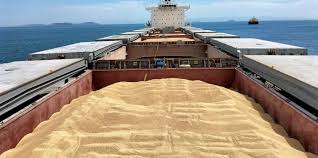
Ukraine is ready to sit down at the negotiating table as soon as possible to bring a lasting peace, and the first steps on this path could be the release of prisoners, an immediate ceasefire in the sky and an immediate truce at sea. This is the Ukrainian plan for bringing peace closer, President of Ukraine Volodymyr Zelenskyy proposed the day before, "Komersant Ukrainian" reports.
The fact that this plan also includes a proposal for an immediate truce at sea seems to be no accident. And not only because the Ukrainian Sea Corridor is important for the export sectors of the Ukrainian economy. The creation of this corridor in the Black Sea has become one of the few examples so far of achieving a goal through the use of force.
The maritime corridor was launched despite Russia’s opposition
The Ukrainian maritime corridor appeared in August 2023 after Russia began blocking ships that were passing through the then “grain corridor.” As you know, the grain corridor was organized on the initiative of the President of Ukraine and with the support of the UN and Turkey to ensure global food security. However, at that time, Russia was one of the parties to the agreement. After systematic violations by the aggressor country and blocking of ships, it was decided to organize an alternative route, which was called the Ukrainian Maritime Corridor.
Unlike the grain corridor, the Ukrainian Sea Route was already able to transport not only agricultural products. Other advantages also emerged, including the fact that Ukraine could independently control the situation with exports.
Ukraine managed to organize and secure its own corridor on the Black Sea, despite the fact that immediately after withdrawing from the agreement, Russia began actively attacking Ukraine’s port infrastructure and agricultural capacities.
The Commander of the Ukrainian Navy, Vice Admiral Oleksiy Neizhpapa, said that the Navy had destroyed a large number of “drifting” mines and that there had been no cases of sea mines in the ports.

How is the security of the “sea corridor” currently guaranteed?
The Ukrainian Defense Forces have done everything to reduce most military risks. Andriy Klymenko, head of the Institute for Strategic Black Sea Studies and the Monitoring Group on Sanctions and Freedom of Navigation, told DW.
“After the attacks by Ukrainian maritime drones, Russian warships are afraid to be in the western sector of the Black Sea,” he said. According to Klymenko, about 25 percent of the attacks were on military facilities in Sevastopol, and the Main Intelligence Directorate of Ukraine under the Defense Ministry destroyed all surveillance systems installed on gas platforms – Boyko’s towers.
According to Vice Admiral Oleksiy Neizhpapa, in 2024, with the participation of the Ukrainian Navy, 9061 vessels successfully passed through the corridor, of which 4651 arrived in Ukraine and 4410 went to other ports.
At present, civilian vessels are moving to and from the seaports of Greater Odesa – Odesa, Chornomorsk and Pivdennyi – via two routes that Ukraine has proposed to the International Maritime Organization.
“One is for ships with a shallow draft. It goes through the Ukrainian 22-kilometer zone from the shore. These vessels are covered by coastal missile forces in case of an attack. Ships with a larger draft go beyond the 22-kilometer zone. We won’t say how, but the task of military cover from possible Russian attacks is also solved there,” Klymenko explains.
The ships leave Ukrainian ports in an organized large group and then gather south of Zmeinyi Island, the expert says. “The Ukrainian military is analyzing all possible risks. In particular, whether there are any maritime drones, warships, missiles, or Russian aircraft nearby,” Klymenko said. After that, the ships sail through the waters of Romania, Bulgaria, and Turkey.
What are the economic results of the sea corridor?
Grain exports via the Ukrainian sea corridor have already reached 70 million tons. This was reported by MP Danylo Hetmantsev. More than 4 thousand vessels have delivered domestic agricultural products to about fifty countries on the Asian, African and European continents.
Another 36 million tons of cargo were non-food products (in particular, ore, metallurgical products, etc.).
According to the President of Ukraine Volodymyr Zelenskyy, over the year and a half of operation, 100 million tons of cargo have been transported through the Ukrainian sea corridor to 53 countries in Asia, Africa, Europe, and America.