All for defense, the rest – as it happens: what will the 2026 budget actually look like?
23 October 2025 16:21 ANALYSIS FROM
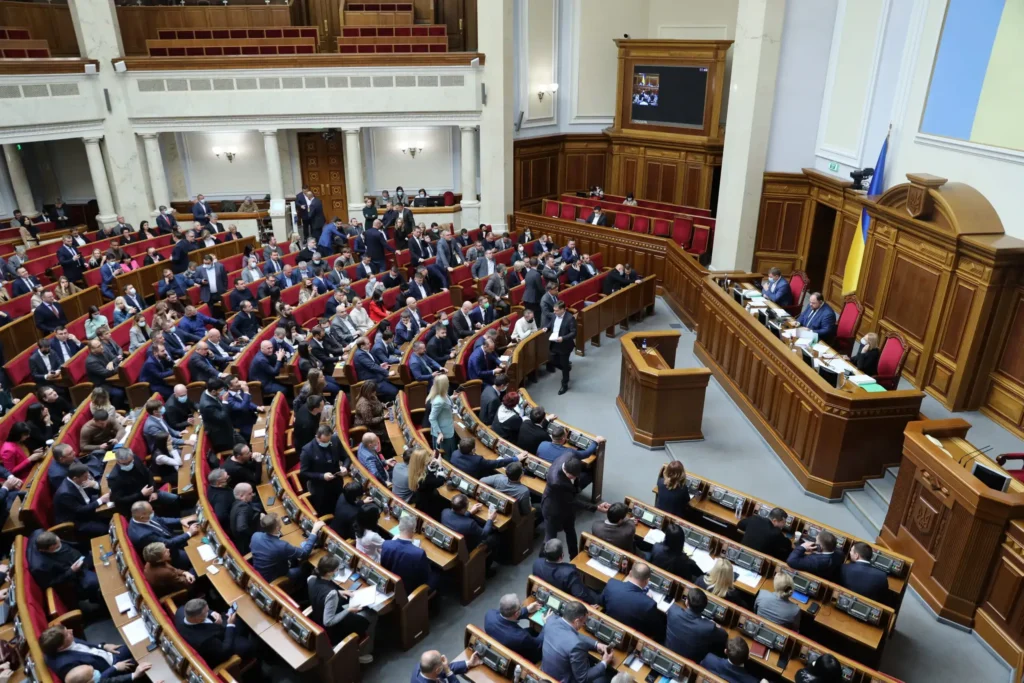
The Verkhovna Rada passed the draft state budget for 2026 in the first reading. The priorities are defense spending, as the war is expected to last for a year. Budget expenditures in 2026 will amount to UAH 4.8 trillion, while revenues will be UAH 2.8 trillion. Therefore, all tax revenues are planned to be spent on defense, and the missing difference is planned to be financed by international assistance. What do MPs plan to fix in this budget, what do economists think about this document, analyzed
The parliament supported the conclusions and proposals of the Budget Committee to the government’s draft law No. 14000, which means the document was adopted in the first reading. It is expected that the budget as a whole will be adopted by November 20.
According to the Accounting Chamber of Ukraine, the draft state budget for 2026 is based on restrained macroeconomic forecasts, which the government approved under a pessimistic scenario. However, even under such conditions, there are high risks of its failure to be implemented, primarily due to the vulnerability of the energy sector and Ukraine’s significant dependence on international assistance. And this primarily concerns defense and security.
According to the Accounting Chamber, international assistance will remain one of the main sources of financing state needs, accounting for 39.8% of all revenues. At the same time, the total public debt in 2026 will reach over 106% of GDP, and the cost of its repayment and servicing will reach UAH 1.2 trillion.
For raising pensions, salaries for teachers and the military
Mykhailo Tsymbalyuk, a member of the Batkivshchyna party, said in a commentary
A separate amendment was passed to instruct the Cabinet of Ministers to finalize the increase in salaries in higher education – these are teachers, professors, associate professors, in addition to allocating additional funds for education, raising teachers’ salaries in two stages: from January 1 and September 1. In addition, according to the MP, they instructed to revise the subsistence minimum.
“We are looking forward to discussing with the Cabinet of Ministers how much it can be increased. We consider the minimum pension, which the government is now proposing to raise by UAH 300, unacceptable, because the real subsistence level is about UAH 8,000. Therefore, in our opinion, the minimum pension should be raised to at least UAH 4,000,” the MP said.
But first and foremost, it is the financial support of military personnel, and it cannot be 20 thousand hryvnias, as proposed by the Cabinet of Ministers, if the average salary in the country is 30 thousand hryvnias. And Batkivshchyna hopes that the Cabinet of Ministers will take this into account before the second reading, emphasized Tsymbalyuk.
Many changes – little money
European Solidarity MP Nina Yuzhanina shared with
“Conceptually, there are only a few things that need to be taken into account, but they require a lot of responsibility from the Cabinet of Ministers, which I do not see. This is a revision of the military’s salaries, an issue that requires calculations and an understanding of where to get the money. Or, for example, the development of a system of remuneration for teachers is a government task, because raising salaries is impossible without revising the entire remuneration system. What was submitted for the second reading is a fiction. Therefore, perhaps something will be changed in this part, for example, so that the increase is added to the educational subvention, and it would really be covered by funding sources,” Yuzhanina noted.
Therefore, as the MP admitted, she does not expect any new changes in the draft law before the second reading, because this document will be indicative for a long time.
“We don’t even have an understanding of what sources will be used to cover the budget deficit until the end,” the MP emphasized.
Realistic budget, but not balanced
In general, the budget is balanced and realistic to implement, says Volodymyr Vatras, MP from the Servant of the People party, as he told
“However, we need to understand that this is a wartime budget, which means that the priority is to finance the Armed Forces and the defense sector, including increasing salaries for the military. Despite this, we managed to find funds for the social needs of citizens and for raising salaries for teachers and researchers,” the MP said.
His colleague in the Rada faction, Oksana Dmytrieva, emphasized that there is no doubt that this is the budget of a country at war, and the main priority should be to finance the defense sector, increase salaries for the military and support those who defend the country. But at the same time, the draft budget for 2026 looks balanced only at first glance.
“It does provide for an increase in social benefits and infrastructure spending, but if you look deeper, some of the indicators are more formal than realistic. The biggest concern is that the subsistence minimum remains much lower than the real cost of living. This means that pensions, social benefits, and even public sector salaries are tied to an understated base. Similarly, the salary increases for the military and teachers in question are not yet supported by clear sources of funding,” the MP believes.
“There are risks of underfunding of health care, especially in terms of complex surgeries, medicines, and rehabilitation. This is critical, because we are talking about the treatment of our wounded. If the government decides to finance infrastructure projects even during the war, the process should be as transparent as possible.
“The wartime budget should be honest and realistic – not to create a pretty picture, but to meet the real needs of the country and the people who are bringing victory closer every day,” emphasizes Dmytrieva.
Hope that something will change by the second reading
MP Georgiy Mazurashu (Servant of the People faction) said
“Of course, my colleagues have already talked about “skinning” and underfunding the army. For me, there were enough other critical issues. I did not submit resource amendments, but proposed measures that could save or raise funds for the military and veterans. My proposal to limit public sector salaries to 10 minimum wages has been rejected year after year. Even though the chairman of the Budget Committee, the speaker, and Hetmantsev supported a similar initiative, it was still not supported,” the MP said.
They also did not support the project of a progressive military tax – from 1.5% of the minimum wage to 50% of immorally high salaries, which was submitted by the MP. And this money could have gone directly to the army. This is a matter of justice that is important to our voters.
“I hoped that the draft would be sent back for a second first reading to make it more fair and popular. But, unfortunately…” the MP emphasized.
Budget of dreamers, not realists
According to economic expert Oleh Pendzin, the 2026 budget is a dreamer’s budget, because the government decided that they would find $42 billion from somewhere. Within these dreams, you can draw anything, but today the issue of a reparations loan remains open, and if there is no source of money, you can dream about anything.
“About 3,500 amendments were submitted, and these amendments require an expenditure part of about UAH 7.2 trillion. This is assuming that we have a revenue side of 2.8 trillion dollars. In other words, we collect 2.8 trillion from the economy, while MPs “rolled out the lip” on 7.2 trillion. The budget contains 4.8 trillion in expenses, we agree that expenses will be higher than revenues and we have to make up the shortfall sometime next year. Out of the 45 billion that we need for next year, this is only what we need for macroeconomic financing. This is what will be spent on social programs. We have 30 billion of this money, but we don’t have 15 billion, and it’s not even clear where it will come from.
But the most interesting thing is that we need 120 billion for security and defense – 2.8 trillion hryvnias have been provided for in the budget, and Europeans must provide us with another 60 billion, or rather, use them to buy weapons in the United States. That is, we will not see this money.
“There is no decision on the reparations loan today. And this is the only source of additional funds to finance defense and security today,” Oleh Pendzin said.
In fact, according to the economic expert, the budget of Ukraine has not changed since 2023, because most of it goes to defense and security. And everything we take from our country’s economy is spent on the war, and everything we can ask our partners for is spent on social protection. Next year, we plan to “ask” our partners for more. But we’ll see how it goes.
Author: Alla Dunina