Pending ratification of the Subsoil Agreement: issues that should be clarified
5 May 2025 14:21
Hybrid warfare has given rise to “hybrid diplomacy,” as exemplified by the Ukrainian-American Agreement on Mineral Resources. This is one of the conclusions made by Ihor Burakovsky, Chairman of the Board of the Institute for Economic Studies, after reading the document, "Komersant Ukrainian" reports.
According to him, the current text of the Minerals Agreement is much better than the previous versions, but a number of important issues arise in the process of familiarizing oneself with the agreement that need to be worked out.
What provisions of the Agreement should be explained
1. Security: weapons. There are no direct security guarantees. At the same time, the Agreement contains a clause stating that the estimated cost of military assistance will be part of the US capital contribution (Article VI, paragraph 5).
“Question 1: What exactly are the volumes and nomenclature of military assistance in question (weapons, intelligence, repairs, something else)? Obviously, these issues will be resolved outside the Agreement. Question 2: How will the United States continue to cooperate with other countries on the supply of weapons to Ukraine by other countries? And a philosophical question, which for some reason is hardly discussed today: what will be the US policy in the field of arms trade and transfer of relevant technologies?” said Ihor Burakovsky.
2. Security: territories. According to Forbes data for 2023, more than 70% of the total value of mineral resources in Ukraine is accounted for by three regions – Donetsk, Dnipro, and Luhansk. According to SecDev, 33% of all Ukrainian rare earth metals are located in the occupied territories.
A question from an expert to the United States: if you propose to give these territories to Russia, are you giving “your” money to Putin? Will the US actively fight for the return of these territories to Ukraine, including for economic reasons? And what will the US do if Russia wants to extract natural resources in these territories?
3. The status of the Partnership. “In the event of any inconsistency between the laws of Ukraine and this Agreement, this Agreement shall prevail in respect of such inconsistency” (Article II, paragraph 3). And in addition to this clause, all payments of the Partnership shall be exempt from taxation, fees, charges, etc. provided for by Ukrainian legislation (Article IV, clause 2).
The question is whether there are examples of institutions in Ukraine with such an “extraterritorial” status.
4. Investment processes. The Agreement (Article VII) provides for a mechanism for the mandatory provision of investment information to the Partnership relating to the subject matter of its activities.
According to Igor Burakovsky, the question arises as to how the Partnership will use this information and how to protect investors’ trade secrets.
“In addition, the expert notes. – “The Partnership has the absolute right to hold ‘good faith negotiations’ with the investor. The purpose and status of these negotiations is not obvious to me.”
5. Currency restrictions. Ukraine (Article V) “may take reasonable protective measures in the form of restrictions on the conversion of hryvnia into dollars”, but at the same time “undertakes to indemnify and hold harmless the Partnership (…the Limited Partner…and the General Partner…) from all costs and damages resulting therefrom”.
The question arises, what about other economic agents working with dollars, euros and other currencies? Won’t we get a lot of lawsuits from interested parties?
6. European integration. (Article VII) In case of additional obligations related to Ukraine’s membership in the European Union, which relate to the provision of information to the Partnership, “the parties shall hold good faith consultations and negotiations with a view to adopting appropriate amendments”.
“It is unclear whether we are talking about amendments to the Agreement or something else?” asks Ihor Burakovsky.
7. General partner. This and other similar terms are mentioned in the text of the Agreement, but the Annex does not define them. Perhaps these points will be taken into account in the foundation’s constituent documents, but still, explanations are needed.
8. Ukraine’s contribution. Ukraine will transfer to the partnership “income agreed with Ukraine”, the source of which will be, among other things, 50% of the reparations received “from Russia or its authorized persons… for Russia’s invasion of Ukraine”. According to the expert, the implementation of this clause is possible on condition of either Russia’s capitulation or Russia’s voluntary commitment to make the relevant payments.
“But, in my opinion, this can only be achieved through the consolidated efforts of all our allies,” notes Ihor Burakovsky. – “And here the question arises to what extent our partners will agree with this option of using the funds. I understand that today this question is rhetorical. But still? Is this an application for the future?”
Ihor Burakovsky, Chairman of the Board of the Institute for Economic Studies, also reminded that the Agreement is aimed at improving relations with the United States.
“Whether we like it or not, the United States has been and remains a global military, political and economic player. And it is a global challenge to compensate for the loss of such an ally,” the expert said.
Also, according to Ihor Burakovsky, he is well aware of all the specifics of diplomacy in times of war, but he believes that the process of developing a number of foreign policy initiatives can and should be more open to society.
As you know, on April 30, 2025, the First Vice Prime Minister of Ukraine and Minister of Economy of Ukraine Yulia Svyrydenko and U.S. Secretary of the Treasury Scott Bessent signed an Agreement between the Government of Ukraine and the Government of the United States of America on the establishment of the U.S.-Ukraine Reconstruction Investment Fund.
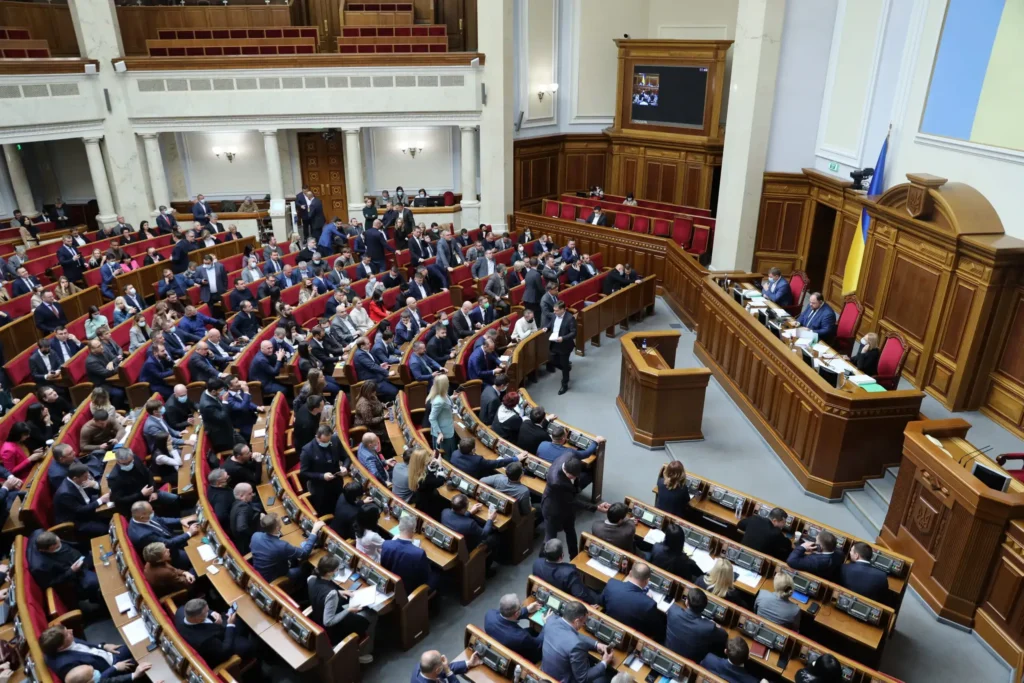
on May 1, a draft law on ratification of the Agreement between the Government of Ukraine and the Government of the United States of America on the Establishment of the U.S.-Ukraine Reconstruction Investment Fund was submitted to the Parliament.
As explained by Yulia Svyrydenko, the fund is created on a 50/50 basis, which means equal shares of Kyiv and Washington in joint management.
“Neither party will have a majority vote, and this will reflect the equal partnership between Ukraine and the United States,” said Svyrydenko.
The Agreement does not recognize the US assistance already provided as a “debt”, provides for equality in the management of the fund, preservation of sovereignty over Ukraine’s subsoil and infrastructure, and compliance with the Constitution and the country’s European integration aspirations. At the same time, the document lacks specific security guarantees, which the Ukrainian government has repeatedly emphasized, and a clear termination date for the agreement.