Ukraine has only scorched earth, not rare earth metals – Bloomberg
21 February 2025 09:00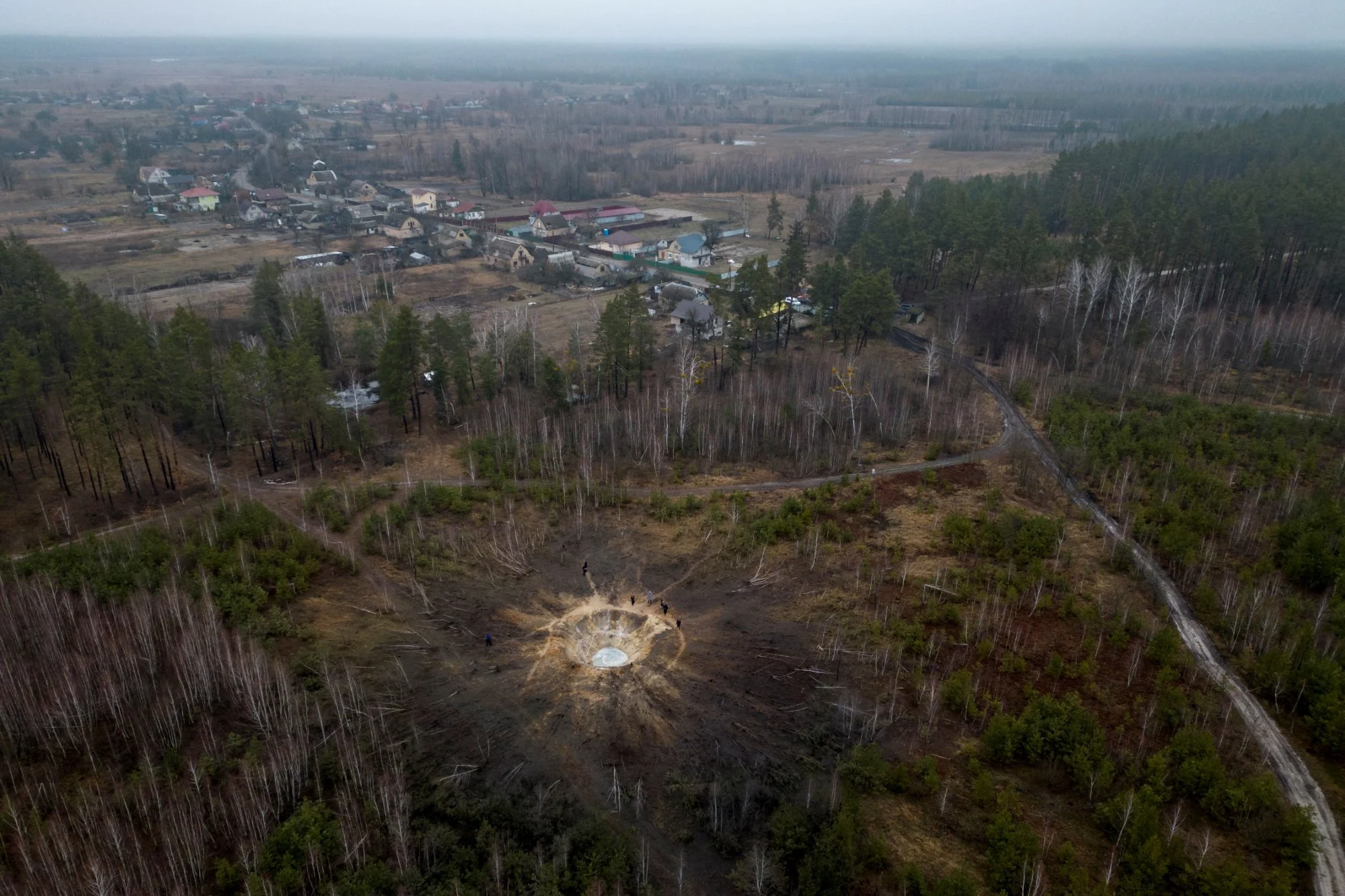
What Ukraine has is scorched earth; what it does not have is rare earth elements. This is the message of a Bloomberg column by Javier Blas, an energy and commodities expert.
Surprisingly, many people, most notably US President Donald Trump, seem convinced that Ukraine has rich mineral reserves. This is nonsense, the author writes.
This is not the first time Washington has misjudged the geology in a war zone. Back in 2010, the United States announced that it had discovered untapped mineral deposits worth $1 trillion in Afghanistan, including some key minerals for electric vehicle batteries, such as lithium. The Pentagon went so far as to call Afghanistan the “Saudi Arabia of lithium.” But those were Washington’s fantasies. And so it is now.
Читайте нас у Telegram: головні новини коротко
Ukraine has no rare earth elements
Despite talks of enormous potential, Ukraine is not known to have any reserves of the major rare earth elements that Donald Trump is seeking, the article notes. According to the US Geological Survey, the world’s reserves of such minerals are distributed as follows:
- China: 44 million tons.
- Vietnam: 22 million tons.
- Brazil: 21 million tons.
- Russia: 10 million tons.
- Greenland: 2 million tons.
- Other countries: 17 million tons.
Whereas in Afghanistan the focus was mainly on copper and lithium, key to electrifying everything, in Ukraine the attention is on rare earths – a collection of 17 elements that high school chemistry students would remember because of their hard-to-pronounce names. The list includes elements such as praseodymium, dysprosium, and promethium.
For Trump, the importance of rare earths reserves stems from the fact that China dominates global supply. In small quantities, these elements are used in exotic alloys. Although they are often presented as necessary for high-tech applications and weapons production, their use is much more prosaic. For example, the popular British home appliance manufacturer Dyson Ltd. boasts that it uses the element neodymium in the magnets of its vacuum cleaners to make them “spin up to five times faster than a Formula 1 engine.”
The author of the article explains that the excitement about Ukraine’s rare earths began with the Ukrainians themselves. Desperate to find a way to engage Trump, they miscalculated by presenting the then-newly elected president in November with a “victory plan” that overly touted the country’s mineral resources. They soon lost control of the narrative.
on February 3, Trump categorically stated that Ukrainians have “very valuable rare lands.” Always eager to be perceived as a man who knows how to make deals, he added: “We are trying to make a deal with Ukraine where they will provide what we give them with their rare lands and other things.” A few days later, on February 11, he reiterated his position in an interview with Fox News, describing his talks with Ukrainian officials: “I told them I wanted the equivalent of something like $500 billion in rare earths.”
“I was puzzled. As far as I know, Ukraine has no significant deposits of rare earth elements, except for small scandium mines,”
– the author writes. The U.S. Geological Survey, an authority on the subject, does not list the country as having any reserves. Neither does any other database commonly used in the mining industry.
$500 billion is an unrealistic figure
Simply put, “follow the money” does not work here, the author emphasizes. At best, the value of the entire global production of rare earth elements is about $15 billion a year. This is equal to the cost of just two days of global oil production. Even if Ukraine had gigantic deposits, they would not be so valuable from a geoeconomic point of view.
Let’s assume that Ukraine could, as if by magic, produce 20% of the world’s rare earths. This would equal approximately $3 billion annually. To reach the $500 billion that Trump has been talking about, the United States would need to secure more than 150 years of Ukrainian production. Pure nonsense, the article emphasizes.
The author sees two possibilities: either Trump is right, and the author is very wrong, and Ukraine does have a lot of rare earths; or Trump misspoke, and instead of “rare earths” he meant other minerals. Or perhaps he took the small potential of one element, scandium, and extrapolated.
“Let’s consider the second option, because at least it would make some sense,” the author writes. While Ukraine has no commercial deposits of rare earth elements, it does have mines of other minerals. Before the war with Russia, Ukraine produced significant amounts of iron ore and coal. Neither is strategic, but the country made good money from both. The problem: some of the mines are now located in territory seized by Russia.
Trump may have confused “rare earths” with the much broader concept of “critical minerals.” Among the latter, Ukraine has some commercial titanium and gallium mines. Both are quite valuable and of some strategic importance, but again, control of either would not change the geo-economy. And they certainly aren’t worth the $500 billion Trump has said they would cost.
And yet the American president persistently referred to rare earths; not once, but several times. So perhaps he knows something that the commodities world does not. But the author has not found a single reputable source that claims Ukraine is overflowing with reserves.
Every document that someone pointed out to the author repeats the same conspiracy theories that can be found in the blogosphere. They tend to mistake a cluster of some minerals containing rare earth elements for a commercial mine. Many point to the Novopoltava deposit, discovered by Soviet geologists in 1970, as a potential source. Although small amounts of rare earths are present, it seems impossible to extract them – so the site remains an unproductive deposit, not a mine, more than 50 years after its discovery. The Ukrainian government has described the Novopoltavske deposit as “relatively difficult” to mine and noted that any yield of rare earths would be “off-balance sheet,” meaning that their extraction is uneconomic at current prices. Even worse, the mineralogy contradicts this: the original source is a mineral that makes the extraction of the elements very difficult.
The worst of the brochures, claiming that Ukraine has reserves of rare earths, bears the imprint of NATO and is widely circulated as proof that “Trump is right.” It was produced in December 2024 by the NATO Energy Security Center of Excellence, based in Lithuania. Although it is affiliated with the military alliance, bearing its name and logo, this organization and its counterparts are autonomous bodies outside the chain of command. The document is provocative: “Ukraine is emerging as a key potential supplier of rare earth metals such as titanium, lithium, beryllium, manganese, gallium, uranium…” This list should be alarming. Anyone with a basic knowledge of chemistry knows that none of these minerals are rare earth elements, the author emphasizes.
It is unclear why NATO’s material is attached to a report that seems to lack basic fact-checking. A spokesperson told the author that the views expressed reflect those of the author, not NATO – which the document does not say. The report, unrebutted, is still available online.
“If this is the source that Trump’s advisors used to convince him of Ukraine’s richness in rare earths, that would be sad – global politics based on copy and paste. It would fit well with Kafka’s 2025,”
– the author concludes.
As a reminder, in exchange for military support, US President Donald Trump demanded $500 billion worth of rare earth metals from Ukraine. He said that the United States should have access to Ukraine’s natural resources, regardless of whether Kyiv manages to reach a peace agreement with Russia. Ukraine sent its version of the agreement to the US, but the US rejected it, accusing Ukraine of refusing to sign the agreement and calling the decision short-sighted.
President Zelenskyy said that the US has actually provided less than $100 billion in aid to Ukraine, namely $67 billion in weapons and another $31.5 billion in direct financial assistance.