Instead of one scandalous administrative court, Ukraine will have two new specialized ones
27 February 2025 10:56
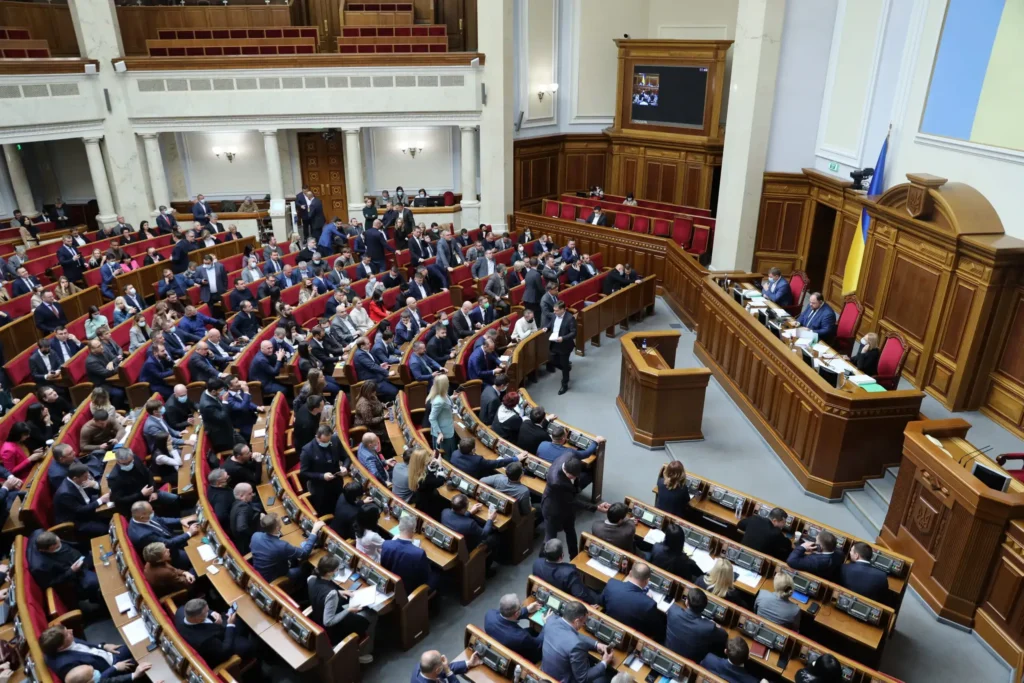
The Verkhovna Rada of Ukraine has adopted a law on the operation of the Specialized District Administrative Court and the Specialized Administrative Court of Appeal, which will replace the liquidated Kyiv District Administrative Court. This was reported by the Ministry of Justice, "Komersant Ukrainian" reports.
The Specialized District Administrative Court and the Specialized Administrative Court of Appeal will hear cases against central-level bodies: The Verkhovna Rada of Ukraine, the Cabinet of Ministers of Ukraine, the National Bank of Ukraine, ministries and other central executive bodies. It will also be possible to challenge the results of competitions for the positions of heads of anti-corruption bodies – NABU, SAPO, NAPC, ARMA, BES, and to consider cases concerning the results of audits of NABU and SAPO.
Olha Stefanishyna, Deputy Prime Minister for European Integration and Minister of Justice, called the path to the adoption of this law difficult and required the cooperation of many parties. According to her, by the second reading, the draft law incorporated key concepts that the Ministry of Justice team had been carefully working on for a long time.
The new law is the result of complex discussions
The adopted draft law is an alternative to the draft Law of Ukraine No. 12368, which provided for the establishment of the High Administrative Court. It was introduced by the Cabinet of Ministers and rejected at the beginning of the year.
As a result, in late February, a law was passed that launches the formation of two separate courts – the Kyiv City District Administrative Court (first instance) and the Kyiv City Administrative Court of Appeal (appellate instance) – instead of a single court that would combine the functions of both instances,
The explanatory note mentions the following advantages of creating two courts
– observance of the principle of independence of the judiciary: the functioning of one court that performs both functions (first instance and appellate) creates a conflict of interest;
– ensuring objectivity and transparency: if one institution performs the functions of both instances, there is a risk of bias in the appeal process, as judges may be bound by internal working relationships;
– efficiency of case consideration: separate courts allow for better organization of work, specialization in relevant procedural functions and optimization of case distribution;
– minimization of corruption risks: separation of courts reduces the risk of coordinated corruption schemes between judges of different instances within the same body;
– accessibility of justice: separation of courts improves access to justice for citizens;
– compliance with European standards: in most European countries, the judicial system provides for a clear separation of functions of the first instance and appellate courts, which ensures a fair trial.
By the way, as MP Yaroslav Zheleznyak reminded, by adopting this law, the Parliament fulfilled one of the overdue IMF beacons, the deadline for which was December 31 last year.
The law defines important features of the formation of courts
The Ministry of Justice emphasized, among other things, that the selection of judges will be carried out under an enhanced procedure involving international experts, and additional mechanisms for verifying the integrity and competence of candidates for judges have been introduced.
Yaroslav Zheleznyak said that the High Qualification Commission of Judges of Ukraine should announce a competition for judges within one month after the law comes into force. Competitions should be held with the involvement of the Expert Council, which will consist of 6 people: 3 from the Council of Judges of Ukraine and 3 from international and foreign organizations.
As a reminder, the already mentioned scandalous Kyiv District Administrative Court was liquidated in December 2022. This court, headed by Pavlo Vovk, became famous for a large number of scandals and dubious high-profile decisions: it declared the nationalization of Privatbank illegal, canceled the new Ukrainian spelling and renamed Moskovsky Avenue to Bandera Avenue in Kyiv, etc.
The US State Department imposed personal visa sanctions against Pavlo Vovk. He and several other judges of this court were involved in a criminal case on the creation of a criminal organization and the seizure of power.