Ukraine is running out of money for defense: will its reserves really last only until summer without decisions from the EU and the IMF?
2 April 14:02 ANALYSIS FROM
Ukraine could face serious financial difficulties and even run out of resources for its defense as early as June 2026. The main reason is delays and the withholding of aid by key Western allies.
Bloomberg reports on this.
Will funds last only until June?
According to Ukrainian and international officials who spoke on condition of anonymity, Kyiv is currently able to cover expenses until approximately June.
After Donald Trump returned to power in January of last year, the U.S. effectively ceased direct support for Ukraine. As a result, the main burden—both military and financial—shifted to European countries.
What is jeopardizing funding
Several factors are complicating the flow of funds:
- Hungary has blocked the allocation of a €90 billion EU loan
- There is a risk that the next IMF tranche will be delayed because parliament has not yet approved the necessary tax changes
- NATO countries are in no hurry to finance the PURL program for the purchase of American weapons
NBU Governor Andriy Pyshnyy noted in an interview with Bloomberg that in the absence of international aid, there may be a need to directly finance the state budget again, particularly to pay salaries to military personnel and civil servants. In effect, this would mean issuing money, which could lead to rising inflation.
What amounts are needed
- Total external financing needs for 2026 — $52 billion
- About $15 billion — for the purchase of American weapons
- $8.1 billion — the amount of the current IMF program (with a first tranche of $1.5 billion)
European Commission President Ursula von der Leyen stated that the EU will fulfill its loan obligations in any case.
Ukrainian Finance Minister Serhiy Marchenko, in turn, said he expects funds from the EU in the near future, although no specific decisions have been made yet.
Statements on risks: how long will the funds last
Economist Oleg Pendzin in an exclusive comment
“Without 90 billion euros in macro-financial assistance to Ukraine and without a program with the International Monetary Fund, funds will effectively last only until the end of the month,” Pendzin noted, citing statements by government officials.
He emphasized that such assessments were also confirmed by the Ministry of Finance and were quite stark in nature. The situation was partially stabilized by the first tranche from the International Monetary Fund.
“Ukraine received the first IMF tranche of $1.3 billion, which covered part of the needs for April and May,” the economist explained.
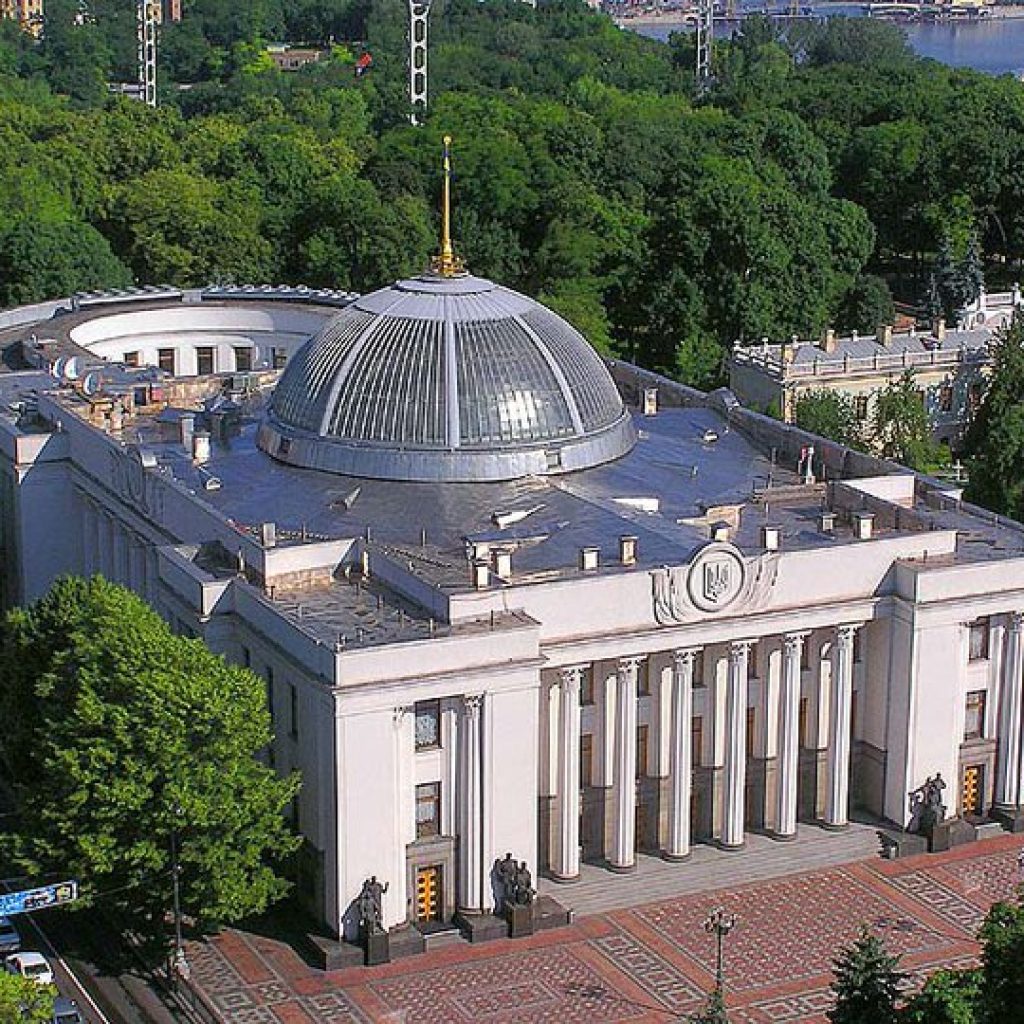
However, the key factor remains fulfilling the conditions for receiving the next tranche of funding. This involves adopting a series of legislative changes that have already been submitted to the Verkhovna Rada.
“If these conditions are not met, the money will last until mid-May at most. We will effectively use the $1.3 billion we received and then run out,” Pendzin warned.
Even if the political deadlock over macro-financial assistance from the EU is resolved, the funds will not arrive immediately.
“Even if all decisions regarding the 90 billion euros are adopted in April, this money will not physically arrive before June,” the expert noted.
In this context, he emphasized the critical importance of quickly meeting the IMF’s requirements.
Skepticism Regarding Western Assessments
Serhiy Yagodzinsky, Ph.D., professor, and vice rector of the European University, in a conversation with journalists
“I am far from believing that Bloomberg journalists are familiar with all of Ukraine’s macro- and microeconomic indicators. These are more like probability assessments than a reflection of the real situation,” he noted.
According to Yagodzinsky, such publications may be part of external influence.
“It seems to me that this is a form of pressure on Ukraine. We see that financial aid is tied to specific conditions, and the IMF mission is putting forward rather strict demands,” the expert explained.
He also pointed out that the issue of repaying funds is inevitably linked to tax policy.
“The IMF wants the funds repaid. And the only real mechanism is raising taxes,” he added.
Is a default possible?
Despite the difficult situation, the expert considers a default scenario unlikely.
“Ukraine could theoretically declare default and wipe out its debts, but this scenario is practically out of the question, as it is critically important for us to demonstrate financial stability,” emphasized Yagodzinsky.
The expert stressed that financial difficulties are typical for a country at war. At the same time, he said, Ukraine is not going down that path, although tax pressure may increase.
Yagodzinsky also noted certain positive developments, particularly the growth of domestic production in the military sector.
“Ukraine today has significantly more domestic production capabilities—from small arms to ammunition—which helps reduce defense costs,” he said.
Ukraine’s financial situation remains tense and depends largely on external support and the fulfillment of international obligations. At the same time, experts urge avoiding extreme assessments and taking into account both risks and available resources to stabilize the economy.