Currency Swings: Why the Dollar Is Rising Again While the Hryvnia Hits a Record Low
16 March 16:18
In recent days, the official hryvnia-to-dollar exchange rate has shown record growth, reaching a historic high of 44.16 hryvnia per dollar at the end of last week. [Komersant] investigated the causes of these exchange rate fluctuations.
The hryvnia’s official exchange rate against the dollar began its climb toward these recent records in early March. And the way it changed over the course of those March days surprised many people more than it alarmed them. First, experts note the absence of growing demand for dollars from the economy. Financial analyst Andriy Shevchyshyn also points this out.
“If we compare net demand for currency on the interbank market in February and March, it fell by 19%. That is, demand on the interbank market over 11 days—the available statistics—has decreased. Meanwhile, the exchange rate has risen. Currently, net demand in the market—or the deficit, if you will—does not reach the levels necessary for the exchange rate to adjust,” the expert notes.
Furthermore, in March, the hryvnia would traditionally have strengthened due to the needs of farmers, who typically sell foreign currency to obtain hryvnia for purchasing fuel and covering other expenses. But on the other hand, there is a war in the Middle East, oil prices are rising, and there is no shortage of pessimistic scenarios. Moreover, the dates of both the start of the war against Iran and the record exchange rate fluctuations actually coincide.
Geopolitical Turbulence
It is precisely the ongoing war against Iran and rising oil prices that Alexander Savchenko, rector of the International Institute of Business, considers the main factors influencing the rise in the dollar exchange rate.
“First, the dollar is currently rising against all currencies, and this is linked to the war. Whenever any kind of upheaval begins—economic or political—the dollar has always risen. Although Donald Trump slightly altered this trend with his actions after taking office, it has now resumed. Investors from around the world want to ride out the current turbulence in dollars. That is the number one factor. The second factor, linked to the first, is the rise in oil prices. And in Ukraine, this could lead to rising inflation,” the expert notes.
Oleksandr Savchenko also mentioned that the International Monetary Fund had previously recommended that Ukraine slightly weaken the hryvnia because it was too strong, which negatively impacted our exports and domestic production.
“My personal view is that the hryvnia was indeed overvalued and needed to be devalued slightly. And the National Bank likely recalled this recommendation from the IMF,” the expert suggests.
According to financial analyst Andriy Shevchyshyn, there are many possible scenarios, but one of the key factors driving the exchange rate is that the National Bank pegged the value of the euro and raised the value of the dollar.
“This was done to ensure the exchange rate aligned with euro-dollar trends on the global market. As a reminder, the euro-dollar rate was 1.18—that was before military operations began in the Middle East. Now it stands at 1.154, meaning the euro has fallen by nearly 3.5%. Meanwhile, on the Ukrainian market, it has even risen slightly—if we look at the cash market. In this case, the National Bank needed to adjust the dollar rate much more significantly. And we saw this significant adjustment,” the analyst notes.
He believes that when adjusting the exchange rate, the National Bank also took into account the still-existing problem of the lack of funds from the EU. This primarily refers to the €90 billion loan blocked by Hungary and Slovakia.
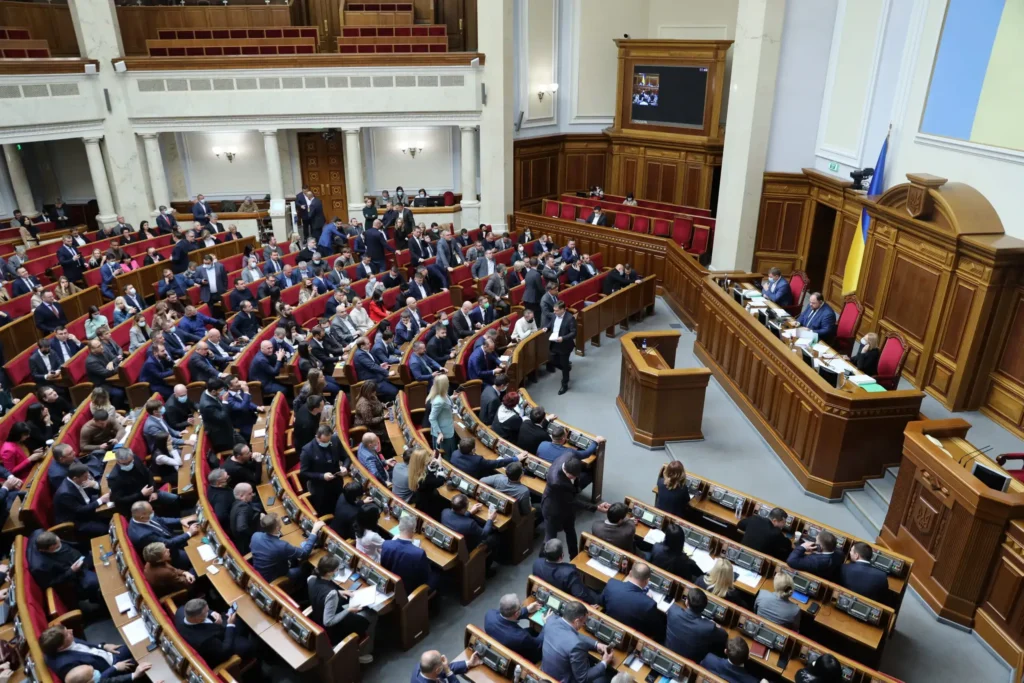
“There is talk of possible aid amounting to 30 billion euros from the Baltic and Northern European countries. But this does not generally solve the larger problem. We see that our Verkhovna Rada is virtually dysfunctional, since important bills—for example, regarding the Ukrainian Facility program and within the framework of cooperation with the IMF—are not being voted on, and many issues remain unresolved. And the National Bank is indeed adjusting this market. It can both lower the exchange rate and hold it steady, as it has done many times. Perhaps the National Bank sees a bleaker outlook from its perspective and, accordingly, is taking this preventive step—that is, instead of the standard seasonal stabilization of the exchange rate, the NBU is weakening it. “This makes it possible to convert foreign currency into hryvnia more profitably in the future to finance budget expenditures. It allows for a reduction—not a significant one, but a reduction—in pressure on the external budget due to lower imports, as they become more expensive,” the expert explains.
Stabilization vs. Speculation
Particularly troubling signals have been coming from the cash market in recent days. And the National Bank responded not only with statements about its readiness to “respond promptly to changes in the situation on the foreign exchange market, using its tools and available international reserves,” but also with actual interventions. According to the industry publication “Minfin,” during the workweek of March 9–13, the regulator sold the equivalent of $1,037.32 million on the foreign exchange market. Financial analyst Andriy Shevchyshyn explains why the regulator is spending its gold and foreign exchange reserves.
“The cash exchange rate has reached 44.8 hryvnia per dollar. That is, it already poses a threat to importers, as they have a rate of 45–46 built into the selling price of goods. And, accordingly, the closer the real exchange rate gets to this rate embedded in the price, the more it causes concern and forces the rate to rise even higher. And that is inflation. And that is a revision of import prices. And that is what the NBU does not want to allow,” the expert notes.
Moreover, the emergence of speculative capital in the market does not bode well.
“In the cash market, we are seeing a significant increase in speculative demand. There, net demand for cash currency has risen, and if we look at the first 11 days of March and compare them to February, the increase is 78%. And the NBU conducted cash currency interventions precisely to stabilize demand. And also… to respond to the situation surrounding the fact that Ukrainian cash collectors were blocked and kidnapped in Hungary. We’re talking about $90 million there, which is 6% of monthly demand. That is, losing 6% isn’t significant, but it adds to market nervousness and slightly disorients it. “And we see this in the greater growth of the cash market compared to the non-cash market. The situation needs to be contained and the market must not be allowed to spiral out of control,” emphasizes Andriy Shevchyshyn.
Financial market experts agree that the National Bank has sufficient resources to keep the exchange rate at an acceptable level. Adding to hopes for stabilization is the fact that today’s official hryvnia exchange rate has already retreated slightly from last week’s peak.
Serhiy Vasylovych